When a plasma cutting system starts producing rough edges, excessive dross, wider kerfs, or inconsistent cuts, the problem is not always the machine itself. In many cases, worn or incorrect consumables are responsible.
That is why choosing the right Hypertherm Plasma Consumables matters.
Consumable parts work directly with the plasma arc. They are exposed to extreme heat and electrical stress during cutting, so they naturally wear out over time. Using the correct replacement parts can help maintain cut quality, reduce unnecessary downtime, and keep production running efficiently.
But with different plasma systems, torch configurations, materials, and amperage levels, selecting the right parts can be confusing.
This guide explains what to look for when buying Hypertherm plasma cutting consumables, which parts are commonly replaced, and how to avoid compatibility mistakes.
What are Hypertherm Plasma Consumables?
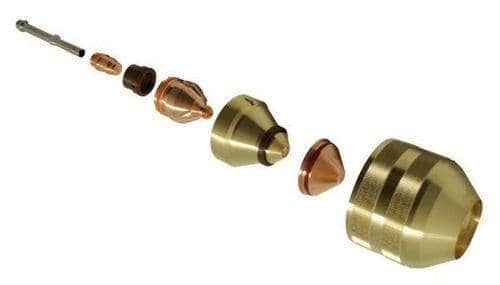
Hypertherm Plasma Consumables are replaceable components used inside Hypertherm plasma cutting torches to create and control the plasma arc. Common parts include electrodes, nozzles, shields, retaining caps, swirl rings, and related torch components. Their correct combination depends on the Hypertherm system, torch type, amperage, material, and cutting application.
Why Plasma Consumables Matter for Cutting Performance
Consumables have a direct effect on how a plasma system performs.
The nozzle, for example, controls the plasma arc as it exits the torch. If the nozzle orifice becomes damaged, the arc can become unstable and produce poor-quality cuts.
The electrode also wears during operation. As it deteriorates, arc stability can decline and cut quality may become inconsistent.
For industrial users, a small consumable problem can become a bigger production issue. Poor cuts may lead to additional grinding, rejected components, slower production, and more material waste.
Choosing suitable consumables helps address these problems before they affect the entire cutting process.
Common Hypertherm Plasma Consumable Parts
Different Hypertherm systems use different consumable configurations, but several component types are commonly found in plasma torches.
Electrodes
The electrode carries the electrical current needed to establish the plasma arc. Because it operates under intense heat, it gradually wears during cutting.
A worn electrode can affect arc stability and cut consistency. Regular inspection is therefore useful, particularly in high-volume production environments.
Nozzles
The nozzle focuses and directs the plasma arc onto the workpiece.
A damaged or incorrectly matched nozzle can result in:
Poor cut quality
Increased dross
Irregular kerf width
Reduced cutting accuracy
Shorter consumable life
Nozzle selection should always match the plasma system and required amperage.
Shields
The shield protects the torch components and helps control the cutting process. It also plays a role in protecting the torch from molten metal and heat generated during cutting.
A shield that is heavily damaged or worn should be replaced rather than continued in service.
Retaining Caps
The retaining cap holds certain torch components in the correct position. Although it may not receive as much attention as the nozzle or electrode, its condition can affect the overall torch assembly.
Damage, cracking, or incorrect installation can cause operational problems.
Swirl Rings
Swirl rings help control gas flow inside the torch. Proper gas movement is essential for creating a stable plasma arc.
A damaged swirl ring can affect gas distribution and may contribute to inconsistent cutting performance.
How to Choose the Right Hypertherm Plasma Consumables
Buying a consumable simply because it looks similar to an existing part can create compatibility problems. The selection process should be based on the complete cutting setup.
1. Identify Your Hypertherm System
Start by confirming the exact plasma power source.
Different systems are designed for different cutting capacities and applications. The consumables required for a Powermax system, for example, may differ from those used with higher-power industrial systems.
Check the machine model and torch configuration before ordering replacement parts.
2. Check the Torch Type
The torch is just as important as the power source.
Even when two systems appear similar, their torch assemblies may require different consumable sets.
Before purchasing, verify:
Torch model
Consumable series
Part number
Cutting process
Amperage range
3. Match the Amperage
Consumables are designed to operate within specific current ranges.
Using a part outside its intended operating range can affect arc performance and consumable life. Always check the recommended amperage for the application before placing an order.
4. Consider the Material and Thickness
The material being cut also influences consumable selection.
Mild steel, stainless steel, and aluminium can require different cutting parameters. Material thickness also affects the required amperage, gas settings, travel speed, and consumable configuration.
For example, a workshop cutting thin sheet metal throughout the day may have very different consumable requirements from a fabrication unit cutting heavy steel plate.
5. Verify the Part Number
Part numbers provide one of the simplest ways to reduce ordering mistakes.
If you are replacing an existing component, check the number printed on the original packaging or compare it with the equipment documentation.
If you are unsure, confirm the part number with a knowledgeable supplier before ordering.
Key Considerations When Buying Hypertherm Plasma Consumables
Before purchasing replacement parts, consider these practical factors:
Machine compatibility: Confirm the exact Hypertherm system.
Torch compatibility: Match the consumables to the correct torch.
Part number: Verify the exact replacement part.
Amperage: Select parts suitable for the intended cutting current.
Material: Consider whether you are cutting mild steel, stainless steel, aluminium, or another material.
Thickness: Match the consumable setup to the cutting application.
Cutting process: Different processes can require different consumable configurations.
Supplier reliability: Choose a supplier that can provide accurate product information and technical guidance.
Storage: Keep unused consumables clean, dry, and protected from damage.
Replacement timing: Do not continue using severely worn consumables simply to save on replacement costs.
Genuine vs. Incorrect or Poorly Matched Consumables
One of the biggest purchasing mistakes is focusing only on price.
A cheaper component may not provide the same performance as a correctly specified consumable. Even when a part physically fits the torch, it may not be designed for the same operating conditions.
Poorly matched consumables can contribute to premature wear, unstable arcs, poor edge quality, and increased operating costs.
For businesses that depend on CNC plasma cutting every day, the total cost matters more than the initial purchase price.
A reliable consumable should provide the right combination of compatibility, cutting performance, service life, and availability.
Hypertherm Plasma Consumables Comparison
Consumable Part | Main Function | Common Wear Effect | Selection Factor |
|---|---|---|---|
Electrode | Transfers electrical current | Unstable arc or poor cut quality | System and amperage |
Nozzle | Focuses the plasma arc | Poor kerf and increased dross | Torch and amperage |
Shield | Protects torch components | Reduced protection | Torch and cutting process |
Retaining Cap | Secures torch components | Component positioning issues | Torch configuration |
Swirl Ring | Controls gas flow | Unstable arc or gas flow | Torch and system |
The exact consumable combination should always be confirmed against the specific Hypertherm system and torch being used.
Signs That Your Plasma Consumables Need Replacement
Experienced operators can often identify worn consumables by changes in cutting performance.
Watch for signs such as:
Increasing dross on the underside of the workpiece
Rough or uneven cut edges
Wider or inconsistent kerf
Difficulty starting the arc
Reduced cut quality
Visible damage to the nozzle
Excessive electrode wear
More frequent torch-related problems
Consumables are wearing faster than expected
Not every cutting problem is caused by consumables. Incorrect gas pressure, poor material positioning, incorrect cutting speed, torch height issues, and machine settings can also affect results.
That is why troubleshooting should consider the complete cutting process.
How Proper Consumable Selection Can Reduce Downtime
For fabrication companies, downtime can be expensive.
Imagine a CNC plasma table that runs several hours every day. If operators frequently stop production because of poor consumable performance, the business loses both machine time and labor time.
Keeping the correct replacement consumables available can help prevent unnecessary interruptions.
A practical inventory should include the parts that are replaced most frequently for the machines and cutting applications used in the workshop.
This is especially useful for companies operating multiple plasma cutting systems.
Buying Hypertherm Plasma Consumables for Industrial Applications
When purchasing Hypertherm Plasma Consumables, industrial buyers should look beyond a basic product listing.
A good supplier should make it easy to identify the correct part for the application. Product information should clearly communicate compatibility, part numbers, and intended use.
For regular buyers, supplier support can also make a difference.
For example, a fabrication company may need consumables for different torch configurations or multiple cutting amperages. A knowledgeable supplier can help the purchasing team identify the correct parts rather than relying on guesswork.
This can make repeat purchasing faster and reduce the risk of ordering incompatible components.
Best Practices for Longer Consumable Life
Consumables will always wear, but good operating practices can help maximize their usable life.
Maintain Correct Cutting Parameters
Follow the recommended cutting parameters for the material and thickness. Incorrect speed or torch height can place additional stress on consumable components.
Keep the Torch Clean
Dirt, metal particles, and accumulated debris can interfere with proper torch operation. Regular inspection and cleaning should be part of routine maintenance.
Check Gas Quality
Plasma cutting depends heavily on gas quality and pressure. Contaminated or poorly controlled gas can affect cutting performance and consumable life.
Inspect Parts Regularly
Do not wait until the cut quality becomes unacceptable before inspecting the consumables. Regular checks can help identify wear early.
Keep Spare Parts Available
Maintain a reasonable stock of commonly used electrodes, nozzles, shields, and other required components. This is particularly useful for production environments where unexpected downtime can affect delivery schedules.
Applications of Hypertherm Plasma Cutting Consumables
Hypertherm plasma systems are commonly used in applications where accurate and efficient metal cutting is required.
Typical industries include:
Structural steel fabrication
General metal fabrication
Industrial manufacturing
Automotive component production
Heavy equipment manufacturing
Shipbuilding
HVAC fabrication
Agricultural equipment manufacturing
Engineering workshops
CNC plasma cutting services
The right consumables can help these operations maintain consistent cutting performance across repeated production jobs.
Frequently Asked Questions
1. What are Hypertherm Plasma Consumables used for?
Hypertherm Plasma Consumables are replacement torch components used during plasma cutting. They include parts such as electrodes, nozzles, shields, retaining caps, and swirl rings. These components help establish, control, and maintain the plasma arc during cutting.
2. How do I know which Hypertherm consumables I need?
Identify your Hypertherm plasma system, torch model, amperage, cutting process, and material requirements. The correct part number should then be verified against the equipment documentation or a reliable supplier's product information.
3. How often should plasma consumables be replaced?
Replacement frequency depends on cutting hours, material thickness, amperage, cutting parameters, and operating conditions. Inspect consumables regularly and replace them when wear begins to affect arc stability or cut quality.
4. Can the wrong nozzle affect plasma cutting quality?
Yes. A nozzle that is incompatible, damaged, or incorrectly selected can affect the plasma arc and lead to poor edge quality, excessive dross, inconsistent kerf width, and reduced consumable life.
5. Where can I buy Hypertherm Plasma Consumables?
You can purchase Hypertherm Plasma Consumables from specialist industrial suppliers. Before ordering, confirm the exact machine model, torch configuration, amperage, and consumable part number to ensure compatibility.
Conclusion
Choosing the right Hypertherm Plasma Consumables is more than simply replacing a worn part. The correct electrode, nozzle, shield, retaining cap, and other components work together to maintain stable plasma cutting performance.
Before placing an order, verify the plasma system, torch type, amperage, material, cutting process, and exact part number. This simple checking process can prevent compatibility problems and unnecessary production delays.
For workshops and industrial fabrication companies, keeping the correct consumables in stock is also a practical way to reduce downtime.