Almost every drink brand starts with a taste. Maybe it is a lemon-mint cooler you perfected at home, a spiced iced tea your friends keep asking for, or a protein shake that finally does not taste chalky. The question follows quickly: "Can I sell this?"
You can, but only if the recipe survives the trip from your kitchen to a factory. A drink that tastes great once is not yet a product. A product has to taste identical in the thousandth bottle, stay stable for months, meet food safety rules and still earn a margin. That journey is built on beverage recipe formulation. This guide explains how it works, what can go wrong and how to get it right.
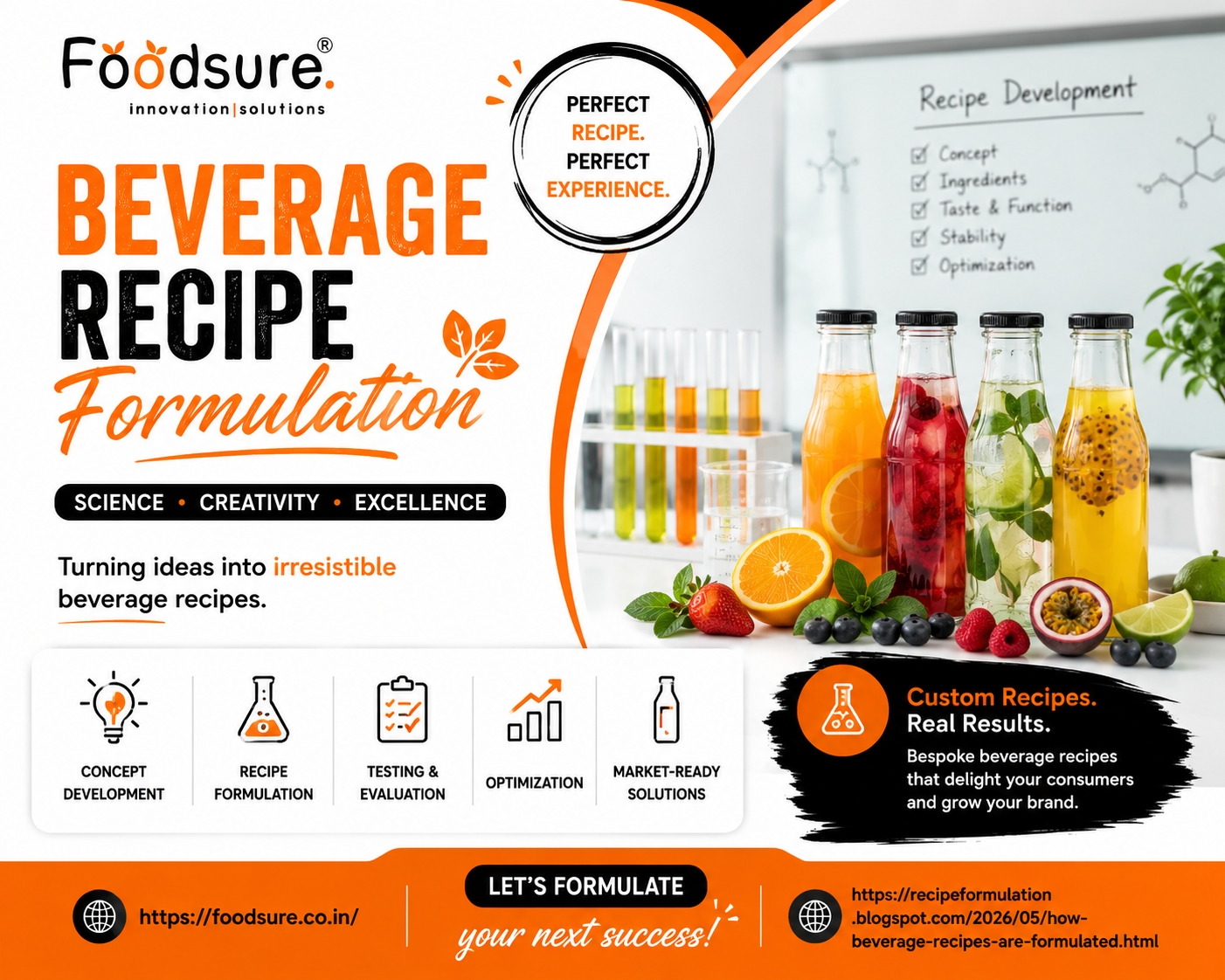
What Is Beverage Recipe Formulation?
Beverage recipe formulation is the process of designing a drink's recipe so that it can be produced consistently at scale. A home recipe says "a squeeze of lemon and sugar to taste". A commercial formula specifies every ingredient to the gram or percentage, along with the processing steps, temperatures, pH and quality limits.
A well-formulated drink balances several things at once:
Flavour: sweetness, acidity, bitterness and aroma in the right proportion
Mouthfeel: body, thickness, carbonation and finish
Appearance: colour, clarity and visual stability
Stability: no sedimentation, separation or flavour drift over time
Safety: microbiological stability and compliance with FSSAI rules
Cost: ingredients and processing that fit your target price
Because these factors affect one another, changing one often disturbs the rest. That is why formulation is as much about balance as it is about creativity.
Why Home Recipes Fail at Scale
Founders are often surprised when a loved recipe behaves badly in a factory. Common reasons include:
Fresh ingredients vary from batch to batch, but a commercial product cannot.
Heating, mixing and filling change flavour and colour.
Light, oxygen and temperature slowly degrade the drink after packing.
Ingredients that dissolve easily in a small jug may clump or settle in a large tank.
A cost that looks fine for ten bottles becomes unworkable for ten thousand.
A proper formulation process finds these issues in the lab, not after launch.
The Key Steps of Beverage Recipe Formulation
1. Define the Product Brief
Everything starts with clear answers. Who is the target consumer? Is the drink carbonated or still, ready-to-drink or powder, regular or functional? What price, pack size and claims do you want? A vague brief leads to endless trials, so invest time here.
2. Benchmark the Market
Taste the leading products in your category, read their labels and compare their pricing. Benchmarking gives formulators a clear target to match or beat, rather than a guess.
3. Choose the Right Ingredients
Each ingredient has a role:
Sweeteners provide sweetness and body
Acidulants add tartness and help preserve the drink
Flavours and extracts build the taste identity
Colours deliver the visual appeal
Stabilisers and emulsifiers keep the drink uniform
Preservatives and antioxidants protect shelf life
Functional ingredients such as vitamins, electrolytes, fibres or botanical extracts
Ingredients interact. Acidity changes how sweetness is perceived, some colours fade in light, and certain vitamins degrade with heat. Choosing with these interactions in mind is a core skill.
4. Run Coded Trials
Formulators prepare several versions, changing one variable at a time, such as sweetener level, acid type or flavour dose. Each trial is coded and recorded, so you know exactly what changed and why one version tasted better. This record is what makes the final recipe repeatable.
5. Sensory Evaluation
Your own taste is not market validation. Panels and consumer feedback measure sweetness, aftertaste, mouthfeel and overall appeal. This stage often exposes problems a founder would never notice alone, such as a lingering bitterness or a flavour that fades quickly.
6. Stability and Shelf-Life Testing
A drink must taste the same on day one and near its expiry date. Stability testing tracks pH, colour, taste, clarity and microbial safety across time and storage conditions, in the same pack you plan to sell.
7. Scale-Up and Pilot Runs
Moving from a lab sample to production volume changes how ingredients dissolve, heat and mix. A pilot batch confirms the formula performs on real equipment before you commit to full manufacturing.
8. Documentation and Costing
The final stage records the formula, process instructions, quality parameters, nutrition data and cost per bottle. Good documentation means any qualified team can reproduce your drink exactly.

Where Beverage Research and Development Fits In
Formulation answers the question "how do we make this drink?" Research and development asks a bigger one: "what should we make, and how can we make it better?" Structured beverage research and development covers consumer trend analysis, ingredient innovation, process improvement, shelf-life studies and sensory testing.
Brands that invest in R&D build a pipeline of new flavours, formats and line extensions instead of depending on a single product. It also helps you respond faster when consumer tastes shift, for example towards lower sugar or cleaner labels.
Why Professional Beverage Formulation Protects Your Brand
Even a great concept can fail if the formula is weak. Professional beverage formulation helps ensure your drink is:
Safe: stable and compliant with food regulations
Consistent: every bottle matches the approved sample
Scalable: it moves smoothly from lab to factory
Cost-effective: the right ingredients at the right levels
Differentiated: it stands out on taste and positioning
Skipping this stage may seem cheaper at first, but reformulating after launch usually costs far more in wasted stock, delays and lost customer trust.
From Formula to Finished Product: Beverage Development
Formulation is one part of a larger journey. Complete beverage development takes you from the first idea through formulation, testing, pilot production and commercial launch. It also includes packaging selection, labelling, regulatory checks and production planning.
When these stages are handled together, nothing gets lost between the recipe and the factory floor. A formula built with the production line in mind is far less likely to need changes later.
When Should You Hire a Beverage Consultant?
Many founders try to manage everything themselves and lose months to trial and error. A beverage consultant brings the technical and regulatory knowledge that is hard to build quickly. You should consider one if:
You have an idea but no technical background
Your homemade recipe works only in small batches
Your drink separates, fades or changes taste over time
You are unsure about permitted ingredients, claims or labelling
You want to scale up but have not found a production partner
You have already wasted money on failed trials
A consultant can turn a rough concept into a clear brief, guide ingredient selection, manage trials, plan pilot runs and estimate costs realistically before you invest in production.
How to Choose the Right Consultant
Hands-on laboratory capability, so you can taste and review trials
Experience across categories such as carbonated, functional, dairy and powder drinks
Clear documentation, including formula, process steps, quality parameters and costing
Transparent timelines, not open-ended promises
Written IP terms, so the recipe belongs to you
Scale-up support, from pilot batches to production
Be cautious with advisers who hand over only a recipe sheet and leave you to figure out testing and manufacturing alone.
Common Beverage Recipe Formulation Mistakes
Scaling a home recipe directly. Small-batch methods rarely translate to factory conditions.
Ignoring water quality. Mineral content and pH affect flavour, carbonation and stability.
Skipping stability tests. A drink that changes colour or taste in two months damages trust.
Overusing flavour to fix problems. It usually hides an issue rather than solving it.
Ignoring cost until late. A great formula that is too expensive to produce is not a business.
Making unapproved claims. Health and energy claims must follow FSSAI rules.
Copying competitors. Differentiation sells better than imitation.
Rushing the launch. Skipping sensory trials and pilot batches leads to expensive reformulation.
Benefits of Getting Beverage Recipe Formulation Right
Faster time to market. Experienced formulators know what works, so you avoid months of guesswork.
Lower development costs. Fewer failed batches and less wasted raw material protect your budget.
Consistent quality. Every bottle tastes the same, which builds repeat purchases.
Regulatory confidence. Your formula, label and claims stay aligned with food safety rules.
Easier scaling. A recipe designed for production moves smoothly to larger batches.
Stronger brand value. A drink people genuinely enjoy is the best marketing you can have.
Beverage Trends Worth Watching in 2026
Low and zero sugar: better-tasting alternatives using modern sweetener blends
Functional drinks: hydration, gut health, focus and immunity benefits
Clean labels: shorter, more recognisable ingredient lists
Premium non-alcoholic drinks: craft sodas and adult-friendly mocktails
Convenient formats: powders, effervescent tablets and ready-to-mix sachets
Brands that build these trends into the recipe from day one tend to stand out faster than those that add them later.
Final Thoughts
A great drink is never an accident. Behind every successful bottle is careful beverage recipe formulation: a clear brief, balanced ingredients, recorded trials, honest sensory testing, proven shelf life and a process designed for scale. Add strong research and development, complete beverage development support and the guidance of an experienced beverage consultant, and your idea has a far better chance of becoming a brand people trust.
If you are planning to launch a new drink, invest in expert formulation early. It is the one decision that shapes quality, cost, compliance and customer loyalty for everything that follows.