Cabinet knobs are compact hardware fittings attached to cabinet doors and drawers. They provide a gripping point for opening and closing furniture while adding a decorative element to the room.
Most knobs attach through a single screw, making them relatively easy to install and replace. This differs from cabinet pulls, which generally use two mounting points and offer a longer grip.
You can find cabinet knobs on kitchen cupboards, bathroom vanities, wardrobes, bedside tables, office furniture and storage units. Their designs range from simple round shapes to geometric forms, ornamental metalwork and colourful ceramic patterns.
The best option depends on the furniture style and how frequently you use it. For example, a minimalist metal knob can complement a contemporary kitchen, while an antique brass design may suit traditional wooden cabinetry.
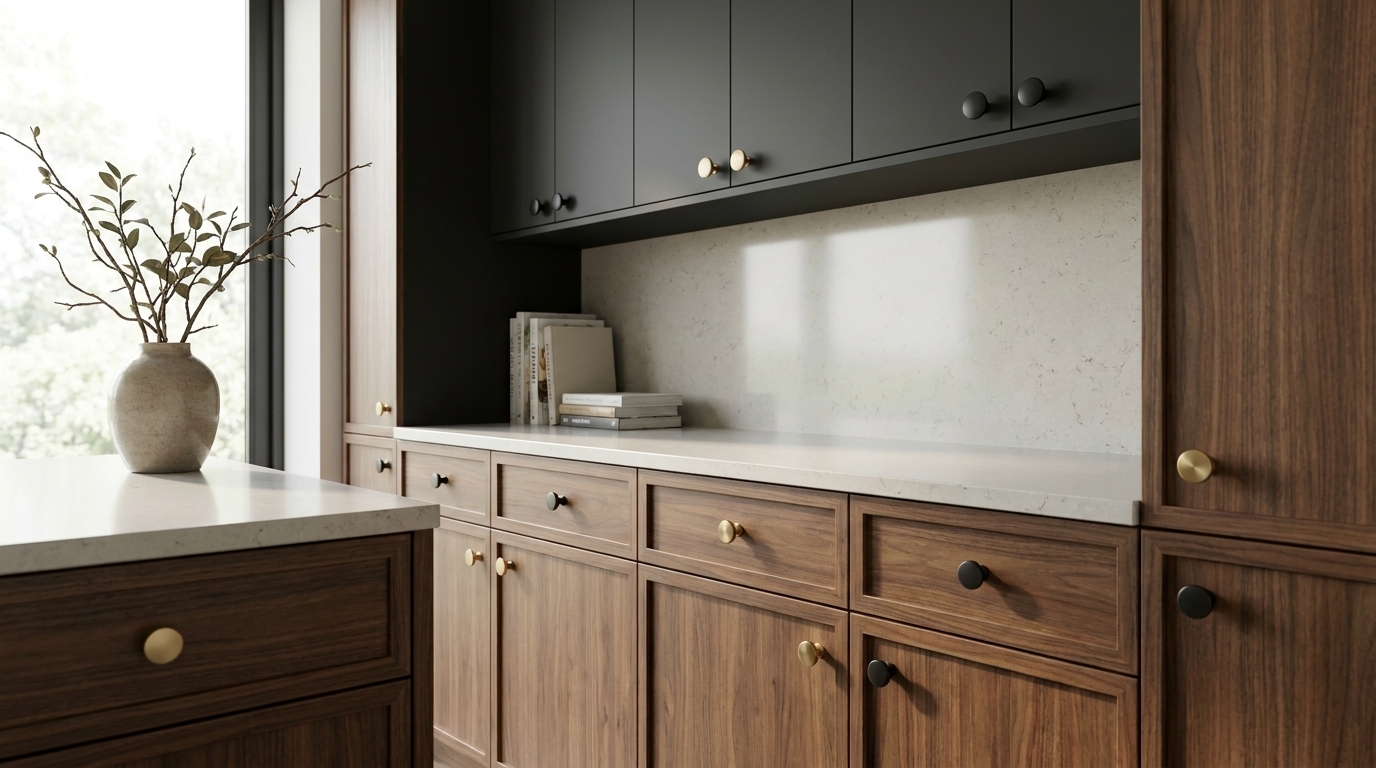
Popular Cabinet Knob Styles and Finishes
Modern and Minimalist Designs
Modern knobs feature clean lines, simple shapes and understated finishes. Round, square and cylindrical designs work particularly well with flat-panel cabinets and contemporary furniture.
Matte black creates contrast against white or light-coloured cabinets, while brushed nickel offers a softer metallic appearance. These styles also suit bathroom storage, office cabinets and built-in wardrobes.
Traditional and Vintage Knobs
Traditional designs often feature rounded profiles, decorative details and warm metallic finishes. Antique brass, bronze and polished brass can complement classic wooden cabinets, shaker doors and vintage furniture.
Decorative backplates can add extra detail and help cover existing marks around mounting holes. This makes them useful when updating older furniture without replacing the cabinet doors.
Ceramic and Glass Knobs
Ceramic knobs introduce colour and pattern into an interior. Floral motifs, painted designs and textured surfaces can suit cottage-style kitchens, vintage dressers and decorative furniture.
Glass knobs create a different effect by reflecting light and adding a subtle decorative accent. However, check their construction and mounting quality before using them on frequently handled cabinets.
Black, Brass and Nickel Finishes
Matte black provides a bold, contemporary appearance. Brass adds warmth, while brushed nickel and chrome offer cooler metallic tones.
You do not need to match every fitting in a room exactly. Black knobs can work with brass lighting, for example, if the combination complements the cabinetry, worktops and other decorative details.
Cabinet Knob Materials and Durability
Solid Brass
Solid brass knobs offer a substantial feel and suit both classic and modern interiors. Depending on the finish, they can appear polished, brushed or intentionally aged.
Uncoated brass may develop a natural patina over time. Lacquered or plated versions behave differently, so check the manufacturer's specifications before choosing a product.
Stainless Steel
Stainless steel provides a clean appearance and suits contemporary kitchens and bathrooms. Its resistance to corrosion depends on the steel grade, finish and conditions in which you use it.
These knobs pair well with stainless steel appliances, neutral cabinets and modern furniture.
Zinc Alloy
Zinc alloy allows manufacturers to produce knobs in many shapes and decorative finishes. It is commonly used in furniture hardware because it supports varied designs.
Quality can differ between products, so check the finish, weight, mounting connection and included screws instead of judging a knob by appearance alone.
Ceramic, Glass and Wood
Ceramic and glass knobs provide decorative options, while wooden knobs introduce a natural texture. Each material has different maintenance needs and resistance to impact.
For busy kitchen drawers, prioritise secure mounting and a material that can tolerate frequent handling.
How to Choose the Right Cabinet Knobs
Match the Hardware to Your Cabinets
Start with the cabinet design and colour. Flat-panel doors often suit minimalist hardware, while shaker cabinets can accommodate both contemporary and traditional styles.
For example, brushed brass can add warmth to dark green cabinets, while matte black creates contrast against white cabinetry. Natural wood cabinets often work well with black, bronze or brushed metal finishes.
Select a Comfortable Size
The size of a knob affects both its appearance and ease of use. Small knobs can suit compact doors, while larger designs may look more balanced on wide cabinet fronts.
Consider the distance between the knob and nearby walls, appliances or adjacent doors. Test a sample before purchasing a complete set to make sure it feels comfortable and provides enough clearance for your fingers.
Consider the Room and Daily Use
Kitchen knobs need to withstand frequent handling, cooking residue and regular cleaning. Bathroom hardware may face greater moisture exposure, while bedroom furniture often allows more decorative flexibility.
Choose a finish that suits the room's conditions and follow the recommended care instructions.
Coordinate Knobs With Other Hardware
Cabinet knobs can complement drawer pulls, hinges, taps and light fittings. A consistent design theme helps create a polished appearance, although every fitting does not need to share the same finish.
For example, you might use knobs on cabinet doors and longer pulls on drawers while keeping their finishes coordinated.
How to Install or Replace Cabinet Knobs
Step 1: Remove the Existing Knob
Open the cabinet door and locate the screw on the inside. Use a suitable screwdriver to loosen it while supporting the knob from the front.
Keep the old screw until you confirm that the replacement hardware includes a suitable alternative.
Step 2: Measure the Position
When replacing existing hardware, check whether the new knob fits the current hole. Make sure the base covers any marks left by the old fitting.
For a new installation, measure the position carefully and mark the centre point with a pencil. A template or drilling jig can help you keep multiple knobs aligned.
Step 3: Drill if Necessary
Choose a drill bit that suits the screw and cabinet material. Follow the hardware manufacturer's guidance and protect the cabinet surface from splintering.
Measure twice before drilling because an incorrectly positioned hole can affect the appearance and alignment of the door.
Step 4: Attach and Test the Knob
Insert the screw through the cabinet door and align it with the threaded opening in the knob. Tighten it until the knob sits securely, but avoid excessive force that could damage the surface.
Open and close the door several times to check stability and clearance.
Cleaning and Maintaining Cabinet Knobs
Regular cleaning helps maintain the finish and appearance of cabinet hardware. Wipe knobs with a soft cloth and a cleaning product suitable for the material.
Avoid abrasive pads and harsh chemicals, especially on plated, lacquered or decorative finishes. Uncoated brass may require different care from polished chrome or stainless steel.
Check the screws occasionally, particularly on frequently used drawers and kitchen cabinets. Tighten loose hardware carefully and replace cracked ceramic or glass knobs when necessary.
Common Mistakes to Avoid
Choosing the wrong proportions: Small knobs may look out of place on large doors, while oversized designs can overwhelm compact cabinets.
Prioritising appearance over comfort: Hardware should feel secure and comfortable during everyday use.
Mixing finishes without a plan: Different metals can complement one another, but consider the room's colours and existing fittings before combining them.
Using unsuitable screws: Incorrect screw length can prevent a knob from sitting securely or cause damage to the cabinet.
Ignoring material quality: A decorative finish does not guarantee durable construction. Check the material and mounting design before purchasing.
Frequently Asked Questions
1. What is the difference between cabinet knobs and pulls?
Knobs usually attach with one screw and offer a compact grip. Pulls generally use two mounting points and provide a longer handle. You can combine both styles in one room.
2. Which cabinet knob finish is best for modern kitchens?
Matte black, brushed brass, chrome and brushed nickel all suit modern kitchens. The best finish depends on your cabinet colour, appliances and preferred design.
3. Can I replace cabinet knobs without drilling?
Yes, if the existing holes match the new hardware and the knobs cover any visible marks. Check the screw dimensions before buying replacements.
4. Are brass cabinet knobs durable?
Quality brass knobs can provide long-lasting performance. Their appearance over time depends on the finish, protective coating, cleaning routine and surrounding conditions.
5. How do I choose the correct knob size?
Consider the cabinet dimensions, the overall design and how comfortably you can grip the knob. Testing a sample helps you assess its proportions before installing a complete set.
6. Can I mix cabinet knobs and drawer pulls?
Yes. Many kitchens use knobs on cabinet doors and pulls on drawers. Coordinating their shapes or finishes creates a balanced appearance.
7. How often should I clean cabinet knobs?
Clean them whenever they become visibly dirty and include them in your regular household cleaning routine. Kitchen hardware may need more frequent attention because of grease and food residue.