
Introduction
A single material mistake in your Custom Soft Jaws can ruin a high-value machined component in seconds. Surface marring, part deformation, and inconsistent clamping are common issues that stem from selecting the wrong jaw material. In precision machining, every detail matters, and the material used for custom soft jaws plays a critical role in protecting workpieces while maintaining secure holding power.
Whether you're machining delicate aerospace components, polished consumer products, or heavy industrial parts, choosing the right jaw material can dramatically reduce scrap rates, improve surface finish quality, and increase overall productivity. This guide will help you match soft jaw materials to your specific machining needs.
Understanding the Role of Soft Jaws in Precision Milling
Why Material Choice Matters
Soft jaws are customized clamping solutions designed to conform precisely to a workpiece's shape. Their primary function is to securely hold parts without causing damage during machining operations.
The material selected for soft jaws directly affects:
Grip strength and clamping reliability
Surface finish quality
Dimensional accuracy
Tool life and operational efficiency
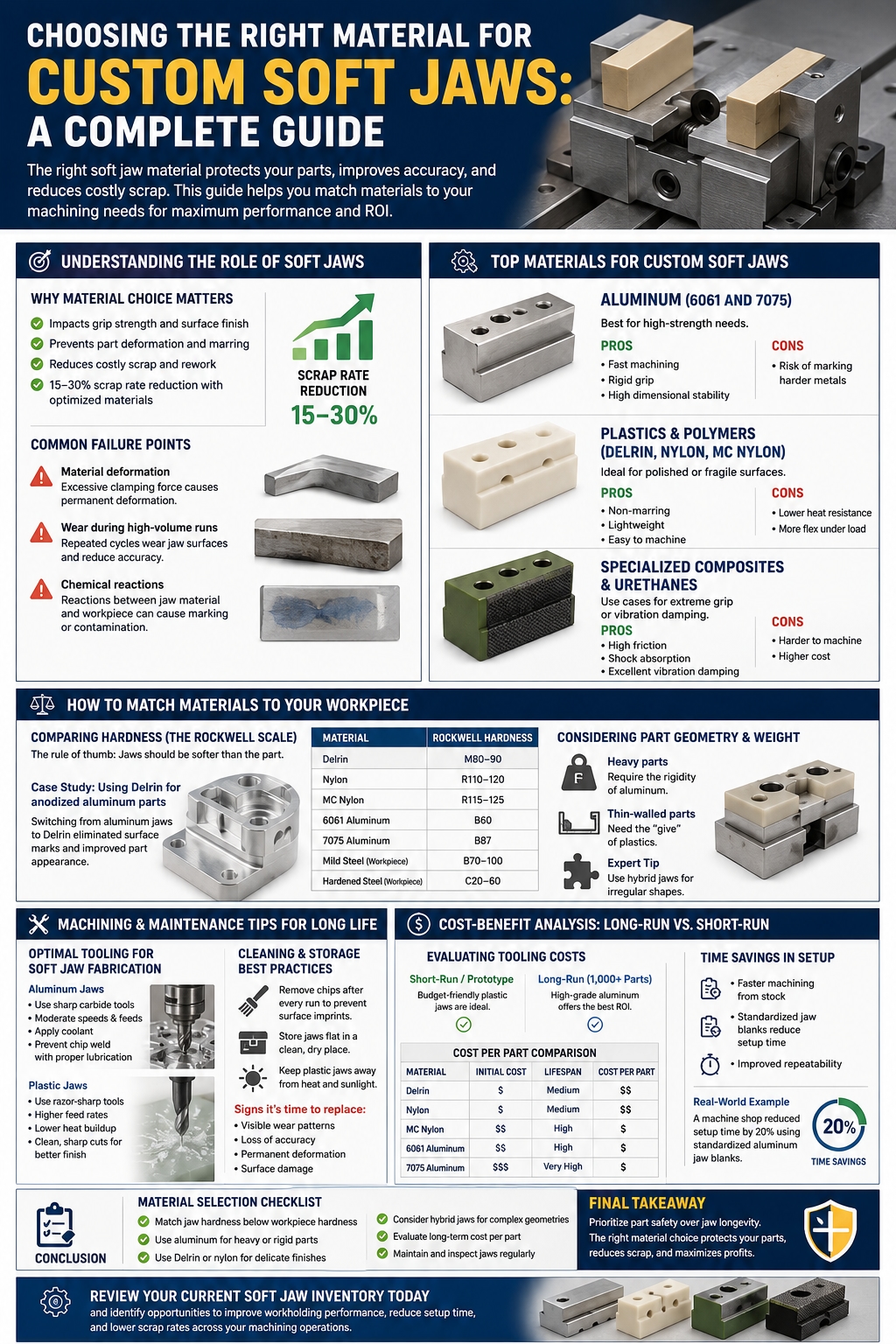
When optimized correctly, custom soft jaws can significantly reduce scrap rates. Many machine shops report scrap reductions of 15–30% after implementing application-specific jaw materials and designs.
Common Failure Points
Even well-designed soft jaws can fail when material selection is overlooked.
Common issues include:
Material Deformation
Excessive clamping force can permanently deform softer jaw materials.
Loss of accuracy leads to inconsistent part positioning.
Wear During High-Volume Production
Repeated cycles gradually wear jaw surfaces.
Worn jaws reduce gripping accuracy and increase setup adjustments.
Material Compatibility Issues
Certain materials can react with workpiece surfaces.
Surface contamination or marking may occur, especially on finished components.
Top Materials for Custom Soft Jaws
Aluminum (6061 and 7075)
Aluminum remains one of the most widely used materials for custom soft jaws due to its excellent machinability and rigidity.
Best Applications
Heavy workpieces
High-precision milling operations
Medium to high-volume production runs
Pros
Fast and easy to machine
Excellent rigidity
High dimensional stability
Suitable for complex jaw geometries
Cons
Can leave marks on softer finished surfaces
Lower cushioning compared to polymer materials
6061 Aluminum
Economical and versatile
Ideal for general-purpose applications
7075 Aluminum
Higher strength and wear resistance
Better suited for demanding production environments
Plastics and Polymers (Delrin, Nylon, MC Nylon)
Plastic soft jaws are preferred when workpiece protection is the top priority.
Best Applications
Polished surfaces
Anodized components
Thin-walled parts
Cosmetic products
Pros
Non-marring surface contact
Lightweight
Easy to machine
Excellent protection for delicate finishes
Cons
Lower heat resistance
More flexible under load
Shorter lifespan in high-volume applications
Delrin (Acetal)
Excellent dimensional stability
Low friction
Popular for precision workholding
Nylon
Tough and impact resistant
Good wear characteristics
MC Nylon
Enhanced strength and durability compared to standard nylon
Suitable for heavier loads
Specialized Composites and Urethanes
For unique applications requiring enhanced grip or vibration control, specialized materials offer significant advantages.
Best Applications
Irregularly shaped parts
High-vibration machining
Fragile workpieces
Pros
Exceptional grip
High friction coefficient
Excellent shock absorption
Reduced vibration transfer
Cons
More difficult to machine accurately
Higher material costs
Tighter manufacturing controls required
Urethane-faced jaws are particularly effective when preventing slippage without increasing clamping pressure.
How to Match Materials to Your Workpiece
Comparing Hardness (The Rockwell Scale)
A fundamental rule in workholding is:
The jaw material should generally be softer than the workpiece material.
This helps prevent surface damage while maintaining sufficient holding force.
Case Study: Delrin for Anodized Aluminum Parts
A manufacturer producing anodized aluminum enclosures experienced frequent cosmetic defects from aluminum soft jaws. After switching to Delrin jaws, visible surface marks were virtually eliminated while maintaining machining accuracy.
Hardness Comparison Table
Material | Typical Hardness |
Delrin | Rockwell M80–90 |
Nylon | Rockwell R110–120 |
MC Nylon | Rockwell R115–125 |
6061 Aluminum | Rockwell B60 |
7075 Aluminum | Rockwell B87 |
Mild Steel Workpieces | Rockwell B70–100 |
Hardened Steel Workpieces | Rockwell C20–60 |
Use these values as general references when selecting jaw materials.
Considering Part Geometry and Weight
The shape and weight of your workpiece should strongly influence material selection.
Heavy Parts
Choose aluminum soft jaws because they provide:
Superior rigidity
Better resistance to deformation
Improved repeatability
Thin-Walled Parts
Choose plastic or polymer jaws because they:
Distribute clamping forces more evenly
Reduce distortion risks
Protect fragile surfaces
Expert Tip: Hybrid Jaws
Many advanced machine shops use hybrid designs that combine aluminum bases with polymer contact inserts.
Benefits include:
Structural rigidity
Surface protection
Reduced jaw replacement costs
Machining and Maintenance Tips for Long Life
Optimal Tooling for Soft Jaw Fabrication
Proper machining practices improve jaw accuracy and lifespan.
For Aluminum Soft Jaws
Use sharp carbide end mills
Apply appropriate coolant
Avoid excessive spindle loads
Preventing Chip Weld
Chip welding can occur during aluminum machining when material sticks to cutting tools.
Prevention methods:
Increase chip evacuation
Use polished tooling
Apply suitable cutting fluids
For Plastic Soft Jaws
Use razor-sharp cutting tools
Reduce heat buildup
Increase feed rates while maintaining moderate spindle speeds
This helps produce cleaner finishes and tighter tolerances.
Cleaning and Storage Best Practices
Proper maintenance extends jaw life considerably.
Cleaning
Remove chips after every production run
Inspect contact surfaces regularly
Avoid embedded debris that may imprint onto finished parts
Storage
Store jaws flat when possible
Avoid excessive heat exposure
Keep polymer jaws away from direct sunlight
Replacement Indicators
Replace jaws when you notice:
Visible wear patterns
Loss of gripping accuracy
Permanent deformation
Surface damage that transfers to parts
Cost-Benefit Analysis: Long-Run vs. Short-Run Production
Evaluating Tooling Costs
Material selection should align with production volume.
Plastic Jaws
Ideal for:
Prototype runs
Short production batches
Delicate components
Advantages:
Lower initial cost
Fast replacement
Excellent part protection
Aluminum Jaws
Ideal for:
1,000+ part production runs
High-repeatability operations
Automated machining cells
Advantages:
Longer service life
Better rigidity
Lower replacement frequency
Cost Per Part Comparison
Material | Initial Cost | Lifespan | Cost Per Part |
Delrin | Low | Medium | Moderate |
Nylon | Low | Medium | Moderate |
MC Nylon | Medium | High | Low |
6061 Aluminum | Medium | High | Low |
7075 Aluminum | High | Very High | Very Low |
For high-volume production, higher-grade aluminum often delivers the best long-term return on investment.
Time Savings in Setup
Soft jaw preparation directly impacts machine utilization.
Benefits of standardized jaw blanks include:
Faster programming
Reduced setup complexity
Improved repeatability
Real-World Example
A precision machining shop implemented standardized aluminum jaw blanks across multiple CNC machines and reduced average setup time by approximately 20%, allowing operators to complete more jobs per shift.
Conclusion
Selecting the right material for Custom Soft Jaws is about balancing grip strength, surface protection, durability, and cost. The ideal solution depends on your workpiece material, geometry, production volume, and quality requirements.
Material Selection Checklist
✔ Match jaw hardness below workpiece hardness
✔ Use aluminum for heavy or rigid parts
✔ Use Delrin or nylon for delicate finishes
✔ Consider hybrid jaws for complex geometries
✔ Evaluate long-term cost per part, not just initial expense
✔ Maintain and inspect jaws regularly
Final Takeaway
When choosing soft jaw materials, always prioritize part protection over jaw longevity. Replacing a worn jaw is far less expensive than scrapping a finished component. By carefully matching jaw materials to your application, you can improve machining consistency, reduce defects, and maximize production efficiency.
Review your current soft jaw inventory today and identify opportunities to improve workholding performance, reduce setup time, and lower scrap rates across your machining operations.