
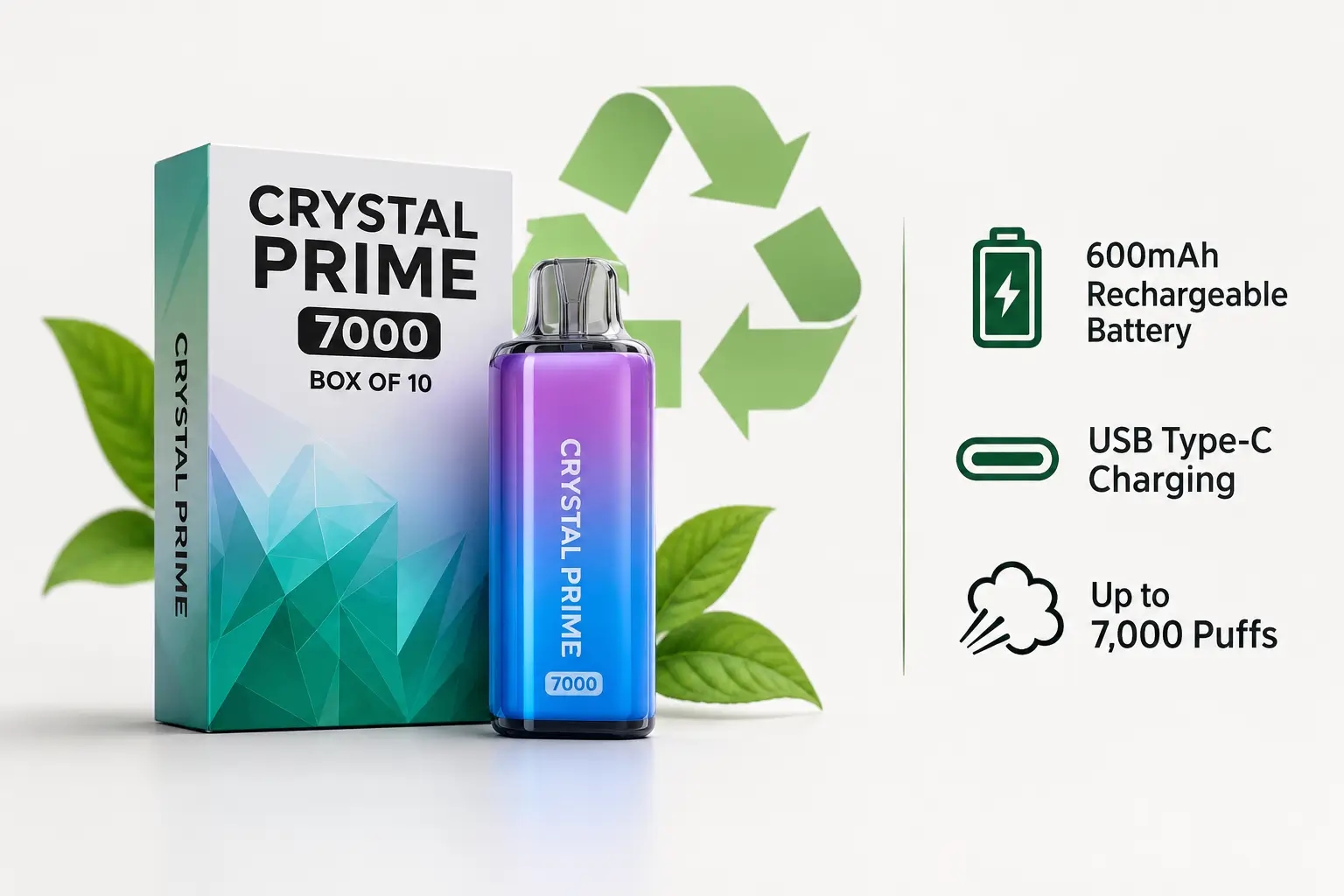
Vaping has evolved with rechargeable devices designed to last longer and reduce disposable waste. The Crystal Prime 7000 Box of 10, featuring a 600mAh rechargeable battery, USB Type-C charging, and an advertised capacity of up to 7,000 puffs, reflects this shift.
The Problem With Non-Rechargeable Vapes
Non-rechargeable vapes were designed to be used once and thrown away. That convenience came with an environmental cost.
How Many End Up as Waste?
Government data shows the scale of the problem:
Nearly 5 million non-rechargeable vapes were thrown away or littered every week in the UK.
That is roughly 8 devices per second.
More than 250 million units were discarded each year.
Most were never recycled. They ended up in general waste bins, on streets, or in rivers and parks.
What Happens to Lithium Batteries in General Waste?
Each non-rechargeable vape contains a lithium-ion battery. Research from University College London found these batteries often retain much of their capacity even after the e-liquid runs out.
Yet because the device is sealed and designed for one-time use, the battery is discarded with the rest of the unit.
In 2022, more than 40 tonnes of lithium from non-rechargeable vapes was thrown away in the UK.
That material could have supported thousands of electric vehicle batteries or renewable energy storage systems.
Batteries in landfill can leak cobalt, copper, and other metals into soil and water.
These substances do not break down easily. They can persist in the environment and pose a risk to wildlife and ecosystems.
The Fire Risk in Bin Lorries and Recycling Centres
Lithium-ion batteries create another problem: fire risk.
When a vape is crushed in a bin lorry, the battery can ignite.
Fires have occurred at waste processing sites across the UK.
This puts workers and infrastructure at risk.
The issue is not limited to vapes. Any lithium-ion battery discarded in general waste carries this risk.
But because non-rechargeable vapes were so widespread and rarely recycled, they became a major contributor to the problem.
How Rechargeable Vapes Reduce Waste
Rechargeable vapes solve the core problem. They extend the useful life of the battery and reduce the number of units that need to be manufactured and discarded.
One Device, Multiple Charges
A rechargeable vape can be topped up dozens of times before it needs replacing.
One device can replace several non-rechargeable bars over its lifetime.
Users recharge rather than discard when the battery runs low.
The Crystal Prime 7000 uses a 600mAh rechargeable battery with USB Type-C charging.
This means the device can be used until the prefilled e-liquid is genuinely finished.
Less Frequent Replacement, Less Waste
Because a rechargeable device lasts longer, fewer units need to be produced, shipped, and thrown away.
Manufacturing, packaging, and transport all decrease.
For a regular vaper, switching to rechargeable cuts monthly waste significantly.
Over a year, this adds up to a meaningful reduction.
The Role of USB Type-C Charging
USB Type-C has become a standard charging port across many devices, including vapes.
Users can often use the same cable for multiple devices.
This reduces the need for separate chargers and cables.
The Crystal Prime 7000 uses a Type-C port, so one cable can serve both the vape and other compatible devices.
The Crystal Prime 7000 in Context
The Crystal Prime 7000 is not the only rechargeable vape on the market. But it shows how the category has evolved to balance convenience with longer device life.
600mAh Battery and 7,000-Puff Capacity
The device is advertised for up to 7,000 puffs per unit, supported by a 600mAh rechargeable battery.
The battery is designed to last through the full prefilled e-liquid supply.
Users are less likely to discard the device before the e-liquid is used up.
The 7,000-puff figure is a manufacturer-stated maximum, not a guaranteed count.
Actual usage varies with draw length and frequency. But the rechargeable battery ensures the device can be used until the e-liquid is genuinely finished.
What the 1.2Ω Mesh Coil Adds
The Crystal Prime 7000 uses a 1.2-ohm mesh coil.
Mesh coils distribute heat more evenly than traditional wire coils.
This reduces the chance of a burnt taste.
Flavour stays consistent as the e-liquid level drops.
A more efficient coil also means less e-liquid is wasted through uneven vaporisation.
Why the Box of 10 Format Supports Bulk Efficiency
Buying a Crystal Prime 7000 Box of 10 reduces individual packaging.
One display box holds all ten units.
Less cardboard and plastic per device.
Fewer delivery trips for retailers.
Less transport-related emissions per unit sold.
Recycling: What Users and Retailers Can Do
Even rechargeable vapes eventually reach the end of their life. Responsible disposal matters.
WEEE Recycling Points
Vapes are classified as Waste Electrical and Electronic Equipment (WEEE).
They contain a battery and electronic components.
They should not go in general household waste.
Users can take finished devices to a household recycling centre or designated WEEE collection point.
Many local authorities across the UK accept small electrical items, including vapes, at these facilities.
Retailer Take-Back Schemes
UK retailers that sell vapes must accept returned devices, pods, coils, and batteries from customers for recycling.
This makes responsible disposal easier for users.
No need to find a recycling centre yourself.
Return the device to the retailer it was purchased from.
For the Crystal Prime 7000, once the device is finished, it can be returned to the retailer rather than thrown away.
What Not to Do: General Waste and Littering
The worst outcome for a finished vape is to throw it in a general waste bin or drop it as litter.
This sends the lithium battery, plastic casing, and remaining e-liquid into landfill or the environment.
It causes pollution and fire risks.
Littered vapes also harm wildlife — animals can ingest plastic or be affected by leaking nicotine and heavy metals.
The Bigger Picture: A Shift in the Vape Market
The move from non-rechargeable to rechargeable vapes reflects a broader shift in how the industry thinks about waste and sustainability.
From Non-Rechargeable to Rechargeable
The UK's non-rechargeable vape ban, which came into effect in 2025, accelerated this shift.
Non-rechargeable disposables are no longer available.
Rechargeable devices like the Crystal Prime 7000 have become the practical alternative.
This reduces the volume of non-rechargeable devices entering the waste stream.
What This Means for Buyers and Retailers
For buyers, rechargeable vapes offer lower cost per puff and less frequent replacement.
For retailers, stocking rechargeable devices aligns with consumer demand and market direction.
The Crystal Prime 7000 Box of 10 offers a bulk format that supports both value and reduced packaging waste.
A Note on E-Liquid and Refillability
The Crystal Prime 7000 itself is a sealed, non-refillable device. But the Crystal Prime brand also offers bottled nicotine salt e-liquids for compatible refillable hardware.
Crystal Prime 7000 Nic Salts come in 10ml bottles.
Available in 10mg or 20mg nicotine strength.
50/50 VG/PG ratio.
12 flavour variants.
For vapers who want to reduce waste further, pairing a rechargeable device with bottled e-liquid can extend the usable life of the hardware even more.
Only the e-liquid needs replacing, not the entire device.
Read our full Crystal Prime 7000 Nic Salts guide for flavours, strengths, and specifications.
Conclusion: Small Changes, Bigger Impact
The environmental case for rechargeable vapes rests on a simple idea: use a device for longer, throw away less.
The Crystal Prime 7000 Box of 10 illustrates this in practice.
Rechargeable 600mAh battery.
USB Type-C charging.
7,000-puff advertised capacity.
Reduced individual packaging.
Less frequent replacement.
No single device solves the waste problem on its own. But choosing a rechargeable vape, using it until the e-liquid is genuinely finished, and disposing of it at a WEEE recycling point are small steps that add up.
For vapers and retailers alike, the shift from non-rechargeable to rechargeable is not just a trend. It is about reducing waste, conserving resources, and building a more sustainable approach to vaping.