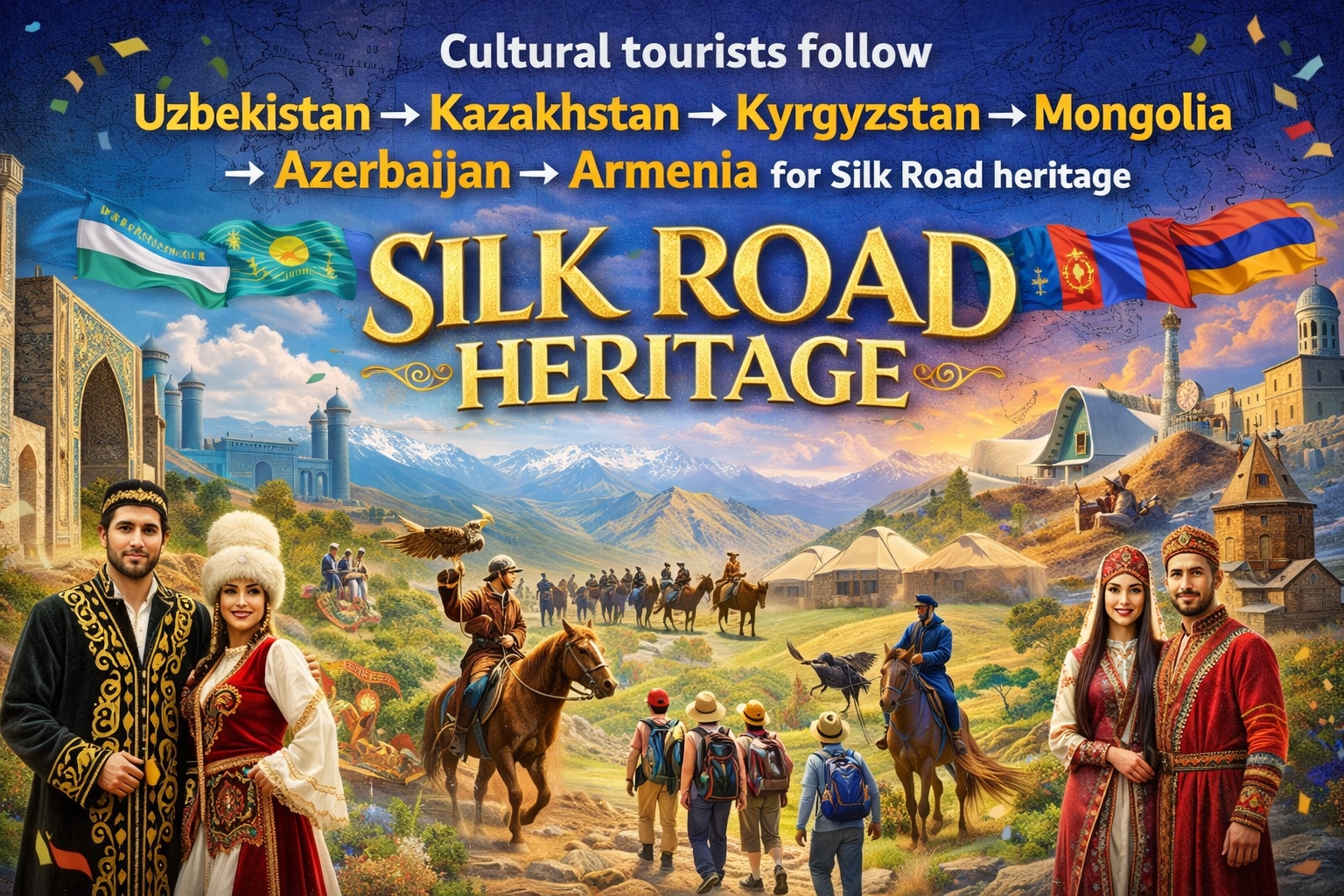
The Silk Road is not just a historical map; it is a living, breathing tapestry of human connection that has shaped civilizations for millennia. For the modern cultural tourist, following the path from the deserts of Uzbekistan to the volcanic highlands of Armenia is the ultimate pilgrimage of discovery.
If you are planning to traverse this legendary corridor, you aren't just taking a vacation—you are stepping into a time machine. This guide explores the must-visit heritage sites and answers the most pressing questions for travelers embarking on this transcontinental odyssey.
1. Why is the Silk Road Still Relevant for Cultural Tourists Today?
The Silk Road remains the world’s most significant symbol of cultural exchange. Today’s travelers aren't looking for silk and spices, but for the "intangible heritage"—the stories, crafts, and hospitality that have survived centuries of empire-building. Walking through a caravanserai in Azerbaijan or watching a nomad in Mongolia reminds us that the world has always been interconnected.
2. Uzbekistan: Where Do I Find the Best Tiled Architecture?
Uzbekistan is the "Heart of the Silk Road." If you’re looking for those iconic blue-tiled domes, Samarkand’s Registan Square is your first stop. However, don't overlook Bukhara, an "open-air museum" with over 2,000 years of history, or the desert fortress city of Khiva, which feels like a movie set frozen in time.
3. Kazakhstan: What Heritage Exists Beyond the Modern Cities?
While Almaty is vibrant and modern, the soul of Kazakhstan's Silk Road history lies in the south. The Mausoleum of Khoja Ahmed Yasawi in Turkestan is a UNESCO World Heritage site and a masterpiece of Timurid architecture. To visit this spiritual landmark, ensure you have secured your Kazakhstan e-Visa well in advance to avoid border delays.
4. Kyrgyzstan: How Can I Experience Authentic Nomadic Culture?
Kyrgyzstan offers a different kind of "heritage"—one of landscapes and traditions. The Tash Rabat Caravanserai, a 15th-century stone structure tucked into a mountain valley near the Chinese border, once sheltered weary merchants. Today, hikers and culture seekers can easily obtain a Kyrgyzstan e-Visa to experience life in a traditional yurt camp.
5. Mongolia: Is the Silk Road Linked to the Mongol Empire?
Absolutely. The Silk Road reached its peak of safety and efficiency under the Pax Mongolica. Visiting Kharkhorin (Karakorum), the ancient capital, allows you to see the Erdene Zuu Monastery. Travelers planning to explore the vast Gobi desert should utilize the official e-Visa Mongolia portal for a seamless entry process.
6. Azerbaijan: What is the "Land of Fire" Heritage?
As you cross the Caspian Sea, the architecture changes. In Baku, the Old City (Icherisheher) is essential. For a deeper look at silk-weaving traditions in Sheki, applying for an Azerbaijan e-Visa is the most efficient way to begin your journey through the Land of Fire.
7. Armenia: Where are the World’s Oldest Christian Heritage Sites?
Armenia was a vital western terminus. Its heritage is etched in stone at the Geghard Monastery, partially carved into a mountain. Before you marvel at the Haghpat and Sanahin complexes, remember to apply for your Visa for Armenia to ensure your pilgrimage through the Caucasus is stress-free.
8. What is the Best Time of Year to Visit These Countries?
The "Golden Windows" are Spring (April to June) and Autumn (September to October).
Spring brings wildflowers to the Kyrgyz mountains and pleasant temperatures to the Uzbek deserts.
Autumn is harvest season, filling the bazaars with world-class melons, grapes, and pomegranates.
9. Is it Safe to Travel Across These Borders Solo?
Generally, yes. Central Asia and the Caucasus are known for their extraordinary hospitality. However, logistics can be tricky. Travelers should respect local customs, particularly in more conservative rural areas, and always keep digital copies of their travel documents.
10. How Do I Manage Multiple Visas for a Silk Road Trip?
This is the biggest hurdle for most travelers. While many countries have simplified their processes, coordinating five or six different government portals can be daunting. Using Reliable Travel Visa Services is highly recommended to manage all your applications under one expert umbrella.
Why Choose Us for Your Silk Road Visas?
Navigating the paperwork for a six-country journey shouldn't be the hardest part of your adventure. We specialize in making the "administrative" side of the Silk Road as smooth as the silk itself.
Reliable Travel Visa Services: Our global approach has assisted numerous travelers in obtaining their Visas across the entire Silk Road corridor.
Round-the-Clock Assistance: Reach out to us 24/7. Our Experienced Visa Consultants understand the urgency of travel and will respond to your queries within 72 hours.
Efficient Visa Application Process: Don't waste hours on clunky government websites. Apply for your Silk Road e-Visa in minutes with our simplified, user-friendly forms.
Conclusion: Your Heritage Adventure Awaits
The Silk Road is more than a route; it’s an invitation to see the world through a wider lens. By visiting these six incredible nations, you aren't just a tourist—you are part of a thousand-year-old tradition of exploration. Secure your visas today and step into history.