Cameroon is one of Africa's most culturally diverse countries. Often called "Africa in Miniature," it brings together different languages, traditions, music styles, and communities. From the busy streets of Douala to the traditional kingdoms of the western highlands, visitors can discover a rich cultural heritage that continues to shape everyday life.
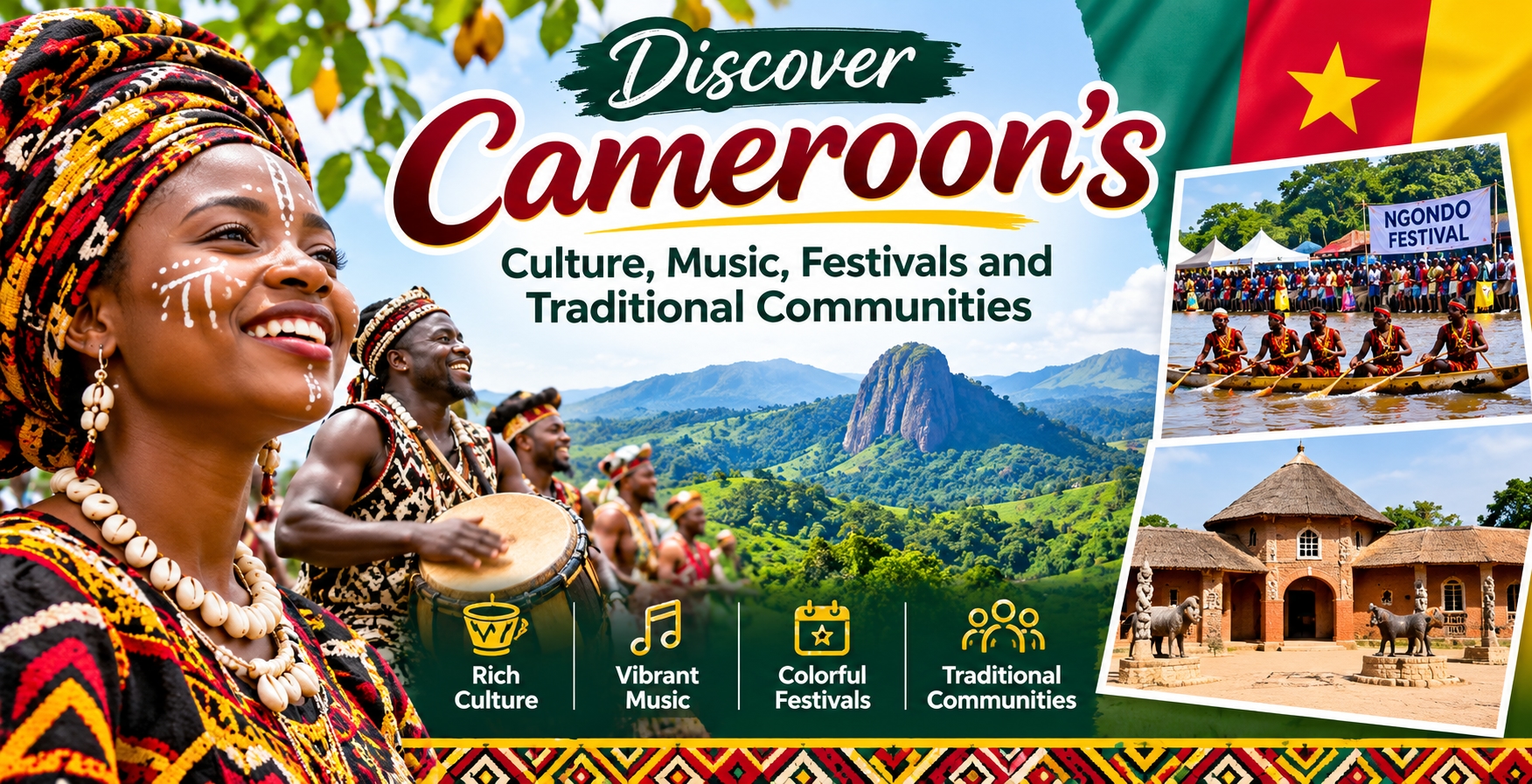
Cameroon’s Rich Cultural Heritage
Cameroon is home to more than 200 ethnic groups, each contributing to the country's cultural identity. Traditional clothing, storytelling, ceremonies, and local customs are important parts of community life.
French and English are the official languages, but many indigenous languages are also spoken. This linguistic diversity reflects Cameroon's history and cultural traditions.
Family gatherings, weddings, and community celebrations often include traditional music, colourful clothing, and shared meals.
Traditional Music and Dance in Cameroon
Music plays an important role in Cameroonian culture. It brings people together during celebrations, religious ceremonies, and social gatherings.
Makossa Music: Originating in the Douala area, Makossa combines lively rhythms with African musical influences. Internationally recognised musician Manu Dibango helped introduce Cameroonian music to global audiences.
Bikutsi Music: Popular among Beti communities in central Cameroon, Bikutsi is recognised for its energetic percussion and dance rhythms.
Traditional Drumming: Drums, rattles, and other instruments accompany cultural performances and help preserve musical traditions.
Visitors can experience these styles at cultural festivals, live performances, and community celebrations.
Famous Cultural Festivals in Cameroon
Cameroon's traditional festivals offer opportunities to understand local history, beliefs, and community values.
Ngondo Festival in Douala
The Ngondo Festival celebrates the cultural and spiritual traditions of the Sawa communities.
Held annually, its activities include canoe races, traditional performances, community gatherings, and sacred ceremonies along the Wouri River. UNESCO recognised Ngondo as Intangible Cultural Heritage in 2024.
Nguon Festival in Foumban
The Nguon Festival is an important celebration of Bamoun heritage in western Cameroon.
Held every two years, it features traditional ceremonies, cultural performances, and rituals examining the relationship between the monarch and the community. It became UNESCO-listed heritage in 2023.
Traditional Communities of Cameroon
Different regions offer visitors opportunities to learn about Cameroon's living traditions.
Bamileke Communities: Found mainly in the western highlands, Bamileke communities are known for traditional chiefdoms, elaborate ceremonies, woodcarving, and artistic craftsmanship.
Fulani Communities: Present across northern Cameroon, Fulani communities maintain cultural traditions connected with cattle herding, clothing, music, and family life.
Baka Communities: Living in forest regions of southern and eastern Cameroon, Baka communities preserve extensive knowledge of forest environments, traditional music, and oral storytelling.
Visitors should approach these communities respectfully and arrange cultural experiences with knowledgeable local guides.
Traditional Food and Local Experiences
Cameroonian cuisine is another way to explore the country's heritage.
Popular dishes include Ndolé, a vegetable-based dish often prepared with peanuts, meat, or seafood, and Eru, a leafy vegetable dish commonly enjoyed in southwestern Cameroon.
Traditional markets also offer handmade baskets, colourful fabrics, wooden crafts, and locally produced goods.
Trying regional food and visiting craft markets can make cultural experiences more memorable.
Planning Your Cultural Trip to Cameroon
Before travelling, visitors should research local customs, transportation, festival schedules, and entry conditions.
International travellers can review the Cameroon eVisa requirements to understand passport, documentation, and application requirements before arranging their journey.
Using an online application assistance service can help travellers organise documents and understand the submission process.
Final Thoughts
Cameroon's cultural richness goes far beyond its famous landscapes. Its traditional communities, lively music, historic festivals, and regional cuisine offer visitors meaningful opportunities to discover the country's heritage.
Whether exploring Douala's music scene or learning about traditional celebrations in Foumban, travellers can experience the diversity that makes Cameroon a fascinating cultural destination.