Egypt is famous for its pyramids, ancient temples and the River Nile, but the country offers much more than historical monuments. Egyptian culture is a fascinating mixture of ancient traditions, religious celebrations, traditional food and family customs. From colourful festivals in Cairo to traditional celebrations along the Nile, visitors can discover a country where history remains part of everyday life.
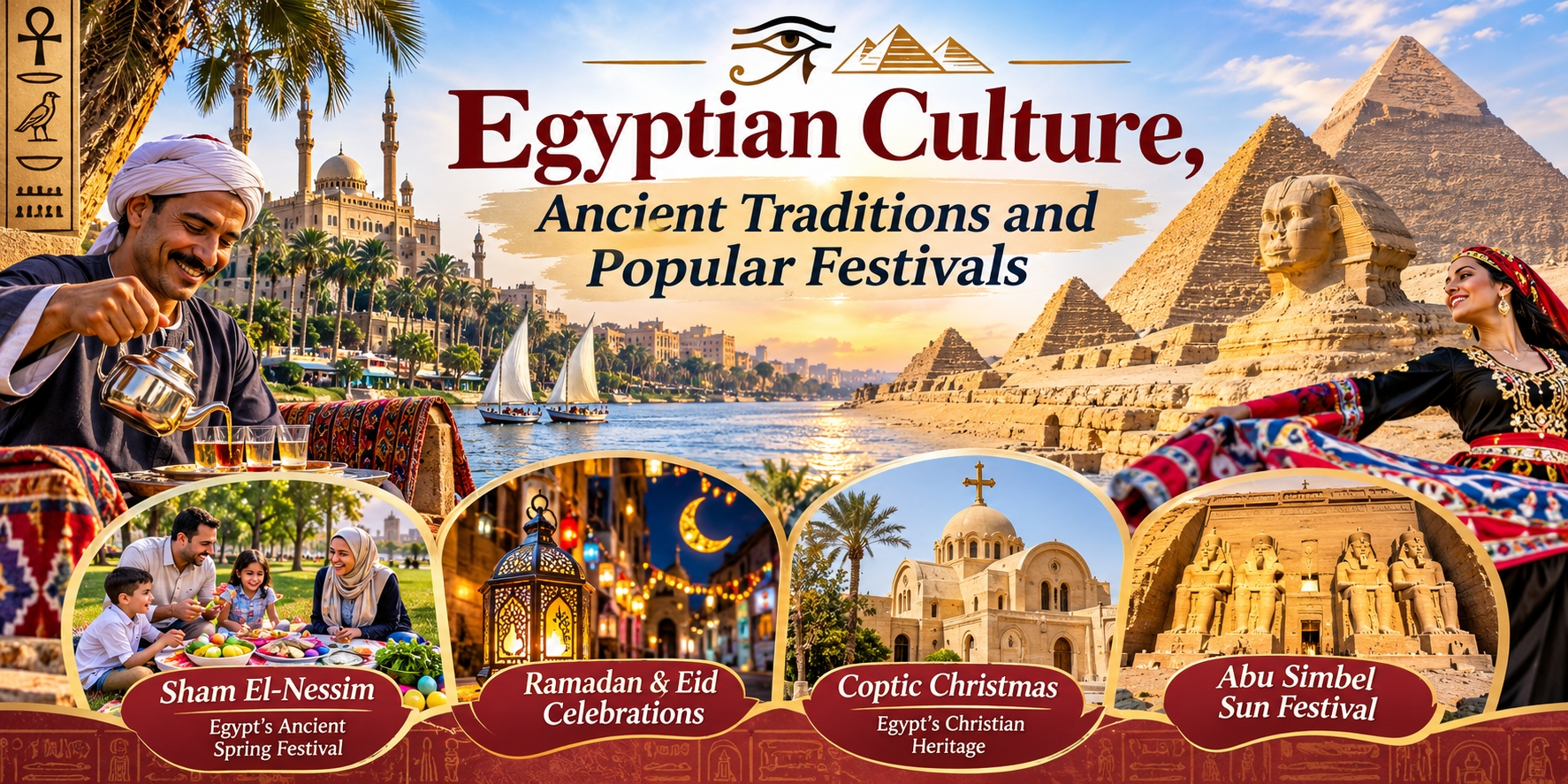
Understanding Egyptian culture and traditions helps travellers experience the country beyond its popular tourist attractions.
Ancient Egyptian Traditions That Still Exist Today
Ancient Egyptian civilisation developed thousands of years ago, leaving behind traditions that continue to influence modern life.
The ancient Egyptians celebrated seasonal changes, agricultural harvests and religious occasions. Music, dancing, storytelling and family gatherings were important parts of their communities.
Today, traditional crafts, local festivals and cultural performances preserve elements of this heritage. Visitors exploring Luxor, Aswan and Cairo can discover how Egypt connects its ancient history with modern customs.
Egyptian Hospitality and Everyday Customs
Hospitality is an important part of Egyptian society. Guests are often welcomed with tea, coffee or traditional refreshments.
Family relationships also play a central role in daily life. Relatives frequently gather for meals, religious celebrations and special occasions.
Traditional Egyptian dishes include koshari, ful medames, molokhia and freshly baked baladi bread. Sharing these meals offers visitors an opportunity to experience local culture.
Sham El-Nessim: Egypt's Ancient Spring Festival
Sham El-Nessim is one of Egypt's oldest celebrations, with origins reaching back to ancient times.
Celebrated on the Monday following Coptic Easter, this spring festival brings families together in public parks, gardens and areas along the Nile.
Traditional foods include coloured boiled eggs, green onions and salted fish called feseekh. The festival celebrates spring, renewal and spending time outdoors.
Unlike many religious holidays, Sham El-Nessim is enjoyed by Egyptians from different religious backgrounds.
Ramadan and Eid Celebrations in Egypt
Ramadan is one of the most important periods in Egypt's cultural calendar.
During this holy month, many Muslim families fast from dawn until sunset. Streets and homes are decorated with colourful lanterns known as fanous, creating a festive atmosphere.
Families gather for iftar, the evening meal that breaks the fast. Restaurants and neighbourhoods become lively gathering places after sunset.
Travellers planning to experience these celebrations should check entry requirements before departure. Eligible visitors can review the Egypt eVisa application process to understand the online application steps and prepare their travel documents.
Eid Al-Fitr and Eid Al-Adha
Eid Al-Fitr marks the end of Ramadan and is celebrated with family visits, prayers and traditional sweets.
One popular treat is kahk, a biscuit often covered with powdered sugar.
Eid Al-Adha is another major Islamic festival. Families gather for special meals, charitable activities and religious observances.
These occasions highlight the importance of generosity and community in Egyptian society.
Coptic Christmas and Religious Traditions
Egypt has a long Christian heritage, particularly within the Coptic Orthodox Church.
Coptic Christmas is celebrated on January 7, when families attend church services and enjoy festive meals.
Historic churches in Old Cairo offer visitors opportunities to learn about Egyptian Christian architecture and religious history.
Abu Simbel Sun Festival
The Abu Simbel Sun Festival is one of Egypt's most remarkable cultural attractions.
On February 22 and October 22, sunlight enters the Great Temple of Ramesses II and illuminates three statues inside its sanctuary.
Visitors gather to witness this extraordinary example of ancient Egyptian architectural and astronomical knowledge.
The occasion is also associated with cultural performances and local celebrations.
Tips for Experiencing Egyptian Festivals
Travellers should respect local customs, dress modestly when visiting religious sites and ask permission before photographing people.
Festival dates may change, particularly those following the Islamic lunar calendar. Checking local schedules before travelling helps visitors plan their activities.
Conclusion
Egyptian culture combines ancient heritage, religious traditions and modern celebrations. Whether enjoying Sham El-Nessim, experiencing Ramadan evenings or visiting Abu Simbel, travellers can discover traditions that make Egypt a memorable destination.