For families choosing an electric SUV in Nepal, safety deserves the same attention as range, charging time, ground clearance, and price.
A vehicle can offer impressive technology and a large battery, but those features do not automatically make it a safer family car.
So, what should buyers look for when comparing the Best EV for Nepal? Independent crash-test results are one of the strongest starting points, but they are only part of the picture.
Airbags, autonomous emergency braking, lane-support systems, child-seat compatibility, blind-spot monitoring, and the actual safety specification of the Nepal-market vehicle also matter.
This guide explains how EV safety ratings work, looks at independently tested electric SUVs, and highlights the safety considerations Nepalese families should check before buying.
What Does an EV Safety Rating Actually Measure?
EV safety rating is not just about the number of airbags and driver assistance systems a car has. Other organizations like Euro NCAP evaluate a number of vehicle safety areas independently.
Euro NCAP tests crash protection: front, side and rear, children and vulnerable road users. It also reviews technologies for preventing or mitigating crashes.
The key areas to consider for families are:
Adult occupant protection: The vehicle's performance in various crash situations when it comes to protecting adults.
Child occupant protection: Protection offered to younger passengers and compatibility with child restraints.
Vulnerable road user protection: Vehicle behaviour around pedestrians and cyclists.
Safety support: Self-driven emergency brake systems, lane support and speed support.
Post-crash safety: Safety features that can assist occupants and emergency responders after a crash.
This is important because a 5-star car is not necessarily the same in all of these aspects. Buyers should not just pay attention to the headline rating and pay more attention to the individual test results.
How to Find the Best EV for Nepal When Safety Is the Priority
Nepal's roads present a different ownership environment from the European markets where many independent crash tests are conducted. Urban traffic, narrow roads, steep gradients, mixed road users and changing road surfaces can all influence which safety features are useful.
A practical family-oriented safety checklist should include:
Safety factor | Why families should care |
Independent crash rating | Provides evidence from controlled safety testing |
Airbag coverage | Helps protect occupants in a collision |
AEB | Can help reduce or avoid certain frontal crashes |
Lane-support systems | Helps address unintended lane departure |
Blind-spot monitoring | Useful when changing lanes or merging |
Rear cross-traffic alert | Helpful when reversing from tight spaces |
Child-seat compatibility | Important for families travelling with children |
ESC | Helps maintain vehicle stability in critical situations |
Camera/parking assistance | Useful in crowded urban areas |
Local specification | Ensures the tested features are actually available |
The key point is simple: the Best EV for Nepal should not be selected on a safety rating alone.
OMODA E5 and Its Independent Safety Credentials
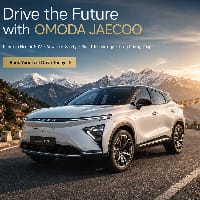
The case studies on the OOMODA site explain how testing can be advantageous when assessing electric SUVs from an independent source.
In 2022 the OMODA 5 got a five-star Euro NCAP rating for safety. Eventually Euro NCAP announced that the battery electric version of the OMODA 5 was also rated 5 stars in the same assessment.
For families who are contemplating an OMODA model, they can visit the latest specification from OMODA & JAECOO Nepal and check the safety gears that are available in the Nepal market OMODA model.
Other Electric SUVs that have performed
EV manufacturer Omoda is not alone in having its vehicles independently tested for safety. It's important for buyers to understand that one star rating shouldn't be the entire decision-making process when comparing a few cars.
BYD ATTO 3
The BYD ATTO 3 was rated 5 star by Euro NCAP in their latest assessment.
But the purchaser will need to be mindful of the assessment year and the version of the cars. For the 2025 model year, Euro NCAP then evaluated the ATTO 3's assisted-driving capabilities, highlighting how a car's safety information can change as it is modified and upgraded.
Kia EV3
Another important lesson to be learned from the Kia EV3 is that equipment can impact a safety outcome.
The results from the Euro NCAP tests for the 2025 proved to be the same, with the standard EV3 receiving four stars across the board and the EV3 fitted with Kia's optional safety pack receiving five stars.
For a family buyer this makes it clear that it's essential to know if safety equipment is standard, optional or not available in the vehicle being considered in Nepal.
JAECOO 7 PHEV
It is not a pure battery EV but can be considered another useful example from the wider family of PHEVs, the plug-in hybrid electric car, the JAECOO 7. In 2025 it was awarded with five stars by Euro NCAP. The evaluation focused on occupant protection, child protection, vulnerable road users and driver-assistance systems.
During its testing, Euro NCAP also discovered a side-curtain-airbag deployment problem and it noted that JAECOO had investigated the problem and enhanced the quality of the production line. It is a good reminder that responsible vehicle comparison should not rely upon just the number of stars, but upon the detailed test results.
What Safety Features are Most Important to Nepalese Families?
While a long list of equipment might seem impressive, families should prioritize aspects that would come in handy in real driving scenarios.
Autonomous Emergency Braking
AEB can detect some obstacles or vehicles, and apply brakes automatically when a collision is deemed imminent. Vulnerable road users can also be identified by some systems.
Blind-Spot Monitoring
Blind-spot monitoring technology may alert the driver if another vehicle leaves the blind zone, which is hard to view through the side mirrors.
Lane Support
Lane-departure warning systems and lane-keeping or lane-departure prevention systems can alert to or assist with unintended lane change.
Rear Cross-Traffic Assistance
This is particularly helpful when backing out of a parking space when a car or pedestrian is driving by in the opposite direction.
Child Protection
It is important that the family find out if the vehicle can accommodate the correct restraints for the child and if rear seat safety equipment is clearly mentioned. Child occupant protection is an integral aspect of the separate assessments Euro NCAP makes of child protection.
So, what is the best EV for Nepal for a family?
No single solution is correct for all households. Best EV for Nepal is based on family road, driving habits, number of passengers and the size of the vehicle.
But a sensible shortlist of safety-first cars starts with those that have credible independent crash-test evidence, then narrows down to the features included in the Nepal-specification.
A family with frequent trips involving children, for instance, might be looking for child-seat compatibility, rear-seat protection and high occupant scores. A frequent driver on the busy streets of Kathmandu may appreciate AEB, blind-spot monitoring, parking cameras and rear cross-traffic assistance more.
For an out-of-town buyer, factors to consider include tyres, braking, ground clearance, predictable control, as well as electronic safety features.
The Best EV for Nepal doesn't always mean the longest range or the most features, in other words. The car that has proven to be safe in tests and that has the right safety features for the family.
Final Checklist Before Buying a Family EV
Before signing a purchase agreement, ask the dealer for:
The latest independent crash-test rating for the exact model or closely related tested variant.
The assessment year and applicable vehicle version.
The number and location of airbags.
A list of standard ADAS features.
Confirmation of which safety systems are available on the Nepal-market specification.
Child-seat and rear-seat safety information.
Details of ESC, AEB and lane-support systems.
Warranty and service information for safety-related electronic systems.
A demonstration of cameras, sensors and driver-assistance functions during a test drive.
Safety ratings are useful because they provide a level of substantiation instead of just the claims being made in advertising. However, they need to be considered within a broader decision.
The best way for a family looking for the Best EV for Nepal is to take a realistic assessment of road conditions, driving practices and their own needs, as well as the actual Nepal-specification and independent crash-test results. That provides a much better sense for consumers if an electric SUV is right for their average family.