When travelers think of French colonial architecture in Laos, iconic destinations like Luang Prabang or the lively boulevards of Vientiane usually come to mind. However, beyond these primary tourist hubs lies a quieter, equally captivating side of Laotian history. Across the central and southern provinces, smaller towns along the Mekong River hold remarkable remnants of the late 19th and early 20th centuries.
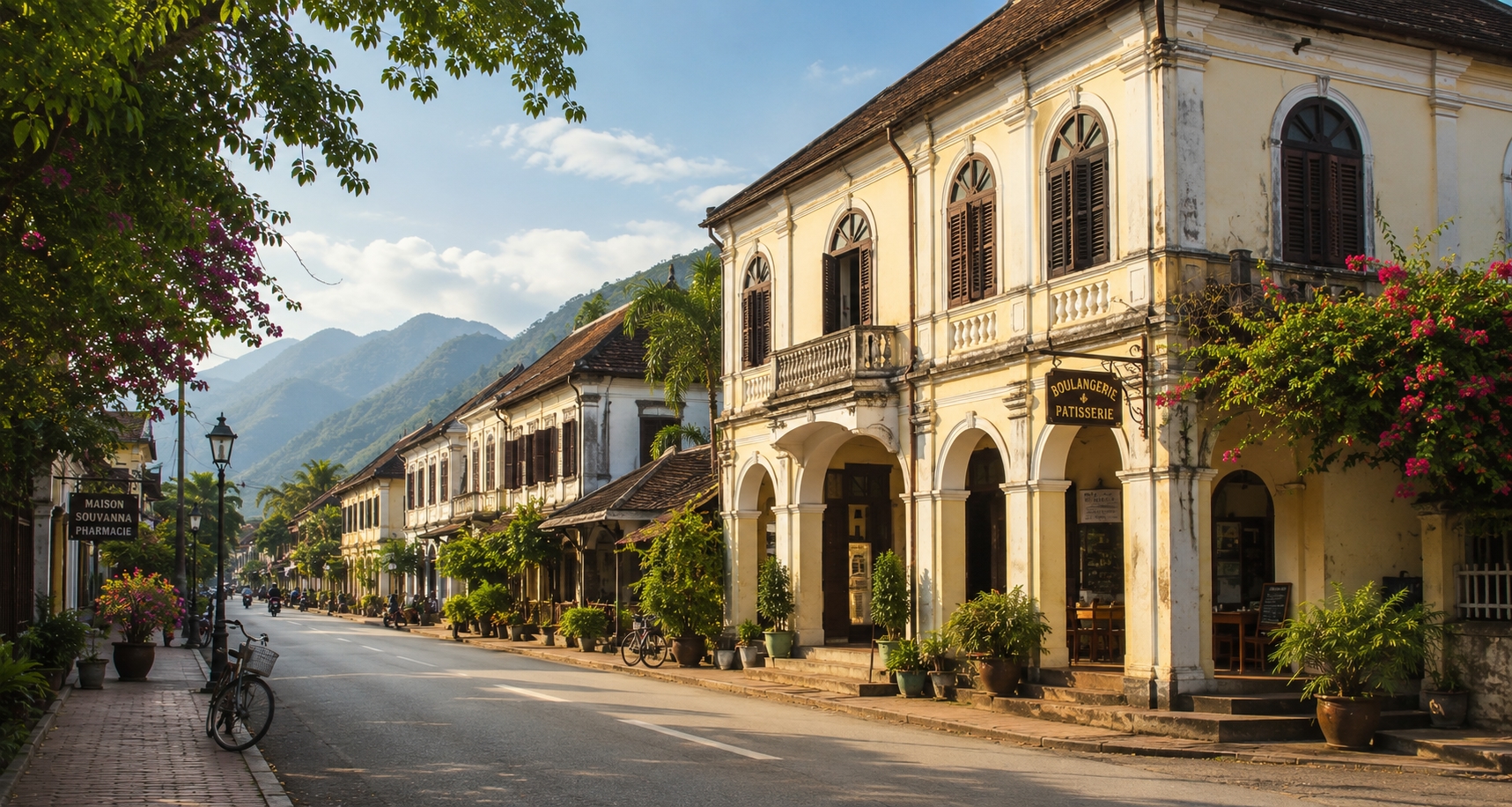
Walking through these sleepier towns feels like stepping back in time. Sun-bleached ochre facades, pastel-hued plasterwork, elegant wooden shutters, and wrought-iron balconies stand alongside traditional wooden Lao stilt houses and ancient Buddhist monasteries. For history lovers, photographers, and slow travelers, exploring French colonial architecture in Laos' smaller towns offers an intimate, authentic glimpse into the nation's layered past.
The Fusion of French and Traditional Lao Architecture
French rule in Laos (1893–1953) left an indelible mark on the urban landscape. However, French architects and local craftsmen did not simply copy European designs. Instead, they adapted Western architectural styles to suit the tropical climate and local building techniques of Indochina.
This unique hybrid style is characterized by specific design features:
High Ceilings and Large Louvered Windows: Designed to maximize air ventilation in hot, humid weather.
Mekong Stucco and Brickwork: Replacing simple timber with sturdy masonry and plaster while keeping open layouts.
Pitched Tile Roofs with Lao Trimmings: Blending European roof designs with traditional local decorative elements.
Shophouses with Verandahs: Two-story buildings featuring ground-floor businesses and upper-floor living quarters with wooden balconies.
In smaller towns, these buildings have aged naturally. Rather than being overly restored, many carry a weathered charm that tells a story of survival through decades of change.
1. Savannakhet: A Walk Through a Forgotten French Quarter
Located along the Mekong River in southern Laos, Savannakhet (officially known as Muang Khanthabouly) contains one of the best-preserved collections of French colonial architecture in the country.
Highlights of Savannakhet's Heritage Center:
St. Teresa Catholic Church: Constructed in the 1920s, this striking white-and-pastel church sits at the heart of the central plaza (Talat Yen). Its square tower and arched windows make it a central landmark.
Old Quarter Shophouses: Surrounding the main square, grid-like streets are lined with two-story yellow shophouses featuring arched doorways, flaking plasterwork, and decorative iron railings.
Savannakhet Provincial Museum: Housed in a former French administrative building, this grand structure showcases classical colonial symmetry and high ceilings.
Sala Savanh: Built in 1926 and formerly used as a consulate, this beautifully restored residence illustrates how grand homes were designed during the era.
Travel Tip: The best way to explore Savannakhet is on foot or by bicycle in the early morning or late afternoon when the golden light accentuates the vintage colors of the facades.
2. Thakhek: Old-World Riverside Charms and Square Life
Famed as the starting point for the popular "Thakhek Loop" motorcycling route, Thakhek town itself is rich in history and architectural beauty. Located in Khammouane Province directly opposite Nakhon Phanom in Thailand, Thakhek was developed by the French as an important trading post on the Mekong.
What to See in Old Town Thakhek:
Central Town Square: Anchored near the Mekong waterfront, the central square features colonnaded buildings where French bakeries and Lao-Vietnamese cafes operate side by side.
Riverfront Promenade: Strolling along the river path reveals grand French villas, many built with broad verandas overlooking the Mekong River.
Historic French Well and Memorial: Located near the riverfront, this spot holds historic memory from the conflict era of the mid-20th century.
Thakhek offers a relaxed atmosphere where you can sip locally grown coffee on a shaded French balcony while watching boats glide across the river.
3. Champasak Town: Royal Elegance and Quiet Colonial Villas
While most visitors head to Champasak Province to visit the UNESCO-listed Wat Phou Khmer temple complex, Champasak Town itself deserves quiet exploration. Once a royal seat, this peaceful stretch of road along the Mekong is lined with historic wooden homes and French colonial residences.
Architectural Highlights in Champasak:
Colonial-Era Royal Residences: Former residences of the Champasak royal family showcase a blending of French neoclassical arches with traditional Lao timber structures.
Boutique Riverside Guesthouses: Many original colonial villas have been thoughtfully restored into boutique heritage hotels, allowing travelers to stay inside a piece of history.
4. Don Khon (4,000 Islands): Industrial Colonial Relics in Nature
In the far south of Laos, where the Mekong expands into the Si Phan Don archipelago (4,000 Islands), you will find a different kind of colonial history on Don Khon.
During the late 19th century, the French encountered a problem: the roaring Khone Phapheng Falls blocked river navigation into Cambodia and China. To overcome this, they built a 7-kilometer narrow-gauge railway across the islands of Don Det and Don Khon.
Historic Relics on Don Khon:
The Old French Railway Line: You can hike or bike along the path of Laos’ first railway line.
Rusty Steam Locomotives: An old French steam engine sits preserved near the historical track as a testament to early 20th-century engineering.
Old French Railway Bridge: A sturdy concrete bridge spanning the river between Don Det and Don Khon, built by French engineers.
Old Hospital and Command Posts: Scattered concrete structures surrounded by lush tropical foliage.
Practical Tips for Architectural Tours in Laos
Hire a Local Guide: A local guide can share the history behind specific buildings and help you locate lesser-known residential streets.
Respect Private Property: Many historic colonial structures remain private homes or active government offices. Always ask for permission before taking photographs up close.
Carry Cash (Lao Kip): Smaller towns may have limited card processing, so keep cash handy for small cafes and local entry fees.
Pack Sun Protection: Exploring town squares on foot requires sun protection, comfortable walking shoes, and hydration.
Planning Your Trip: Lao e-Visa Requirements
Before setting out to explore the historic architecture and scenic river towns of Laos, ensure your entry documents are in order. Travelers entering Laos for tourism can apply for an e-Visa online, making international travel smooth and hassle-free.
To check eligibility, document requirements, and eligible entry ports, visit the official guide on who can apply for Lao e-Visa.
Why Choose Us for Your Laos Visa Needs?
Navigating visa requirements should never slow down your travel adventures. Here is why travelers rely on our dedicated visa services:
Reliable Travel Visa Services: Our global approach has assisted numerous travelers in successfully obtaining their visas.
Round-the-Clock Assistance: Reach out to us 24/7, and our experts will respond promptly to resolve your questions.
Experienced Visa Consultants: Receive expert guidance throughout the application process to ensure your paperwork is accurate and complete.
Efficient Visa Application Process: Apply for your Laos Visa in just minutes using our simplified online form.
Conclusion
Exploring Laos' historic French colonial architecture in smaller towns like Savannakhet, Thakhek, Champasak, and Don Khon offers a journey into the past. These tranquil destinations showcase a harmonious mix of French design and traditional Lao culture. As you wander along quiet Mekong riverbanks and through historic town squares, you will experience an authentic, timeless side of Southeast Asia that stays with you long after your journey ends.