
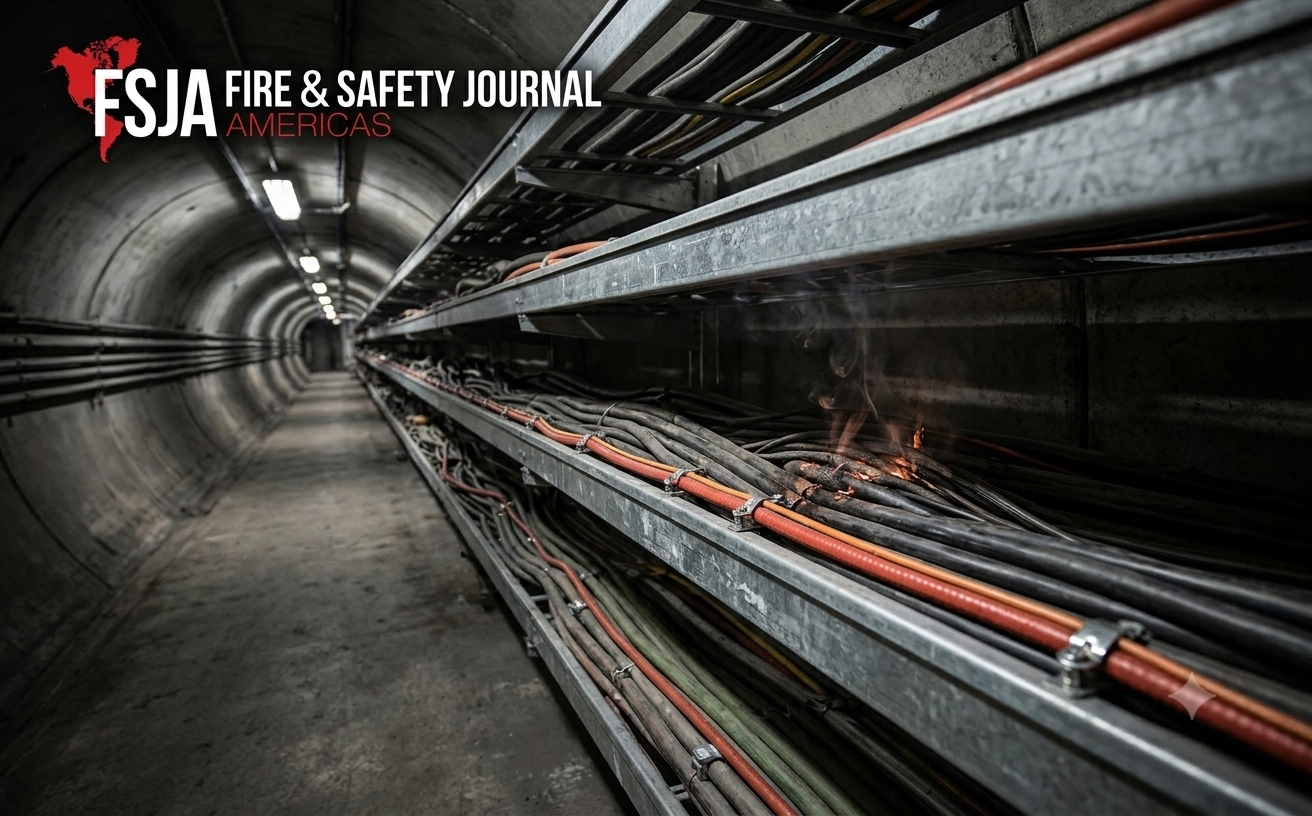
Some of the most damaging fires begin where nobody is looking. Behind panels, above ceilings, inside cable galleries, and deep within tunnels, a small electrical fault can smoulder for minutes or hours before anyone notices. By the time smoke is visible, flames may already be racing along bundled cables, producing toxic fumes and cutting power to critical systems. For power plants, data facilities, transport networks, and manufacturing sites, such an event can mean extended shutdowns and serious safety risks.
The challenge is that these spaces are long, narrow, and often difficult to access, which makes traditional spot detectors a poor match. This is where linear heat detection proves its worth. A continuous sensing cable can follow the exact path of the hazard, watching every metre of a cable tray or tunnel wall without gaps. In this article, we look at why these fires are so dangerous, how the technology is installed, what affects its response, and how to keep it reliable over the long term.
Why Cable and Tunnel Fires Are So Dangerous
Electrical cables are packed with insulation and sheathing materials that can burn, release dense smoke, and carry flames along the full length of a tray. When trays are stacked in multiple tiers, a fire can climb vertically and spread to neighbouring runs in moments. Overloaded circuits, loose connections, damaged insulation, and ageing components are all common ignition sources, and they often develop quietly out of sight.
Tunnels add their own complications. Ventilation can push smoke in unexpected directions, vehicles or equipment may supply additional fuel, and evacuation routes are limited. A fire in a confined space can also damage the very systems that people rely on for safety, such as lighting, communication, and ventilation controls. Early detection is therefore not just a property protection measure but a life safety priority, and it demands a sensor that works along the whole route rather than at isolated points.
How Linear Heat Detection Follows the Hazard
The strength of a heat-sensing cable is that it can be laid directly alongside what it protects. Installed along a cable tray, it sits within a few centimetres of the potential fire source, so a rise in temperature reaches the sensor almost immediately. In a tunnel, it can run along the ceiling or upper wall, where hot gases collect, and provide continuous coverage from portal to portal.
Because linear heat detection does not rely on airflow carrying smoke to a device, it works even when strong ventilation or draughts would disperse particles. The cable is also unaffected by dust, vibration, humidity, and the corrosive atmospheres common in underground structures. This combination of proximity and resilience explains why engineers frequently specify it for the places where other detectors would produce false alarms or miss a developing fire entirely.
Installation Methods Along Trays, Walls, and Ceilings
Installation methods vary with the structure. On cable trays, the sensing cable is commonly fixed in a sinusoidal or straight pattern along the top layer, so that it is in close contact with the hottest zone. For multi-tier trays, a separate run on each level may be needed. In tunnels, it can be mounted on the ceiling using clips or a support wire, or along the wall at a height recommended by the designer.
Spacing, clip intervals, and distance from the heat source all affect performance, so the design should follow the manufacturer's guidance and recognized fire safety standards. Take care to avoid sharp bends, excessive tension, and contact with sharp edges that could damage the jacket. In areas exposed to vehicles or maintenance activity, protective conduits or guards can prevent accidental harm. Neat, well-documented routing also makes later inspection and repair much easier.
Response Speed, Zoning, and Fire Location
How quickly a system responds depends on the cable's temperature rating, its distance from the fire, ventilation conditions, and the speed of fire growth. A lower alarm threshold gives earlier warning but must remain safely above normal operating temperature. In warm environments such as boiler areas or desert tunnels, choosing the right rating is critical to avoid nuisance alarms.
Zoning matters just as much. Dividing a long linear heat detection circuit into logical zones lets the control panel indicate which section is in alarm, helping responders reach the right place quickly. Analogue systems can go further by estimating the location of the heat source along the cable, allowing operators to direct teams or activate suppression only where needed. This level of fire zone identification reduces response time and limits unnecessary disruption to unaffected areas.
Conveyors and Other Linear Hazards
The same principles apply beyond cables and tunnels. Conveyor belts carrying coal, grain, wood chips, or packages can overheat when rollers seize or material builds up, creating friction fires that spread along the belt. A sensing cable mounted alongside the conveyor can monitor the length of the belt and flag hot spots early. Pipe racks, loading bays, and long storage tanks also present linear risk patterns that suit the same approach.
When designing for these hazards, consider mechanical protection, washdown conditions, and the possibility of abrasion or product spillage. The goal is to place the cable where heat is most likely to reach it first, while ensuring that daily operations will not damage it. Close cooperation between the safety team and the operations team usually results in the most practical layout.
Design Challenges in Tunnels and Galleries
Good linear heat detection design in tunnels must account for airflow, ceiling height, and vehicle or equipment movement. Strong longitudinal ventilation can cool the cable and delay response, so designers often model airflow and select more sensitive thresholds or additional runs. Long distances also raise questions about power, signal quality, and how many control units are needed along the route.
In cable galleries and basements, the challenge shifts to congestion. Cables, pipes, and supports may leave little room for installation, so early coordination with other trades is essential. Retrofitting an existing facility can be especially tricky, but flexible cable routing often makes it possible to protect areas that would be impractical for other technologies. A thorough site survey before design saves considerable rework later.
Maintenance Considerations
Even a rugged system needs attention. Inspect the cable and its fixings regularly for damage, loose clips, corrosion at junctions, and signs of rodent or mechanical harm. Confirm that routing remains correct after changes to trays or equipment, since new cables or modifications can shift the relationship between the sensor and the hazard.
Functional testing should follow an approved method and be documented. Many facilities schedule tests during planned outages to avoid disrupting operations. Keeping spare cable lengths, terminations, and interface components on site allows quick repairs after any activation. Proper upkeep ensures that linear heat detection remains ready for the moment it is needed, which is exactly when reliability matters most.
Conclusion
Cable trays and tunnels hide risks that spot detectors were never designed to manage. Continuous sensing along the exact route of the hazard gives early, reliable warning, even in ventilated, dusty, or congested spaces. With careful zoning, correct thresholds, sound installation, and disciplined maintenance, linear heat detection can protect both people and critical infrastructure. Fire & Safety Journal Americas urges operators of cable-intensive facilities to review their detection coverage and seek a professional site-specific assessment.
Frequently Asked Questions
What is linear heat detection in a cable tray application?
It is a continuous sensing cable laid along the tray that responds to rising temperature at any point. When heat reaches the cable's threshold, it signals the control panel so that responders can act before the fire spreads.
Can the cable be installed on existing trays?
Yes. Retrofits are common, as the cable is flexible and can be fixed along existing routes. A site survey helps confirm access, spacing, and protection needs before work begins.
Will airflow in a tunnel affect detection?
Strong ventilation can cool the cable and slow its response, so designers account for airflow when selecting thresholds and routing. Placement near the ceiling, where hot gases collect, helps maintain sensitivity.
How does the system help firefighters?
Zoned or analogue systems indicate which section is in alarm, and some estimate the position of the hot spot. This shortens search time and supports targeted suppression.
Does the cable need replacing after a fire?
That depends on the design. Some cables need the affected section replaced after activation, while others can recover. Check the manufacturer's data and plan for spare parts.