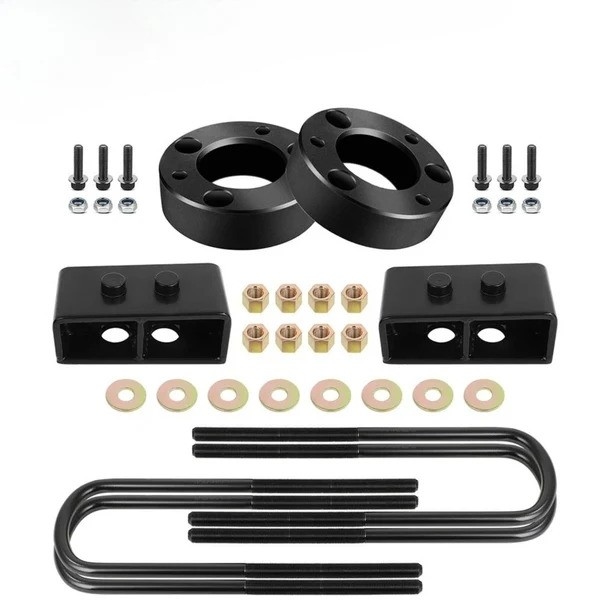
Upgrading the tire size on a Ford F150 can dramatically change its appearance, stance, and off-road capability. For truck owners considering Fitting 35-inch Tires Using An F150 Leveling Kit, the process requires more than simply installing larger rubber. A properly selected leveling kit can create additional clearance at the front of the truck, helping accommodate larger tires while maintaining a balanced appearance. However, tire dimensions, wheel offset, suspension geometry, and driving conditions all need to be considered before making the upgrade.
Understanding What a Leveling Kit Does
A leveling kit is designed to reduce the factory front-to-rear height difference commonly found on pickup trucks. On an F150, the front end often sits slightly lower than the rear, which allows manufacturers to account for payload and towing loads. Installing a leveling kit raises the front suspension closer to the rear height, creating a more aggressive stance and potentially improving tire clearance. The amount of lift varies by kit, so owners should confirm the exact specifications before purchasing.
Choosing the Right 35-Inch Tires
Not every 35-inch tire has identical dimensions. Actual height and width can vary between manufacturers and tire models, even when the size designation appears similar. Some 35-inch tires may be wider or have a more aggressive tread pattern, increasing the amount of clearance required. Load rating is another important consideration for an F150, especially when the truck is frequently used for towing, hauling, or off-road travel. Selecting a tire that matches the truck's intended use can help maintain predictable handling and durability.
Wheel Offset and Backspacing Matter
Wheel specifications play a major role when fitting larger tires. Offset determines how far the wheel sits inward or outward relative to the hub mounting surface, while backspacing describes the distance from the mounting surface to the rear edge of the wheel. An unsuitable combination can cause a 35-inch tire to contact suspension components, the inner fender, or the outer fender during steering. Before purchasing wheels, owners should compare the wheel specifications with the truck's suspension setup and the dimensions of the selected tires.
Checking Fender and Suspension Clearance
Even with a leveling kit installed, clearance should be checked throughout the steering and suspension range. A truck may have sufficient room while sitting stationary but experience rubbing when the steering wheel is turned fully or when the suspension compresses over uneven terrain. The front bumper area, inner fender liners, upper control arms, and other nearby components should be inspected carefully. This step is particularly important for trucks that will be driven on trails where suspension movement is greater than during normal road use.
Considering Upper Control Arms
Depending on the height of the leveling kit and the truck's suspension design, aftermarket upper control arms may be useful or necessary. Raising the front suspension changes suspension geometry, and certain setups can affect alignment range or component angles. Upgraded control arms designed for lifted or leveled applications may provide additional clearance and improved compatibility. Owners should follow the suspension manufacturer's recommendations rather than assuming every leveling kit requires the same supporting components.
Alignment After Installing the Kit
A professional alignment is an important part of the installation process. Changing front suspension height can alter camber, caster, and toe settings. Incorrect alignment may result in uneven tire wear, steering problems, or reduced driving stability. After installing the leveling kit and larger tires, the truck should be aligned according to the manufacturer's recommended specifications. It is also wise to inspect the tires after several hundred miles to ensure wear remains consistent.
Managing Potential Tire Rubbing
Some F150 configurations may experience rubbing with 35-inch tires even after installing a leveling kit. Minor contact can sometimes be addressed by adjusting or trimming plastic fender liners, depending on the truck and wheel combination. However, owners should identify exactly where contact occurs before making modifications. Metal components should not be altered casually because structural or suspension-related modifications can create serious problems. A professional inspection is recommended when clearance is uncertain.
Impact on Ride and Handling
Larger tires can affect the driving characteristics of an F150. A 35-inch tire generally has greater rotating mass than a smaller factory tire, which can influence acceleration, braking, steering response, and fuel economy. The larger diameter can also affect gearing and transmission behavior. Drivers should expect the truck to feel somewhat different after the upgrade. Maintaining correct tire pressure and selecting tires appropriate for the truck's weight can help preserve predictable handling.
Speedometer and Vehicle Calibration
Changing tire diameter can affect speedometer accuracy because the vehicle travels farther with each tire rotation. Depending on the F150 model year and configuration, recalibration may be necessary to ensure the displayed speed and other vehicle calculations remain accurate. Owners should check compatibility with their specific truck before completing the upgrade. Electronic systems may also respond differently when tire diameter changes significantly from the original specification.
Installation and Final Inspection
Whether the work is completed at home or by a professional shop, every component should be inspected after installation. Lug nuts should be tightened according to the wheel manufacturer's specifications, suspension hardware should be checked, and the steering should be tested through its full range. The truck should also be driven carefully at first so that any unusual vibration, rubbing, pulling, or steering behavior can be identified early.
Conclusion
Fitting 35-inch tires to an F150 can create an impressive combination of appearance, ground clearance, and off-road capability when the supporting components are selected correctly. A leveling kit can provide useful front-end clearance, but it should be considered as part of a complete wheel and tire setup rather than a standalone solution. By carefully evaluating tire dimensions, wheel offset, suspension geometry, alignment, and potential rubbing, truck owners can create a setup that looks aggressive while remaining practical for everyday driving and demanding terrain.