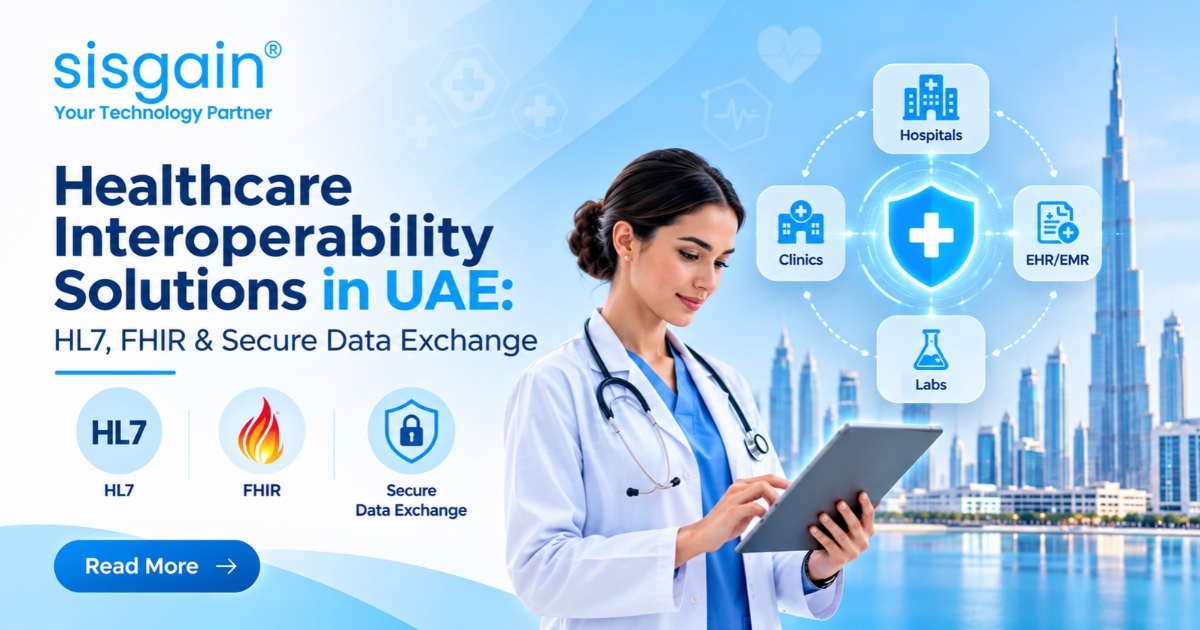
Healthcare organizations across the UAE are adopting digital technologies to improve patient care, streamline operations, and manage medical information more effectively. Hospitals, clinics, laboratories, and diagnostic centers increasingly depend on connected systems to access accurate patient records and coordinate healthcare services. As a result, healthcare interoperability solutions UAE has become an important focus for organizations looking to build a connected and efficient healthcare environment.
Interoperability enables different healthcare applications to exchange, interpret, and use information consistently. Standards such as Health Level Seven (HL7) and Fast Healthcare Interoperability Resources (FHIR) help connect electronic health records, hospital management systems, laboratory applications, and other clinical platforms.
With secure data exchange and well-planned integration, healthcare providers can reduce information gaps, minimize repetitive administrative tasks, and support better-informed clinical decisions.
Understanding Healthcare Interoperability in the UAE
Healthcare interoperability refers to the ability of different information systems to exchange and use medical data accurately. For example, when a patient receives treatment at multiple healthcare facilities, authorized professionals may need access to relevant medical history, laboratory reports, allergies, and previous diagnoses.
Disconnected systems can make this process difficult. Healthcare professionals may have to request documents manually, enter information repeatedly, or work with incomplete records. These challenges can affect operational efficiency and delay access to important clinical information.
Interoperability addresses these issues by establishing standardized communication between applications. It can connect clinical systems, administrative platforms, medical devices, and patient-facing applications through appropriate interfaces and data exchange protocols.
In the UAE, healthcare integration projects should also consider the requirements of relevant health authorities and information exchange initiatives. Depending on the facility and jurisdiction, these may include NABIDH in Dubai, Malaffi in Abu Dhabi, and Riayati at the national level. Organizations should verify the applicable technical and regulatory requirements before implementing an integration solution.
The Importance of HL7 in Healthcare System Integration
HL7 is a family of standards designed to support the exchange of healthcare information between different software applications. It is commonly used to connect electronic health records, hospital information systems, laboratory information systems, radiology platforms, and billing applications.
HL7 Version 2 is widely used for exchanging messages related to patient admissions, discharges, transfers, laboratory orders, and clinical results. HL7 Clinical Document Architecture (CDA) supports structured clinical documents, while FHIR provides a more modern framework for exchanging healthcare data through standardized resources and APIs.
For healthcare organizations using older software, HL7 integration can help connect existing applications with newer platforms without requiring a complete infrastructure replacement.
Successful implementation involves mapping data fields, configuring interfaces, validating messages, and monitoring communication between connected systems. Error handling and data reconciliation are also important to maintain the accuracy and consistency of exchanged information.
Healthcare organizations looking for experienced healthcare system integrators in Dubai can explore HL7 integration solutions in UAE to understand how standardized integration can support communication between healthcare applications.
How FHIR Supports Modern Healthcare Data Exchange
Fast Healthcare Interoperability Resources, commonly known as FHIR, is a healthcare data exchange standard developed by HL7. It organizes information into resources representing patients, practitioners, appointments, observations, medications, and clinical encounters.
FHIR commonly uses RESTful APIs and formats such as JSON, making it suitable for modern web applications, mobile health platforms, patient portals, and connected healthcare services.
One of its main advantages is the ability to simplify communication between compatible systems. Rather than developing a completely different exchange mechanism for every application, organizations can use standardized resources and API interactions to support multiple integration use cases.
FHIR can help healthcare organizations:
Connect electronic health record applications.
Exchange relevant patient information between authorized systems.
Integrate patient portals with clinical platforms.
Support remote patient monitoring workflows.
Enable secure connections with compatible third-party applications.
Make structured healthcare data available for analytics and clinical decision-support tools.
However, FHIR adoption requires careful planning. Organizations must consider resource profiles, terminology standards, version compatibility, authorization, and data validation to ensure that information is exchanged correctly.
AI and Healthcare Software Development in the UAE
Artificial intelligence is creating new opportunities for healthcare organizations to improve operational efficiency and make better use of available medical information. AI-powered applications can assist with clinical documentation, data classification, workflow automation, and operational forecasting.
However, AI systems depend on reliable data. If medical records are incomplete, duplicated, or inconsistent across applications, the quality of generated insights may be affected.
AI healthcare software development UAE initiatives can combine interoperable healthcare systems with carefully designed AI capabilities to support modern clinical and administrative workflows. For example, an application may help summarize authorized clinical records or identify patterns in appropriately prepared healthcare datasets.
Interoperability can make relevant information available to AI applications, but access must be governed by appropriate permissions and security controls. Healthcare organizations should also establish human oversight, audit trails, and validation procedures for AI-supported workflows, particularly when clinical decisions may be affected.
AI should complement reliable healthcare infrastructure rather than replace the need for accurate records, secure integrations, and sound clinical judgment.
Essential Components of a Secure Healthcare Integration Solution
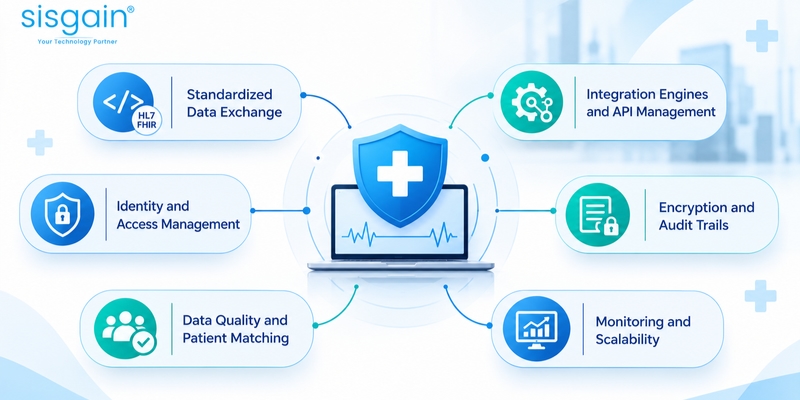
Building a reliable interoperability environment requires more than connecting two software applications. Healthcare organizations need an architecture that supports accurate data exchange, protects sensitive information, and remains dependable as their systems expand.
Standardized Data Exchange
HL7 messaging and FHIR APIs help applications exchange information using recognized structures. The appropriate standard depends on the existing systems, integration requirements, and technical capabilities of participating applications.
Integration Engines and API Management
Integration engines can route messages, transform data formats, validate information, and manage communication between different applications. API management platforms can also help control access, monitor requests, and maintain consistent integration policies.
Identity and Access Management
Healthcare information should only be accessible to authorized users and applications. Authentication, role-based permissions, and appropriate authorization mechanisms help reduce unauthorized access to sensitive medical records.
Encryption and Audit Trails
Encryption in transit and at rest helps protect healthcare information from unauthorized disclosure. Audit trails provide visibility into access and system activity, supporting security monitoring and investigations when necessary.
Data Quality and Patient Matching
Accurate patient identification is essential when exchanging records across different healthcare facilities. Validation rules, consistent identifiers, duplicate detection, and data reconciliation can help reduce mismatches and maintain record accuracy.
Monitoring and Scalability
Monitoring tools, error notifications, retry mechanisms, and performance tracking help identify integration problems. Scalable architecture also allows organizations to connect additional applications and accommodate increasing volumes of healthcare data.
Regulatory Considerations for Healthcare Data Exchange
Healthcare interoperability projects in the UAE must account for applicable data protection legislation, healthcare information security requirements, and the technical standards established by relevant authorities.
Depending on the organization's location and activities, projects may need to consider the UAE Personal Data Protection Law, applicable healthcare data legislation, and requirements associated with healthcare information exchange initiatives.
For example, providers in Dubai may need to assess relevant NABIDH requirements, while facilities in Abu Dhabi may need to consider applicable Malaffi requirements. Riayati may be relevant to organizations participating in the national health information exchange ecosystem.
Using HL7 or FHIR alone does not guarantee regulatory compliance. Organizations must also evaluate data access permissions, retention practices, security controls, auditability, and applicable rules for handling or transferring personal health information.
A structured compliance assessment should take place before development and deployment. Healthcare providers should confirm current obligations with the relevant authorities and qualified compliance professionals.
Benefits of Interoperability for Healthcare Providers
When implemented effectively, healthcare interoperability can improve the way information moves throughout an organization and across connected care environments.
Improved access to medical information: Authorized professionals can retrieve relevant information from connected applications without depending entirely on manual document transfers.
Reduced administrative work: Automated exchange can minimize repetitive data entry, duplicate documentation, and time spent locating information.
Better care coordination: Connected clinical systems help authorized providers work with more consistent patient information across different stages of treatment.
Improved data consistency: Standardized formats and validation procedures can reduce errors associated with incompatible systems and manual processing.
Support for digital healthcare services: Interoperability can help connect telemedicine applications, remote patient monitoring platforms, patient portals, and analytics tools.
Greater operational visibility: Integrated information can help healthcare organizations assess workflow performance, identify communication problems, and plan improvements.
The results depend on system compatibility, implementation quality, staff adoption, and effective data governance.
Modernizing Healthcare Applications and Digital Infrastructure
Healthcare organizations often need to upgrade their technology while continuing to use established applications and workflows. Modernization may involve connecting existing hospital systems, improving data exchange, developing patient-facing applications, or introducing new digital services.
A well-planned modernization strategy begins with an assessment of existing infrastructure and business requirements. This helps identify integration gaps, technical limitations, security considerations, and opportunities to improve operational processes.
Organizations planning these initiatives can explore healthcare software development services to learn how digital healthcare applications can support clinical workflows, information management, and technology modernization.
The right approach should align with the organization's operational needs while allowing room for future integrations and changing healthcare requirements.
Custom Solutions for Different Healthcare Requirements
Not every healthcare organization uses the same software, follows identical workflows, or requires the same integration capabilities. A hospital may need connections between its EHR, laboratory, radiology, and billing applications, while a clinic may prioritize appointment management and patient record exchange.
Tailored software can address these differences by supporting specific workflows, connecting relevant systems, and providing functionality aligned with organizational needs.
Custom healthcare software development can help healthcare providers build applications around their operational requirements while considering security, scalability, maintainability, and interoperability from the beginning.
A successful project should define the required interfaces, identify supported data standards, establish access controls, and include comprehensive testing before deployment. Clear documentation and ongoing maintenance are also important for long-term reliability.
Choosing a Healthcare Technology Partner in Dubai
Selecting a suitable development partner is an important step when planning healthcare integration. The provider should understand clinical workflows, healthcare data standards, system architecture, and the security considerations involved in handling sensitive information.
When evaluating a healthcare software development company Dubai, organizations should consider experience with HL7 messaging, FHIR APIs, hospital management systems, EHR platforms, and healthcare application integration.
Other important factors include knowledge of applicable UAE requirements, structured testing processes, technical documentation, monitoring capabilities, and ongoing support.
A capable technology partner should assess the existing environment before recommending a solution. This approach helps organizations avoid unnecessary complexity and establish a practical implementation roadmap based on their current infrastructure and future goals.
How SISGAIN Technologies Supports Healthcare Digital Transformation
SISGAIN Technologies offers healthcare software development capabilities for organizations exploring digital applications and connected healthcare workflows. Its solutions can be evaluated according to project requirements, existing infrastructure, and the intended scope of integration.
Healthcare organizations planning interoperability initiatives should begin by identifying the systems that need to communicate, the information that must be exchanged, and the security and compliance requirements that apply. This assessment provides a foundation for selecting appropriate integration standards and designing a sustainable solution.
The implementation process should include interface development, data validation, security testing, monitoring, and ongoing maintenance. These measures help establish a dependable digital environment that can evolve as healthcare technology requirements change.
Conclusion
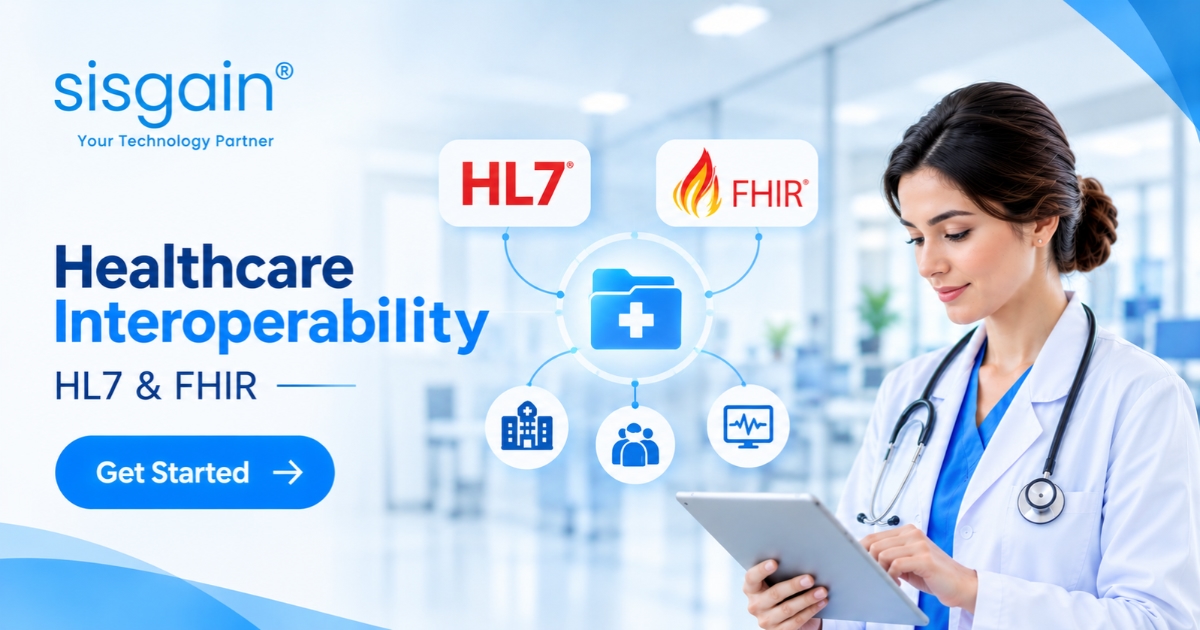
Healthcare interoperability is an important part of digital healthcare transformation across the UAE. HL7 supports communication between established clinical applications, while FHIR provides flexible options for API-based data exchange and modern healthcare services.
When combined with secure architecture, accurate patient matching, effective data governance, and appropriate regulatory controls, these technologies can help healthcare organizations improve information accessibility and operational coordination.
By adopting a structured integration strategy, healthcare providers can build connected systems that support efficient workflows, informed clinical decisions, and the continued development of digital healthcare services throughout the UAE.
Ready to improve healthcare connectivity? Contact SISGAIN Technologies today to get started with secure, scalable healthcare interoperability solutions tailored to your needs.