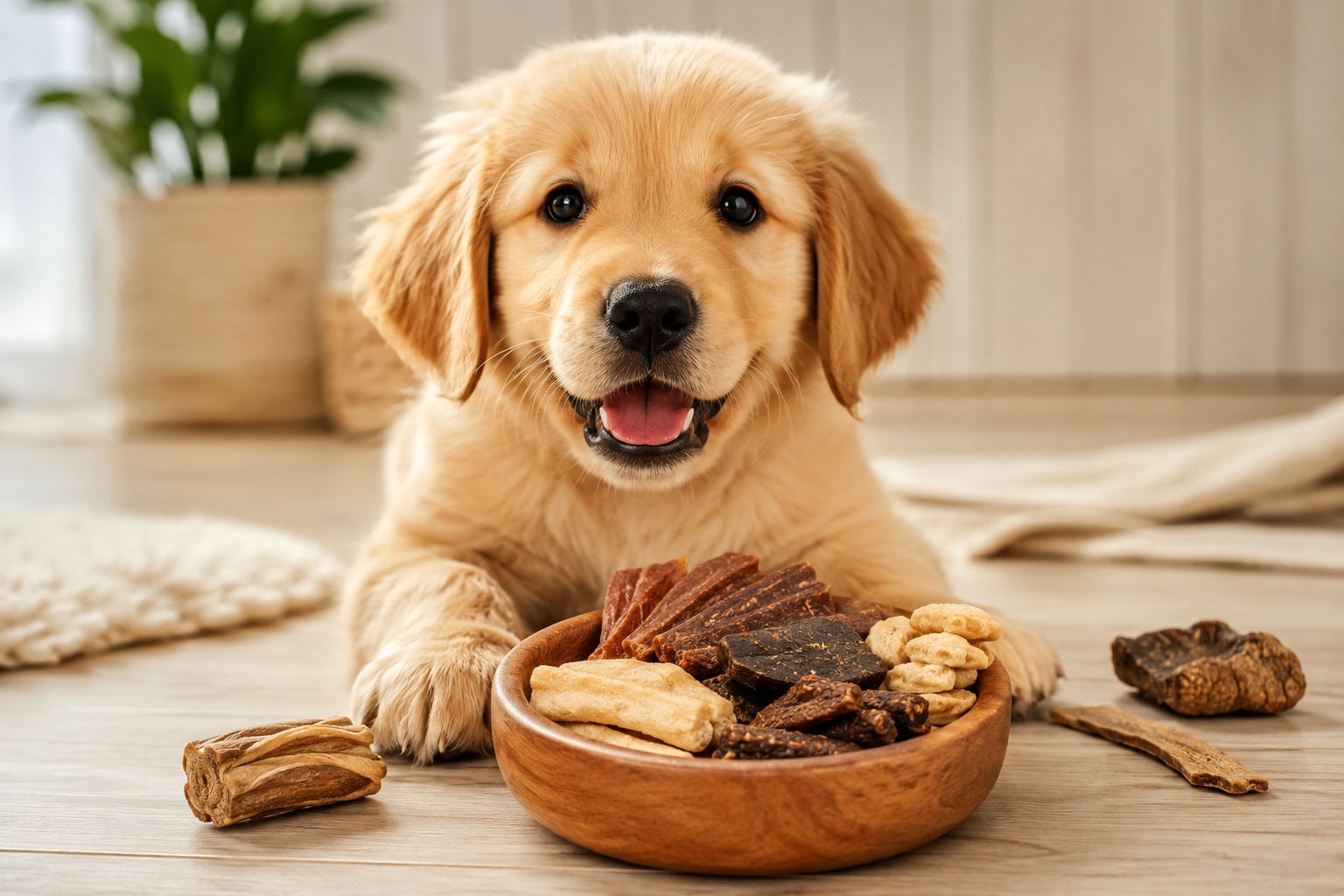
Welcoming a puppy into your home brings excitement, new responsibilities, and plenty of opportunities to build healthy habits. From teaching basic commands to encouraging good behavior, treats can play an important role in your puppy’s development. However, choosing the right snacks requires careful consideration of ingredients, nutritional value, portion sizes, and age-appropriate textures. The best healthy dog treats for puppies complement a balanced diet while making training and bonding more enjoyable.
Puppies have different nutritional needs from adult dogs because their bodies are growing rapidly. Their bones, muscles, teeth, and immune systems require appropriate nutrition to support healthy development. Treats should never replace a complete and balanced puppy food, but carefully selected options can help reinforce positive behavior and introduce enjoyable new experiences.
Why Do Puppies Need Healthy Treats?
Treats are useful tools for rewarding desirable behavior and helping puppies learn household rules. When a puppy responds to its name, sits on command, or calmly accepts a leash, a small reward can reinforce that behavior.
Healthy treats can also make training sessions more engaging. Puppies generally have short attention spans, so small, appealing rewards help maintain interest without providing excessive calories.
Another benefit is the opportunity to establish good feeding habits early. Introducing appropriate treats helps pet parents learn how to manage portions, monitor food sensitivities, and recognize which ingredients their puppies tolerate well.
Nevertheless, treats should remain a limited part of a puppy’s daily intake. Veterinary nutrition guidelines commonly recommend that treats and other extras account for no more than 10% of daily calories, with at least 90% coming from complete and balanced food. For very small puppies, even a few treats can contribute a significant number of calories.
What Ingredients Should You Look For?
Reading ingredient labels is one of the most effective ways to choose suitable treats. Products with clearly identified ingredients make it easier to understand what your puppy is eating.
1. Single-Ingredient Animal Proteins
Treats made from a single animal ingredient can be a practical option for pet parents who prefer straightforward recipes. Examples include appropriately prepared beef liver, chicken, or other dog-safe animal proteins.
Single-ingredient treats may make it easier to identify the source of a reaction if your puppy develops digestive upset. However, a simple ingredient list does not automatically guarantee that a product is nutritionally complete, safe for every puppy, or suitable for a particular age.
2. Easily Managed Training Rewards
Training treats should be small enough for your puppy to eat quickly without interrupting the learning process. Soft, puppy-appropriate treats are often convenient for teaching commands, practicing recall, and rewarding calm behavior.
You can also break larger, suitable treats into smaller pieces when the product allows it. The goal is to reward frequently while keeping total calorie intake under control.
3. Clearly Labeled Products
Choose products with clear ingredient lists, feeding directions, and storage instructions. Check the manufacturer's recommended age range and verify that the texture and size are appropriate for your puppy.
Avoid treats containing ingredients known to be toxic to dogs, including xylitol, chocolate, grapes, and raisins. If a label is unclear, contact the manufacturer or ask your veterinarian before feeding the product.
How to Choose Healthy Dog Treats for Puppies
Selecting healthy dog treats for puppies involves more than looking for natural ingredients or attractive packaging. Your puppy’s age, size, chewing behavior, and health needs should guide your decision.
Consider Your Puppy’s Age
Young puppies may not be ready for the same treats as older puppies. Very young animals need age-appropriate textures and portions, and puppies transitioning from milk to solid food should follow their veterinarian’s feeding guidance.
Check the product label before offering a treat. If the recommended age is unclear, wait until you can confirm its suitability.
Match the Treat to Your Puppy’s Size
A treat that is manageable for a large-breed puppy might be too large or difficult for a smaller breed. Choose pieces that are easy to handle and unlikely to be swallowed whole.
Always supervise your puppy while eating. Remove treats that become small enough to swallow whole or develop loose pieces that could cause choking.
Check the Texture and Chewing Difficulty
Puppies explore the world with their mouths, but their developing teeth and chewing habits require special attention. Very hard chews, bones, antlers, and other rigid items can damage teeth. Large or poorly sized treats may also create choking or intestinal blockage risks.
Choose age-appropriate products and ask your veterinarian for guidance if you are unsure whether a chew is suitable.
Introduce New Treats Gradually
Start with a small amount of one new treat and monitor your puppy for changes such as vomiting, diarrhea, itching, or unusual discomfort. Avoid introducing several new products at the same time because doing so makes it harder to identify the cause of a reaction.
If symptoms are severe or persistent, stop offering the new treat and contact your veterinarian.
Are Natural and Freeze-Dried Treats Good for Puppies?
Natural and freeze-dried treats can offer convenient options, provided they are formulated or labeled as appropriate for the puppy's age and used safely.
Freeze-dried beef liver treats, for example, can be appealing high-value rewards during training. Their concentrated flavor may help maintain a puppy’s attention during short learning sessions. However, liver is rich in nutrients, including vitamin A, so it should be fed in moderation rather than used as an unlimited snack.
Freeze-dried products made from raw animal ingredients also deserve special consideration. Freeze-drying does not necessarily eliminate harmful bacteria or other pathogens. Choose products from reputable manufacturers that provide appropriate food-safety information, follow the label directions, and maintain good hygiene when handling treats.
Natural does not automatically mean safer, healthier, or nutritionally complete. The product’s ingredients, processing methods, texture, and intended use matter more than marketing terms alone.
Can Puppies Have Long-Lasting Chews?
Chewing is a normal behavior that can provide enrichment and help puppies explore their surroundings. However, long-lasting chews are not automatically appropriate for every puppy.
Consider the puppy’s age, tooth development, chewing strength, and ability to break off pieces. Avoid excessively hard products and any chew that can splinter, swell, or become small enough to swallow whole. Rawhide products and other animal-hide chews require particular care because swallowed pieces may present choking or digestive obstruction risks.
If you choose an animal-hide chew, confirm that the manufacturer specifically recommends it for your puppy’s age and size. Supervise every chewing session and remove the chew when it becomes small, loose, or damaged.
Puppies that gulp food, chew aggressively, or have a history of digestive problems may need alternatives recommended by a veterinarian.
How Ugly Chews Approaches Natural Dog Treats
Ugly Chews began with a goal of reducing waste in rural communities while creating useful products from responsibly sourced animal ingredients. Its approach emphasizes thoughtful sourcing, handmade preparation, and a more sustainable way to produce dog treats and chews.
For pet parents comparing natural products, Ugly Chews offers a brand perspective centered on simple ingredients and responsible use of available resources. However, not every adult-dog chew is appropriate for puppies, and natural or handmade products should not automatically be considered puppy-safe.
Before purchasing any treat or chew from Ugly Chews, review the individual product's ingredients, age recommendations, size guidance, and feeding instructions. If a product does not explicitly confirm suitability for puppies, contact the company or consult your veterinarian before offering it.
Choosing products carefully allows pet parents to balance their interest in natural treats with their puppy’s specific developmental needs.
Tips for Feeding Puppy Treats Safely
Following a few simple practices can help make treat time safer and more beneficial.
Keep portions small: Use tiny rewards during training and account for their calories in your puppy’s daily food allowance.
Supervise your puppy: Watch for gulping, choking, or attempts to swallow large pieces.
Provide fresh water: Keep clean drinking water available, especially when offering dry treats or chews.
Store products correctly: Follow package instructions to maintain freshness and reduce contamination.
Avoid unsafe human foods: Never offer chocolate, grapes, raisins, products containing xylitol, or other foods known to be toxic to dogs.
Consult your veterinarian: Seek advice if your puppy has allergies, digestive sensitivities, a medical condition, or special dietary requirements.
Treats can also be used to support socialization. Rewarding calm behavior around new people, household sounds, and unfamiliar environments can help create positive associations. Keep these sessions brief and ensure that your puppy is comfortable rather than overwhelmed.
Frequently Asked Questions
1. What Are the Best Healthy Dog Treats for Puppies?
The best options are age-appropriate, easy to manage, made with clearly identified ingredients, and suitable for your puppy’s size and chewing ability. Small training treats and appropriate single-ingredient snacks may work well when fed in moderation.
2. How Many Treats Can I Give My Puppy Each Day?
There is no single number that suits every puppy because calorie needs vary with age, breed, size, activity, and the treat itself. As a general guideline, treats should account for no more than 10% of daily calories. Your veterinarian can help determine an appropriate amount.
3. Can Puppies Eat Freeze-Dried Beef Liver Treats?
Some puppies can eat freeze-dried beef liver treats if the product is suitable for their age and used according to its directions. Offer small portions because liver is nutrient-dense, and remember that freeze-drying does not necessarily eliminate harmful pathogens from raw ingredients.
4. Are Natural Dog Chews Safe for Puppies?
Some natural chews may be appropriate, but safety depends on the product, hardness, size, and the puppy’s developmental stage. Avoid excessively hard chews and supervise chewing. Confirm age suitability with the manufacturer or your veterinarian before introducing an unfamiliar product.
5. When Should I Introduce Treats to My Puppy?
Treats can be introduced when a puppy is developmentally ready for solid food and can safely handle the product's texture. Follow the manufacturer's age guidance and your veterinarian’s recommendations, especially for very young puppies or those transitioning to solid food.
Conclusion
Choosing the right treats can make training more rewarding, encourage positive habits, and strengthen the bond between you and your puppy. The most suitable options have clear ingredients, appropriate textures, manageable portions, and safety guidance that matches your puppy’s age and size. Remember that treats are supplements to a balanced diet, not replacements for the nutrition puppies need to grow.
When comparing healthy dog treats for puppies, look beyond marketing claims and consider ingredient quality, food safety, calorie content, and chewing risks. Ugly Chews reflects a commitment to responsible sourcing and sustainability, but every product should be evaluated individually before being offered to a young dog. With thoughtful choices, close supervision, and guidance from your veterinarian, you can make treat time a safe and enjoyable part of your puppy’s healthy development.