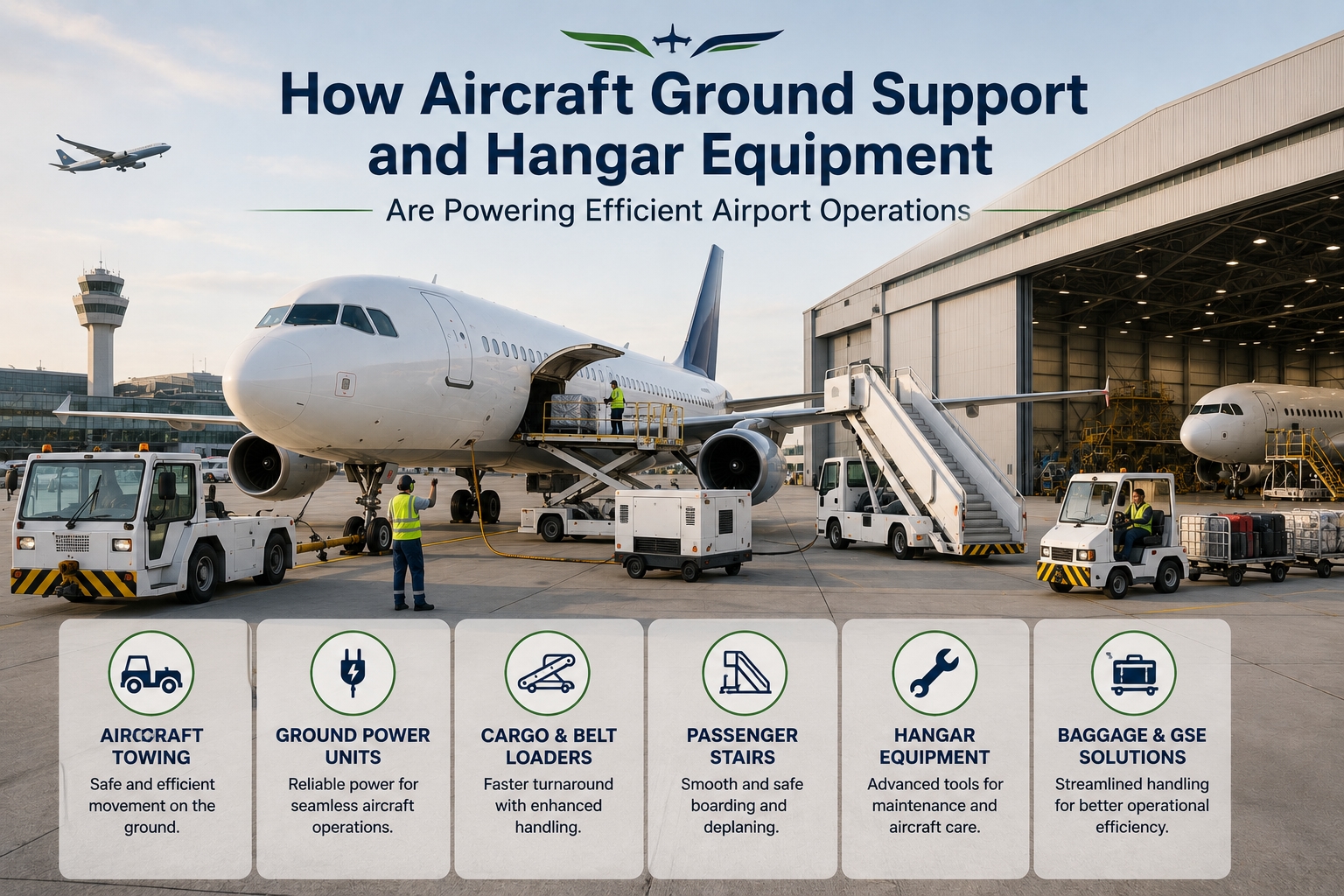
Behind every successful flight is a highly coordinated network of ground operations that keeps aircraft safe, efficient, and ready for departure. While aircraft often receive the most attention, the equipment used on the ground plays an equally critical role in ensuring smooth airport operations. From towing aircraft and supplying electrical power to supporting maintenance inside hangars, ground support and hangar equipment form the backbone of modern aviation infrastructure. As global air travel continues to evolve, airports and maintenance providers are increasingly investing in advanced equipment that improves operational efficiency, safety, and sustainability.
According to a study published by MarkNtel Advisors, detailed insights can be found in this aviation infrastructure analysis. The report highlights how airport modernization, fleet expansion, increasing aircraft maintenance requirements, and the adoption of sustainable airport technologies are driving demand for advanced aircraft ground support and hangar equipment across commercial, military, and business aviation sectors.
Ground Support Equipment Keeps Airports Running
Ground Support Equipment (GSE) refers to the wide range of vehicles and machinery used to service aircraft while they remain on the ground. These include aircraft tow tractors, baggage loaders, passenger stairs, ground power units, air conditioning units, refueling equipment, de-icing vehicles, and cargo handling systems.
Efficient GSE ensures that aircraft can be prepared for departure quickly while maintaining strict safety standards. Every minute saved during ground operations contributes to improved aircraft utilization, reduced delays, and better passenger experiences.
As airlines continue optimizing turnaround times, investment in advanced ground support technologies is becoming increasingly important.
Modern Hangars Support Aircraft Reliability
Aircraft hangars are much more than storage facilities. They serve as specialized environments where maintenance, inspections, repairs, and system upgrades are performed throughout an aircraft's operational life.
Modern hangars incorporate advanced maintenance equipment, overhead cranes, docking systems, lighting solutions, automated inspection tools, and digital diagnostic technologies that improve maintenance efficiency while ensuring compliance with aviation safety regulations.
As airline fleets expand and aircraft become more technologically advanced, maintenance facilities must also evolve to accommodate increasingly sophisticated aircraft systems.
The Federal Aviation Administration (FAA) continues establishing standards and guidance that support safe aircraft maintenance, airport operations, and aviation infrastructure development.
Electrification Is Driving Sustainable Airport Operations
Sustainability has become a major priority across the aviation industry. Airports around the world are gradually replacing diesel-powered ground support vehicles with electric alternatives that reduce emissions, improve energy efficiency, and lower operating costs.
Electric baggage tractors, aircraft pushback vehicles, passenger buses, and ground power units contribute to quieter airport environments while supporting broader environmental objectives. Battery technology improvements and charging infrastructure expansion are accelerating this transition.
Many airports now view electrified ground operations as an important component of long-term sustainability strategies.
Digital Technologies Are Improving Operational Efficiency
Digital transformation is reshaping airport ground operations through connected equipment, automation, and real-time monitoring. Modern ground support equipment increasingly incorporates telematics, GPS tracking, predictive maintenance software, and fleet management platforms.
These technologies enable airport operators to monitor equipment performance, optimize vehicle utilization, schedule maintenance proactively, and reduce unexpected equipment failures.
Real-time operational visibility improves coordination between airlines, airport authorities, and ground handling providers while supporting faster aircraft turnaround.
Automation Is Changing Ground Handling
Automation is gradually becoming more common across airport operations. Autonomous baggage vehicles, robotic inspection systems, automated docking guidance, and intelligent maintenance tools are improving efficiency while reducing manual workload.
Artificial intelligence also contributes by optimizing equipment scheduling, analyzing operational data, predicting maintenance requirements, and improving resource allocation across airport facilities.
These innovations enable airports to handle increasing passenger volumes while maintaining high operational standards.
The International Civil Aviation Organization (ICAO) promotes global standards that support safe, efficient, and sustainable civil aviation operations, including airport infrastructure development and operational best practices.
Maintenance Planning Benefits from Predictive Analytics
Predictive maintenance has become an important application of digital technologies within aircraft maintenance facilities. Sensors installed on both aircraft and maintenance equipment continuously monitor operational conditions, allowing engineers to identify potential issues before failures occur.
By analyzing equipment performance data, maintenance teams can schedule repairs more effectively, minimize downtime, and improve fleet availability. This proactive approach reduces maintenance costs while enhancing operational reliability.
Predictive analytics also supports better inventory management by ensuring replacement parts are available when needed.
Safety Remains the Highest Priority
Aircraft ground operations involve numerous moving vehicles, specialized equipment, and highly coordinated personnel working in busy airport environments. Maintaining safety throughout these operations requires rigorous procedures, regular training, and reliable equipment.
Modern ground support systems increasingly incorporate collision avoidance technologies, operator assistance features, remote diagnostics, and automated safety monitoring to reduce operational risks.
The International Air Transport Association (IATA) continues supporting global best practices that improve ground handling safety, operational efficiency, and standardized airport procedures across the aviation industry.
Looking Ahead
Aircraft ground support and hangar equipment are becoming increasingly sophisticated as airports and airlines embrace digital transformation, automation, and sustainability. Advances in electric vehicles, intelligent maintenance systems, connected equipment, and predictive analytics are enabling safer, faster, and more efficient airport operations.
As global aviation continues expanding and airlines seek higher operational efficiency, investment in advanced ground support infrastructure will remain essential. By combining innovative technologies with evolving maintenance practices, aircraft ground support and hangar equipment will continue to play a vital role in ensuring safe, reliable, and efficient aviation operations for years to come.