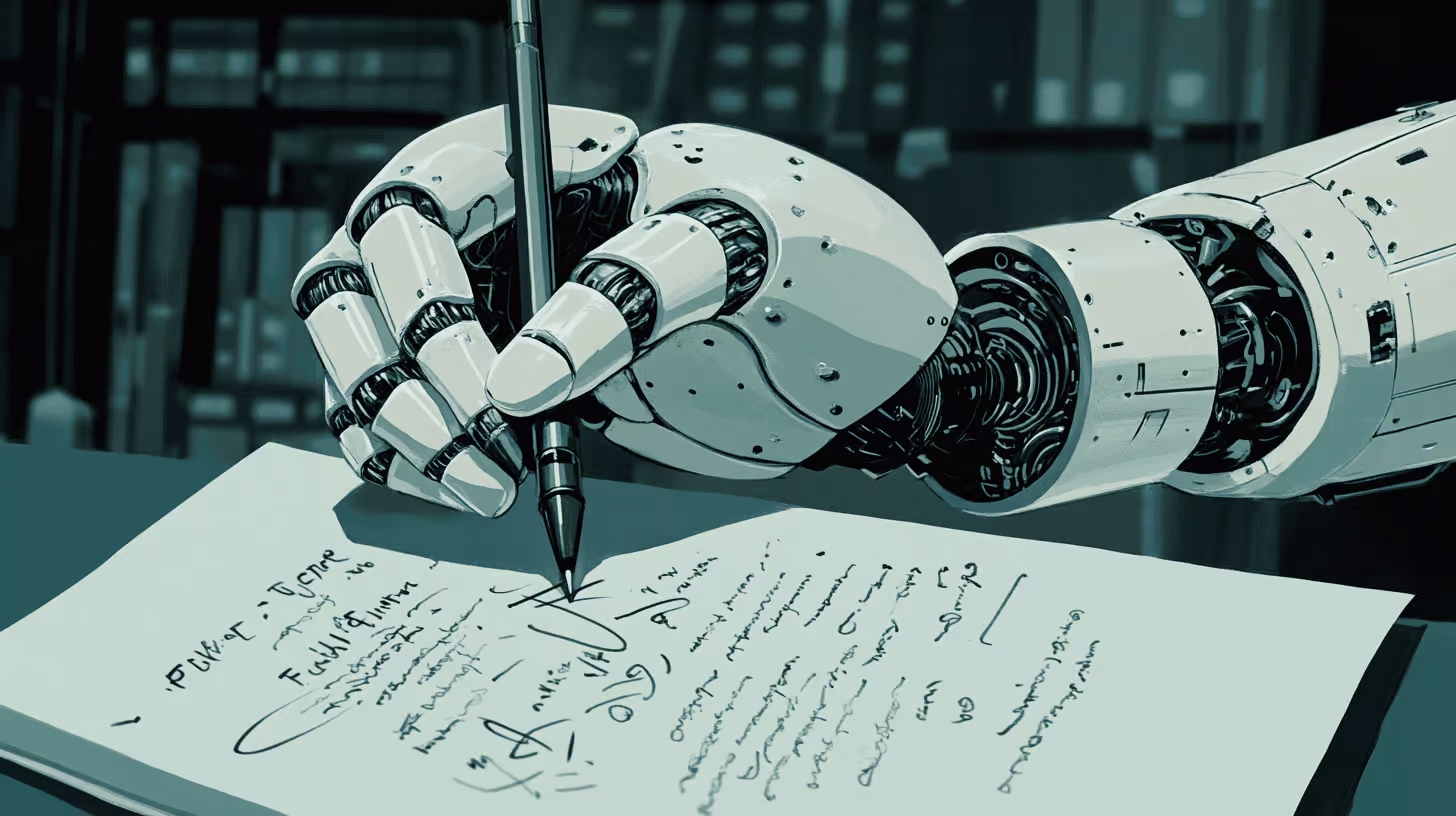
Ever finished an article and then wondered, “Does this actually sound like me?” You’re not alone. Online writing has changed a lot in the last few years. Students, bloggers, businesses, and even experienced writers now use digital tools to research, edit, brainstorm, and improve their content.
The tricky part is knowing whether a piece of writing feels genuinely original and useful. A polished article isn't automatically AI-written, and a few awkward sentences don't automatically prove that a person wrote it. So, instead of relying on guesses, it's better to understand the signals behind modern content analysis and use several checks together.
Start With the Quality of the Writing
Before using any software, read the article like a normal reader.
Ask yourself:
Does the information actually answer the topic?
Are the examples specific or just generic?
Does the writer have a recognizable voice?
Are the paragraphs repeating the same point?
Does the article contain useful details rather than filler?
I've found this simple reading step surprisingly helpful. Sometimes a detector score looks worrying, but after reading the article, the writing clearly has personal examples and a natural flow. Other times, a piece looks extremely polished but says very little.
Good content should stand on its own before any automated check is involved.
How Modern Writing Analysis Works
An ai detector generally analyzes patterns in text that may be associated with machine-generated writing. Depending on the tool, the analysis can consider things such as sentence structure, predictability, word choice, and other linguistic patterns.
But there's an important catch: these systems aren't mind readers.
A result can indicate that text resembles AI-generated writing without proving exactly how that text was created. This is especially important for formal essays, technical articles, short samples, translated content, and writing that has gone through several rounds of editing.
That's why a percentage should be treated as a signal for further review, not as an absolute authorship verdict.
Don't Forget About Different Languages
Language is another part that people sometimes overlook.
A system trained or optimized around common English writing patterns may behave differently when analyzing Spanish, Filipino, Tagalog, Ukrainian, or other languages. Sentence construction, vocabulary, idioms, and cultural expressions can all change the way text looks statistically.
For multilingual writers, it can be useful to check whether a tool actually supports the language being reviewed instead of assuming every detector works equally well everywhere.
Also, don't translate a paragraph only to make a detection score change. The point of reviewing content is to understand its quality and origin, not to play a numbers game.
Use More Than One Piece of Evidence
If authorship genuinely matters, automated analysis shouldn't be your only evidence.
A stronger review can include:
Original drafts – Earlier versions can show how the article developed.
Notes and research – Sources and personal notes provide useful context.
Revision history – Document changes can show the writing process.
Writing style – Compare the content with the author's previous work.
Automated analysis – Use detection software as one additional signal.
Tools such as isgen.ai can be included in this process when you want another automated perspective on a piece of text.
This combined approach makes much more sense than saying, “The tool gave me 80%, so that's the final answer.” Real writing is messy, and automated systems can make mistakes.
Watch Out for False Positives
This is probably the part people should take most seriously.
Human writing can sometimes be flagged because it uses predictable wording or a very formal structure. A student writing an academic assignment, for example, might naturally use similar sentence patterns throughout the paper.
Likewise, heavy editing can change someone's natural writing style. Grammar correction, translation, and rewriting tools can also make text look more standardized.
If a result seems unexpected, go back and review the actual sentences. Look at the context. Check the writing history if it's available. Don't immediately accuse the writer based on one automated result.
The goal isn't to catch people. It's to understand content better.
Make Your Content More Human the Right Way
If you're a writer trying to improve your own work, focus on genuine quality rather than trying to “beat” a detector.
Add details that actually come from your experience. Explain ideas in your own words. Use examples that fit the subject. Mix short and longer sentences naturally. Remove repetitive filler. Most importantly, make sure every paragraph has a reason to exist.
A good article doesn't need to sound artificially imperfect. It just needs to communicate something useful in a voice that feels authentic.
Before publishing your next piece, take five extra minutes to read it as a real person would. Check the facts, improve unclear sections, remove repetition, and use automated tools only as supporting checks.
That small habit can make your content clearer, more trustworthy, and much more useful to readers. If you found these tips helpful, share your own experience with content-checking tools in the comments.