Introduction:
In this growing digital world, every business face a critical challenge : how to maintain security and compliance while accelerating document workflows. The answer lies in a powerful combination of digital signing software integrated with event-driven architecture. This synergy transforms how the organizations handle contracts, approvals, and sensitive transactions .
The Evolution of Document Management:
Business workflows used to be done by hand. This meant printing papers getting people to sign them and storing the papers in files. These ways of doing things were not good because they were slow and often had mistakes. It was also hard to keep track of what was going on. Now companies need things to happen fast. They need to be able to see what is going on and they need to be safe. Digital signing software helps with this.
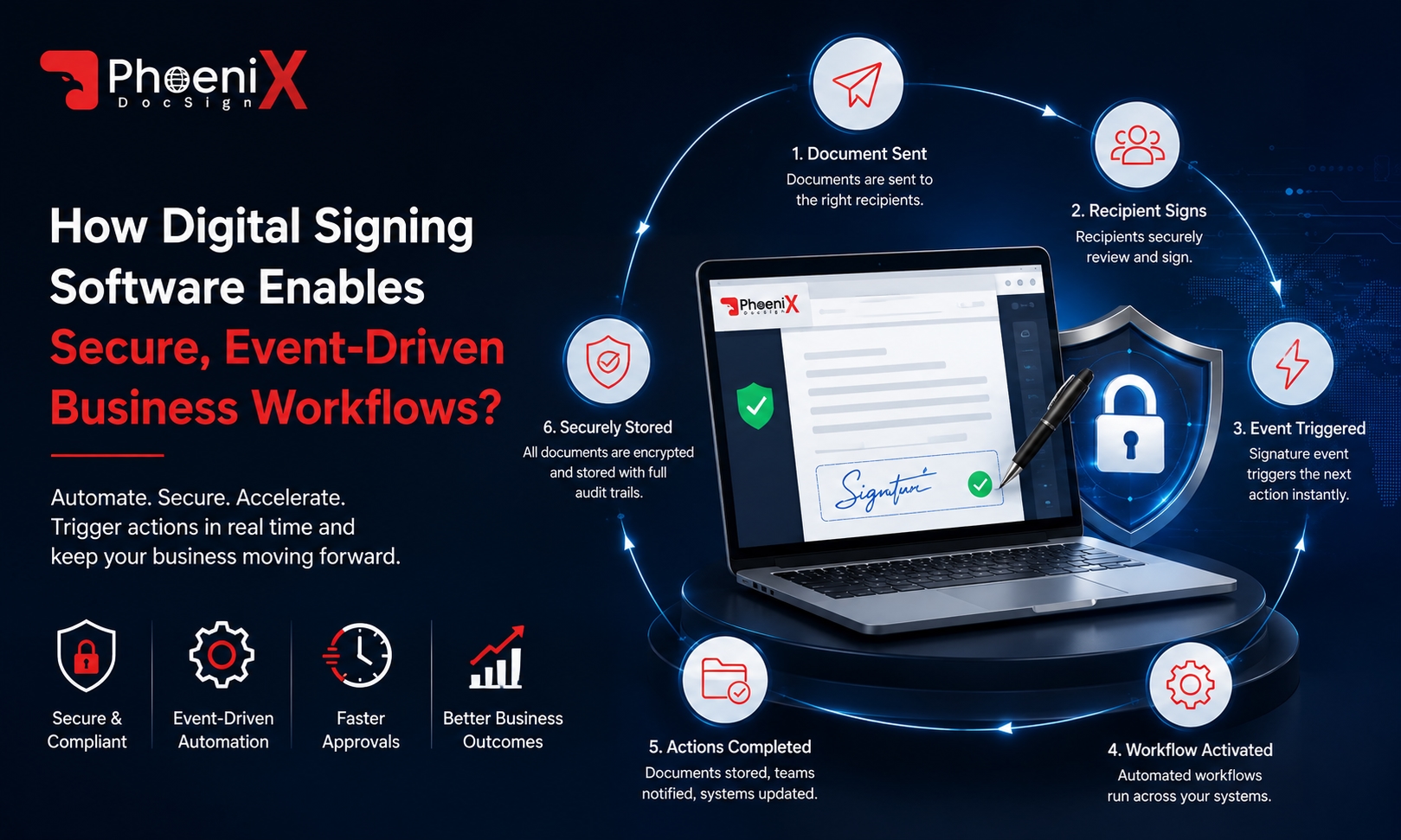
Just using digital signatures does not fix all the problems, with workflows. When you use signatures with a system that does things automatically when something happens it makes the whole system work better. This means that when someone does something with a document it can automatically make something else happen in the business. This makes everything work together smoothly.
What Are Event-Driven Business Workflows?
An event-driven workflow is a system where specific actions—or "events"—trigger downstream processes automatically. In the context of document management, events might include:
Files signed: Initiates invoice processing or contract activation
Signature received: Notifies stakeholders and updates status dashboards
Approval completed: Moves a document to the next stage in a multi-step approval process
Deadline approached: Sends automated reminders to signers
Rather than relying on manual status checks or email chains, these workflows create a continuous stream of intelligence flowing through your organization.
The Security Foundation: Digital Signing
Digital signing software provides the cryptographic backbone for secure document transactions. Here's why this matters:
· Authentication & Non-Repudiation: Digital signatures are used to verify the identity of the person who signed something. They make sure that person cannot say they did not sign it later. This is something that courts will enforce in places including following rules, like the ESIGN Act, eIDAS and GDPR. Digital signatures are important because they make sure the person who signed the document is really who they say they are and digital signatures are used to prevent people from denying they signed a document.
· Integrity Protection: When you use hashing on a document it helps make sure that the document has not been changed after it was signed. If someone tries to modify the document the signature will not be valid anymore. This means you can tell away if someone has tried to tamper with the document. Cryptographic hashing is really good, at detecting this kind of thing because it checks the document for any changes.
· Audit Trails: Every time someone takes an action like signing something viewing a document downloading a file or forwarding an email it gets a timestamp. Is recorded. This is like a record book that has everything in it. It helps us follow the rules that the government says we have to follow. It also gives us proof if there is a disagreement, about something.
· Encryption in Transit: When you use a signing platform they keep your documents safe. They do this by putting a code on the documents when they are being sent and when they are stored. This code helps to make sure that only the right people can see the information in the documents. Digital signing platforms do this to protect the information in the documents, from people who are not supposed to see it.
The Power of Integration: Digital Signing + Event-Driven Architecture
When digital signing meets event-driven systems, organizations unlock unprecedented efficiency:
Ø Real-Time Workflow Acceleration: Traditional workflows wait for manual intervention at each stage. Event-driven systems respond immediately. Once a document is signed, downstream systems—billing systems, CRM platforms, ERP software—receive notifications instantly. What previously took hours now takes seconds.
Ø Intelligent Process Automation: Digital signatures act as triggers for complex business logic. A signed employment contract can automatically:
· Create employee records in HR systems
· Trigger background check workflows
· Provision IT access
· Initiate payroll setup
Ø Reduced Bottlenecks and Delays: Events eliminate the waiting game. Approvers don't sit on documents; systems automatically notify relevant parties. Deadlines trigger reminders. Dependencies are tracked automatically.
Ø Enhanced Visibility and Control: Event-driven systems generate continuous data streams. Organizations gain real-time visibility into:
Document status and location
Signature completion rates
Approval timelines
Workflow bottlenecks
This data feeds dashboards and analytics tools, enabling continuous optimization.
Real-World Applications:
1. Financial Services: Banks process loan applications through event-driven workflows. Once a customer signs loan documents, events trigger credit checks, fund disbursement, and regulatory filing—all automatically.
2. Healthcare: Medical facilities use digital signatures for consent forms and authorization documents. Event streams integrate with scheduling systems, billing, and patient records, ensuring seamless care coordination.
3. Legal and Contracts: Law firms manage complex multi-party agreements. Digital signatures on contract sections trigger version updates, notification to other parties, and automatic filing with legal tracking systems.
4. Human Resources: HR departments onboard employees faster. Job offer acceptance triggers background check workflows, equipment provisioning, and training registrations automatically.
5. Real Estate: Property transactions involve numerous documents and signatures. Event-driven systems ensure escrow instructions, title updates, and recording happen in sequence, reducing closing time.
Security Considerations in Event-Driven Systems:
While event-driven architecture accelerates workflows, security must remain paramount:
· Validated Event Sources: Only authorized systems should trigger events. Digital signing platforms should authenticate the source and verify legitimacy before initiating workflows.
· Granular Permissions: Access to sensitive documents and events should follow the principle of least privilege. Not every system needs access to all events.
· Compliance and Regulatory Requirements: Event trails must satisfy industry standards. Digital signing solutions should maintain immutable logs that comply with regulatory requirements and support forensic analysis.
· Data Encryption: Events often contain sensitive metadata or document references. Encryption should protect data in transit and at rest.
· Monitoring and Alerting: Unusual event patterns like signing attempts from unfamiliar locations or repeated failures should trigger security alerts.
Implementing Secure, Event-Driven Workflows:
1. Choose the Right Digital Signing Platform:
Select software that offers:
Strong encryption and legal compliance
API access for integration with existing systems
Event streaming capabilities
Comprehensive audit logs
2. Map Your Workflows: Document current processes and identify where digital signatures and event triggers add value. Focus on high-volume, repetitive processes first.
3. Design Your Event Architecture: Determine which events matter, who needs to be notified, and what actions should follow. Use event mapping diagrams to visualize dependencies.
4. Implement Gradually: Start with a pilot process. Test security controls, measure performance, and refine before broader rollout.
5. Monitor and Optimize: Use event data and analytics to identify bottlenecks, measure cycle times, and continuously improve workflows.
The Competitive Advantage:
Organizations implementing secure, event-driven workflows gain measurable advantages:
Speed: Processes that once took days now complete in hours
Cost Reduction: Automation eliminates manual work and reduces errors
Compliance: Automated audit trails and security controls satisfy regulators
Scalability: Systems handle growth without proportional increases in labor
Customer Experience: Faster approvals and clearer communication improve satisfaction
Conclusion:
As businesses get more complicated connecting signing tools with event-driven systems is becoming really important. Companies that use this mix—focusing on both safety and automation will work faster better and with trust.
The question isn't if they should use these tools. How fast they can put them in place to stay ahead. The future of work isn't about doing things by hand and keeping things the same it's, about being digital, safe and changing quickly to meet business needs.