
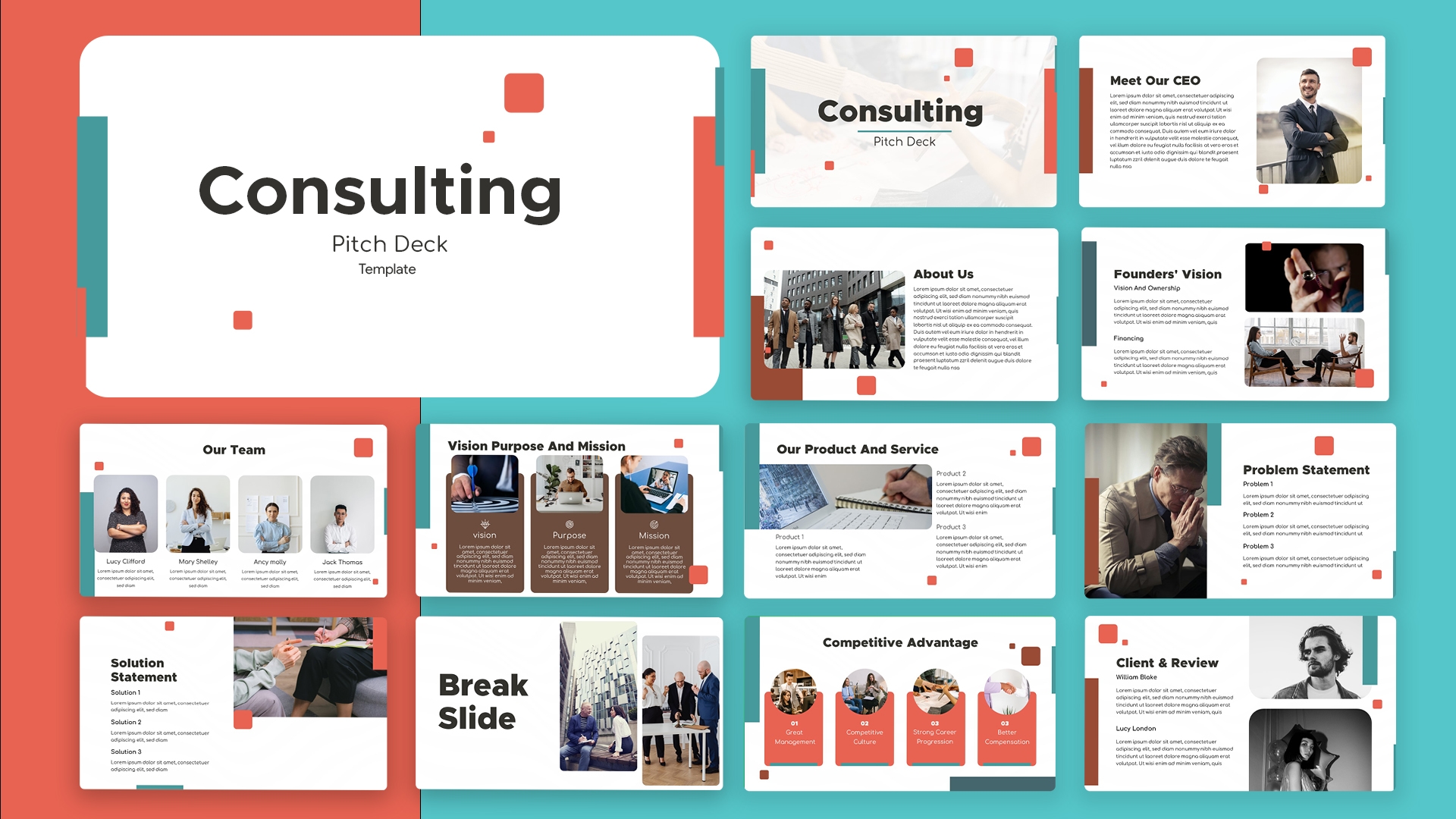
Dubai has developed into one of the world’s most competitive business hubs, bringing together multinational corporations, ambitious startups, government organizations, and rapidly growing local enterprises. In such an environment, consulting firms need more than strong analysis and recommendations to stand out. They must also communicate their ideas clearly, persuasively, and professionally. A well-designed presentation can transform complex consulting insights into a compelling business story that decision-makers can understand and act upon.
For consulting firms in Dubai, improving presentation strategy means combining strong content, thoughtful design, local market awareness, and effective storytelling. The objective is not simply to make slides attractive but to ensure every presentation supports the firm’s strategic message and influences its audience.
Understanding the Dubai Business Audience
Recognizing Diverse Decision-Makers
Dubai’s business environment is highly international. Consulting presentations may be delivered to executives from different cultural, professional, and linguistic backgrounds. This diversity makes clarity particularly important.
Consultants should avoid overly complicated language, unexplained technical terminology, and dense paragraphs. Instead, presentations should communicate important ideas in a direct and accessible manner. Clear headlines, concise explanations, relevant visuals, and logical structures can help audiences understand recommendations quickly.
A presentation designed for senior executives should also respect their limited time. Decision-makers typically want to know what the problem is, why it matters, what the evidence shows, and what action should be taken. Structuring presentations around these questions can make consulting recommendations much more effective.
Adapting to Local Business Expectations
Understanding Dubai’s professional culture can also strengthen presentation strategy. Businesses in the UAE operate within a unique combination of international standards and regional expectations. Presentations should therefore appear modern and globally professional while remaining appropriate for the local business environment.
Visual choices, examples, terminology, and communication styles should reflect the audience. A consulting firm working with a government organization, financial institution, real estate company, or technology startup may need a different presentation approach for each client.
Building a Strong Consulting Story
Start With the Business Problem
One of the most common presentation weaknesses is beginning with too much background information. Consulting presentations should establish the central business problem quickly.
The opening slides should help the audience understand the situation, the challenge, and the reason action is required. Once the problem is clearly established, the analysis becomes easier to follow because every subsequent section has a clear purpose.
A strong narrative might move from the current situation to the key challenge, followed by analysis, insights, strategic options, recommended action, and expected outcomes. This creates a natural progression that keeps decision-makers engaged.
Make Insights More Important Than Data
Consulting firms often work with large amounts of research, financial information, market data, and operational metrics. However, including all available data does not automatically make a presentation persuasive.
The purpose of data is to support an insight. Instead of presenting several charts without explanation, consultants should clearly communicate what the audience should understand from each chart.
For example, rather than showing a complicated market growth graph and leaving the audience to interpret it, a slide headline could state the central finding directly. The supporting chart can then provide evidence for that conclusion.
This approach makes presentations more analytical and decision-oriented.
Improving Visual Communication
Use Design to Create Hierarchy
Professional consulting presentations should have a clear visual hierarchy. The audience should immediately recognize the most important information on every slide.
Headlines should communicate the main takeaway rather than simply describing the topic. Supporting information should be visually secondary, while charts, diagrams, and key numbers should receive appropriate emphasis.
Consistent typography, spacing, alignment, and formatting also make a presentation easier to navigate. When every slide follows a coherent visual system, the audience can focus on the consulting message rather than trying to understand the design.
Simplify Complex Information
Consultants frequently need to explain complicated strategies, organizational structures, financial models, market trends, or operational processes. Turning these ideas into clear visual frameworks can significantly improve comprehension.
Instead of presenting a long explanation in text, firms can use process diagrams, timelines, matrices, flowcharts, and conceptual models. These formats allow complex relationships to be communicated more efficiently.
However, visuals should not be used simply for decoration. Every graphic should serve a communication purpose. Unnecessary icons, excessive colors, decorative images, and complicated diagrams can distract from the core message.
Making Presentations More Persuasive
Connect Recommendations to Business Outcomes
A consulting recommendation becomes more convincing when the audience can clearly see its potential impact. Presentations should therefore connect strategic recommendations with measurable business outcomes.
For example, a recommendation might be connected to revenue growth, cost reduction, operational efficiency, customer retention, market expansion, or improved risk management. Showing this connection helps executives understand why the recommendation deserves attention.
Consultants should also distinguish between immediate actions and longer-term strategic objectives. This gives decision-makers a clearer understanding of implementation priorities.
Use Evidence Strategically
Credibility is essential in consulting. Research, benchmarks, financial analysis, customer insights, and industry data can strengthen a recommendation when presented appropriately.
However, evidence should be selective. Including too many statistics can weaken the argument because the audience may struggle to identify which information actually matters.
A better strategy is to identify the strongest evidence supporting each major conclusion and present it clearly. Sources and assumptions should also be documented where appropriate, particularly when presentations are used for important strategic decisions.
Leveraging Professional Presentation Design
Create Consistent Presentation Standards
Dubai consulting firms can benefit from developing standardized presentation guidelines. These guidelines can define typography, colors, chart styles, layouts, imagery, spacing, and other visual elements.
Consistency helps establish a recognizable professional identity. It also makes presentation production more efficient because consultants do not need to reinvent the design system for every project.
Professional firms may also work with specialized design experts when presentations involve major client pitches, board meetings, investor discussions, or high-profile strategic engagements. Consulting Presentation Design Services in Dubai can help firms transform complex consulting material into polished, persuasive, and executive-friendly presentations.
Design for Different Presentation Formats
Not every consulting presentation will be delivered in the same way. Some decks are designed for live presentations, while others may be distributed as documents that clients read independently.
A presentation intended for a live meeting can use fewer words and stronger visual storytelling because the consultant provides verbal explanation. A document-style consulting deck may require more context because the slides need to communicate independently.
Recognizing this difference can dramatically improve the effectiveness of presentation materials.
Strengthening Presentation Delivery
Practice the Narrative
Excellent slide design cannot compensate for weak delivery. Consultants should practice the story behind the presentation rather than simply reading slide content.
Presenters should understand the purpose of every slide, anticipate likely questions, and know how each section connects to the next. Practicing transitions is especially useful because smooth movement between topics makes the presentation feel more confident and deliberate.
Prepare for Executive Questions
Senior decision-makers may challenge assumptions, ask about financial implications, question methodology, or request alternative scenarios. Consulting teams should therefore prepare supporting analysis before important meetings.
The main presentation should remain concise, while additional backup slides can contain detailed calculations, methodology, research findings, or supplementary data. This allows consultants to answer difficult questions without overwhelming the primary narrative.
Measuring and Improving Presentation Performance
Learn From Client Feedback
Presentation strategy should continuously evolve. After important meetings, consulting teams can evaluate which sections generated questions, which recommendations received attention, and where audiences appeared confused.
Client feedback can reveal whether the presentation communicated its intended message. Over time, these observations can help firms improve their storytelling, visual communication, and delivery techniques.
Focus on Decision-Making
Ultimately, the success of a consulting presentation should not be measured by how attractive the slides look. Its real value lies in whether it helps the audience understand an issue and make a better decision.
Dubai consulting firms can improve their presentation strategy by combining rigorous analysis with clear storytelling, strong visual hierarchy, relevant evidence, and confident delivery. When every slide has a clear purpose and contributes to the overall argument, complex consulting recommendations become easier to understand and more persuasive.
In Dubai’s competitive consulting market, presentation quality can become an important differentiator. Firms that consistently communicate their expertise through clear, strategic, and engaging presentations are better positioned to build credibility, influence decision-makers, and create stronger relationships with clients.




