
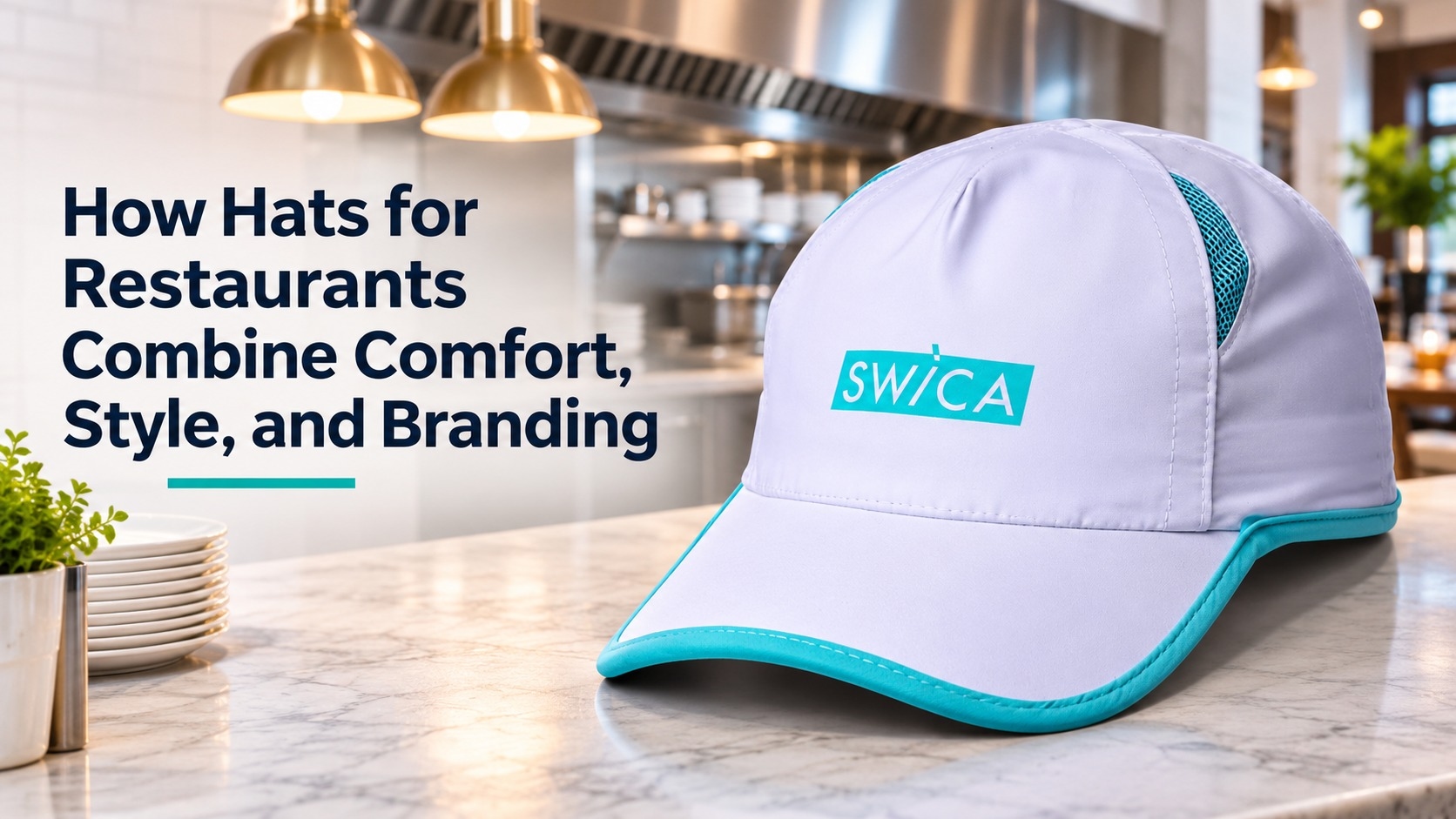
Headwear has a long history in food service. Cooks wear hats to keep hair away from food, servers wear caps as part of a uniform, and many restaurants use headwear as a visible sign of identity. Hats for restaurants therefore serve practical, visual, and marketing purposes at the same time. This article explains how comfort, style, and branding shape headwear choices and which factors operators usually review before placing an order.
Why Headwear Matters in Food Service
Hygiene and Safety
Many local health codes require food handlers to restrain their hair. Hats, caps, and hair nets are common ways to meet this rule. Requirements differ by region and by job role, so operators generally confirm local regulations before selecting a style.
Uniform Consistency
A shared piece of headwear helps guests identify staff quickly. It also gives a team a consistent appearance, even when other parts of the uniform vary by position. Consistent headwear also simplifies training, since new employees can see which items belong to each role.
Comfort: The Base of Daily Wear
Fabric and Breathability
Kitchens are warm, and shifts can last eight hours or more. Cotton twill and cotton blends are widely used because they breathe and handle frequent washing. Polyester blends that move moisture away from the skin are also common. Mesh panels add airflow, which is why trucker styles appear in many casual kitchens.
Fit and Adjustability
Staff members have different head sizes, so adjustable closures are practical. Snaps, buckles, hook-and-loop straps, and elastic bands are the most common options. A hat that stays in place without pressing on the forehead is less likely to be removed or adjusted during service.
Weight and Structure
Lightweight hats reduce fatigue during long shifts. Structured hats keep their shape and provide a clean front panel for a logo, while unstructured hats feel softer and fold flat for storage.
Style: Matching Headwear to the Restaurant Concept
Common Styles
Hats for restaurants come in several forms, and each suits certain settings:
Baseball caps are familiar and easy to wear in casual dining.
Trucker hats allow airflow and appear often in food trucks and barbecue restaurants.
Visors keep hair back while leaving the top of the head open.
Beanies are used in cooler regions and in some cafes.
Chef hats and skull caps are traditional choices for professional kitchens.
Color and Design
Color choices usually follow the brand palette, interior design, or menu theme. Dark colors such as black, navy, and charcoal hide stains in busy kitchens. Lighter colors suit bakeries and cafes, where a fresh appearance is part of the concept. Simple designs with one or two colors tend to stay readable and remain consistent across uniforms, aprons, and signs.
Front of House and Back of House
Front of house staff, such as hosts and servers, often wear hats that match the look of the dining area. Back-of-house staff place more weight on hygiene and heat control. Some restaurants use two styles of headwear to reflect these roles while keeping colors and logos consistent.
Branding: Turning Headwear into Visible Identity
Logo Placement and Methods
The front panel is the standard location for a logo. Embroidery is widely used because it withstands heat and repeated laundering. Patches, screen printing, and heat transfers are other options, and each offers different levels of durability and detail. Clear artwork with limited colors reproduces more reliably on fabric.
Staff as Brand Representatives
Staff are among the most visible parts of a restaurant. Branded headwear connects the dining experience to the logo on the menu, the sign, and the website. In photos and social posts taken by guests, a hat with a clear logo also adds recognition.
Consistency Across Materials
Headwear is one part of a wider set of branded items, including aprons, menus, and packaging. Matching colors and logo versions across these items supports recognition and keeps the visual identity unified.
Promotional Hats Beyond the Staff
Promotional hats are caps or other headwear that carry a logo and are given or sold to customers. Restaurants use them at anniversaries, community events, catering jobs, and merchandise tables. When customers wear them, the brand reaches places outside the dining room. They also serve as keepsakes for regular guests and event participants.
Practical Considerations Before Ordering
Durability and Care
Hats for restaurants face heat, grease, and frequent washing. Colorfast fabric and polyester thread help designs keep their color. Care instructions should be shared with staff, since high heat in dryers can warp brims and loosen stitching. Air drying helps preserve the shape of the hat. Hats that fade or fray can weaken the appearance of a uniform, so many operators set a regular schedule to replace worn pieces.
Sizing and Quantity
Operators usually count current staff and add extra pieces for turnover and new hires. Promotional hats are normally ordered as a separate quantity, since they follow event plans and customer demand rather than staffing levels.
Planning Checklist
The following points summarize common review items:
Local health code rules for hair restraint
Fabric suited to kitchen heat and frequent washing
Adjustable sizing for a mixed team
A logo method that holds up after repeated laundering
Colors that match the brand palette
Separate quantities for staff hats and promotional hats
Working with a Headwear Supplier
Suppliers such as Montauk Hat provide custom headwear and accept quote requests, which lets restaurant operators review styles and share design details before placing an order. Working with a supplier also allows operators to match hats for restaurants to different staff roles and to plan promotional hats for events or merchandise.
Conclusion
Comfort, style, and branding work together in restaurant headwear. Breathable fabric and adjustable fit support long shifts, while color and shape match the concept of the venue. Logo placement turns hats for restaurants into a consistent part of the brand, and promotional hats extend that presence to guests and events. Careful attention to fabric, sizing, and artwork helps a restaurant select headwear that meets daily needs and represents the business clearly.