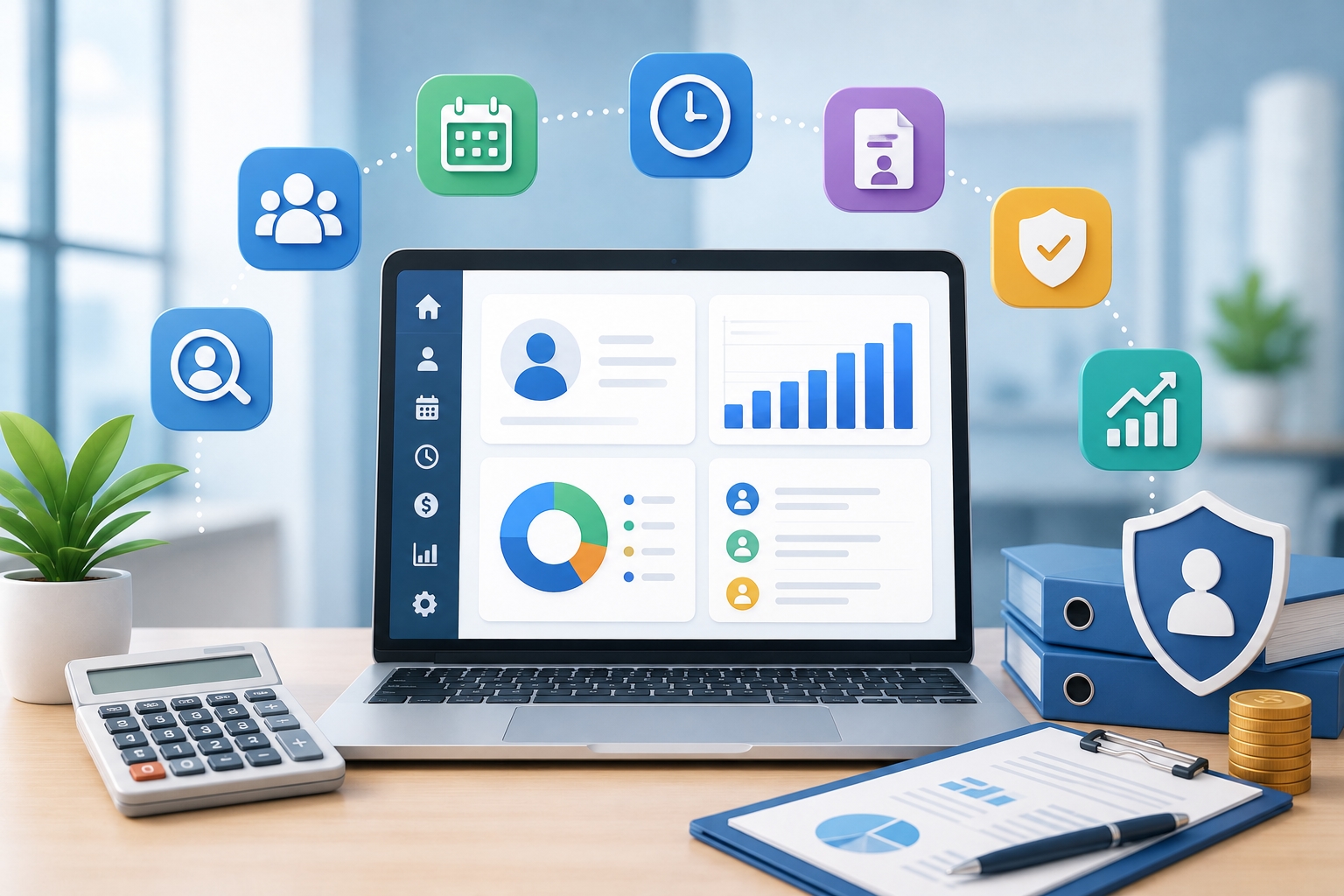
Businesses looking for HR and Payroll software can benefit from a centralized platform that connects employee management with salary processing. By bringing essential HR activities together, organizations can reduce repetitive administrative work, maintain organized records, and improve coordination between HR professionals, finance teams, managers, and employees.
Understanding Integrated HR and Payroll Management
Human resource management covers the complete employee lifecycle, from recruitment and onboarding to attendance tracking, performance reviews, and employee record maintenance. Payroll management focuses on salary calculations, deductions, payslips, payment records, and applicable statutory requirements.
When these functions operate through separate systems, HR professionals may need to transfer information manually. For example, approved leave records might need to be entered again during salary preparation.
An integrated platform connects relevant information across different functions. Employee details, attendance records, leave balances, and salary structures can be managed within a coordinated workflow, subject to the system's configuration and access permissions.
This approach helps businesses maintain consistency and reduces the administrative effort involved in everyday workforce management.
Why Businesses Need Integrated HR Solutions
As organizations expand, employee management becomes more complicated. New employees must be registered, attendance records must be maintained, salary structures may change, and managers need reliable information to make workforce decisions.
Manual processes can make these responsibilities difficult to coordinate. Separate spreadsheets may contain outdated information, and repetitive data entry can increase the risk of mistakes.
An integrated HR platform helps businesses establish standardized procedures. HR teams can access employee information more easily, monitor important activities, and manage routine requests through defined workflows.
For small businesses, this can reduce administrative pressure on owners and office managers. Larger organizations can benefit from improved coordination across departments, locations, and employee groups.
Essential Features of HR and Payroll Systems
1. Centralized Employee Records
A centralized employee database stores important information, including employee profiles, contact details, job roles, joining dates, documents, and reporting structures.
Authorized users can retrieve relevant records without searching through multiple files. Role-based access controls help ensure that sensitive employee information is available only to appropriate users.
Maintaining updated records also supports smoother onboarding, payroll preparation, and employee administration.
2. Automated Payroll Processing
Payroll processing requires accurate information about earnings, attendance, leave, deductions, reimbursements, and salary adjustments.
An automated payroll module uses configured salary structures and relevant employee data to calculate payments. It can also generate payslips and maintain historical payroll records.
For businesses operating in India, payroll systems should support applicable requirements relating to provident fund, employee state insurance, tax deductions, and other statutory obligations.
Organizations should verify payroll calculations and review regulatory changes regularly. Software can support compliance processes, but correct configuration and appropriate human review remain necessary.
3. Attendance and Leave Management
Attendance tracking helps organizations monitor working hours, late arrivals, overtime, shifts, and absences. Leave management allows employees to submit requests while managers review and approve them.
When these functions connect with payroll, approved attendance adjustments and leave information can be considered during salary preparation.
Digital workflows reduce the need for manual registers and repeated data entry. They also make it easier for HR teams to identify missing records and resolve discrepancies before payroll is finalized.
4. Recruitment and Onboarding
Recruitment involves managing vacancies, candidate applications, interviews, and hiring decisions. Once a candidate is selected, onboarding begins with documentation, employee registration, and other joining formalities.
Recruitment and onboarding tools help organize these activities in one place. Employee information collected during onboarding can then support the creation of employee records, reducing repeated entry of the same details.
A structured process improves coordination between recruiters, hiring managers, and HR administrators.
5. Employee Self-Service
Employee self-service features allow staff members to access routine HR services through a web portal or mobile application.
Depending on the platform, employees may be able to view payslips, check leave balances, review attendance, update personal information, and submit requests.
This reduces the need to contact HR for every routine question. Employees also gain convenient access to relevant information, while HR professionals can focus on more complex responsibilities.
How HR Software Supports Indian Businesses
Organizations operating in India must manage workforce administration alongside applicable employment, payroll, and tax-related requirements. The specific obligations can depend on factors such as establishment type, employee eligibility, salary structure, and current regulations.
Choosing HR Software India businesses can use effectively means evaluating more than basic employee record management. Companies should look for suitable payroll configurations, attendance integration, digital documentation, reporting capabilities, and support for relevant Indian statutory processes.
A well-configured system can help organize payroll data, maintain employee records, and prepare reports needed for internal reviews and compliance activities.
Businesses should also confirm whether the provider offers implementation assistance, regulatory updates, and support for their particular workforce requirements.
The Role of AI in HR and Payroll Automation
Artificial intelligence is introducing new ways to access information and simplify routine HR activities.
AI-enabled tools may help employees find answers to common HR questions, retrieve relevant policy information, summarize workforce records, and navigate standard workflows. For example, an employee might ask about their leave balance or attendance status through a conversational interface.
Depending on the system, AI can also assist HR teams with routine communication and information organization.
However, businesses should carefully evaluate data security, permissions, accuracy, and transparency. Sensitive salary information must be protected, and decisions involving compensation, recruitment, or employee performance should receive appropriate human oversight.
Benefits of Using a Unified HR Platform
An integrated system can improve everyday operations in several ways:
Reduced manual work: Connected workflows limit repetitive data entry across HR and payroll activities.
Improved accuracy: Consistent employee information helps reduce discrepancies between attendance and salary records.
Faster payroll preparation: Relevant attendance and leave information can be accessed during payroll processing.
Better employee access: Self-service features make common HR information easier to obtain.
Organized reporting: Centralized records help managers review workforce information and salary expenses.
Greater scalability: Businesses can expand their processes as employee numbers and operational requirements increase.
The actual benefits depend on the selected platform, implementation quality, data accuracy, and employee adoption.
How to Select the Right HR and Payroll Platform
Before choosing a solution, businesses should identify their most important operational challenges. Some organizations may need better attendance tracking, while others may prioritize payroll automation, compliance reporting, or employee self-service.
Evaluate the following factors:
Business requirements: Identify the HR and payroll processes that need improvement.
Ease of use: Make sure employees, managers, and administrators can navigate the system comfortably.
Integration capabilities: Check whether attendance, leave, payroll, and employee records work together.
Compliance support: Confirm that relevant Indian requirements are supported.
Data security: Review user permissions, authentication, audit trails, and backup practices.
Pricing: Compare subscription fees, implementation charges, and additional costs.
Customer support: Assess training, onboarding assistance, and ongoing technical help.
Requesting a product demonstration can help decision-makers understand how the system handles real workflows, from adding a new employee to reviewing and finalizing monthly payroll.
Conclusion
Managing employee information and processing salaries efficiently are essential for sustainable business operations. Disconnected tools and manual procedures can increase administrative work, create inconsistencies, and make it harder for teams to maintain accurate records.
An integrated HR platform connects employee management, attendance, leave, recruitment, and payroll activities within a coordinated system. By choosing a solution that matches their workforce requirements, businesses can simplify daily processes, improve access to information, and strengthen payroll administration. The right technology, supported by accurate data, appropriate security controls, and regular reviews, can help organizations create a more organized and productive workplace.