Applying to an educational institution has become much easier with the adoption of an Admission Management System. Whether you're a university, college, school, or training institute, digitizing admissions helps streamline applications, reduce paperwork, and improve the applicant experience. At the same time, students often ask one common question: How long does the online admission process take?
The answer depends on several factors, including document verification, application volume, approval workflows, and the technology used by the institution. A modern Admission Management System significantly reduces delays by automating repetitive tasks and providing real-time tracking throughout the admission journey.
In this guide, we'll explore the typical online admission timeline, the factors that affect it, and how institutions can accelerate admissions with the right technology.
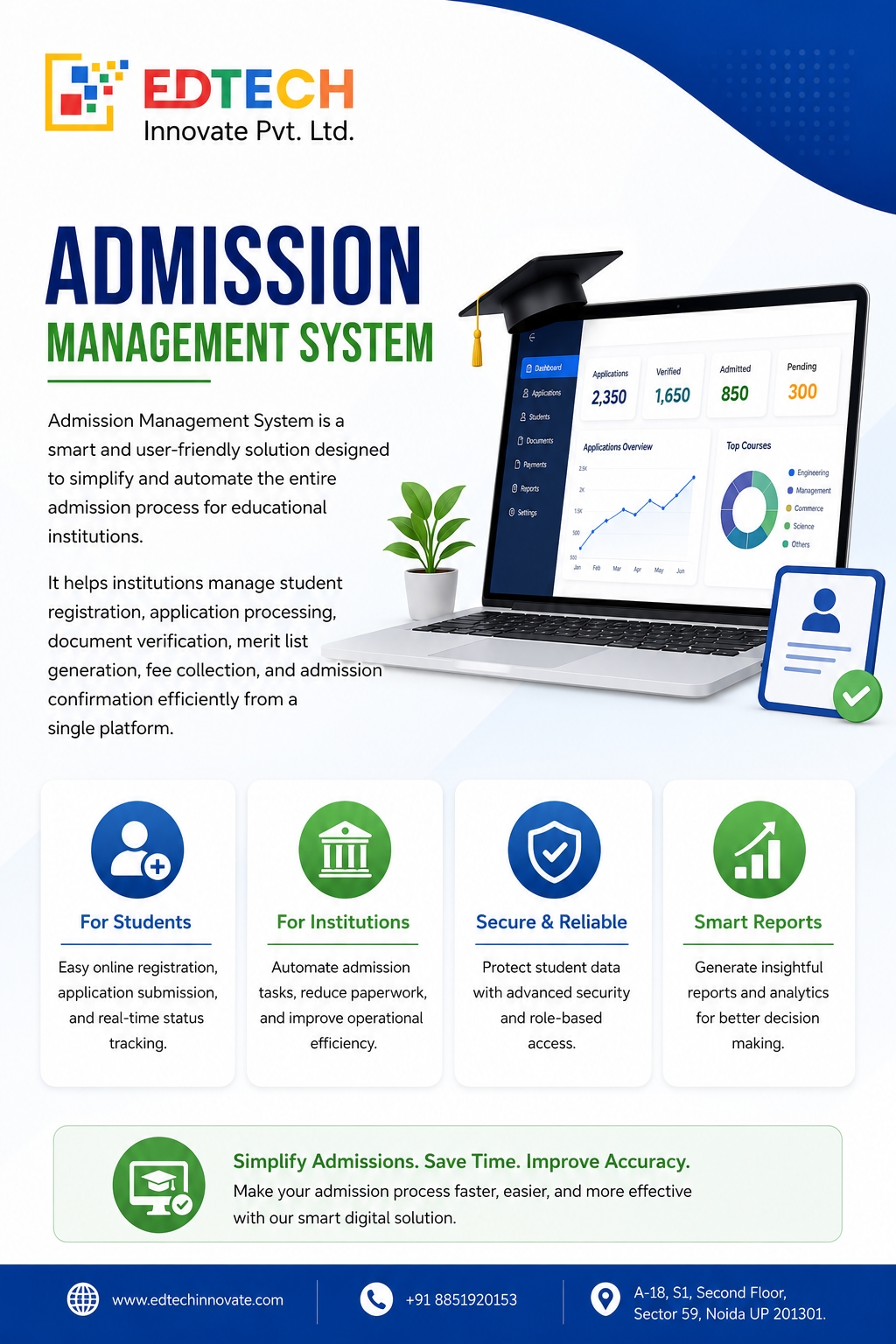
Understanding the Online Admission Process
The online admission process involves multiple stages, from application submission to final enrollment. While timelines vary between institutions, most follow a structured workflow that ensures every application is evaluated fairly.
A typical admission journey includes:
Online registration
Application form submission
Document upload
Document verification
Eligibility assessment
Entrance test or interview (if applicable)
Offer letter generation
Fee payment
Final enrollment
With an efficient Admission Management System, each of these stages becomes faster, more transparent, and easier to monitor.
Typical Timeline of the Online Admission Process
Below is a general timeline followed by many educational institutions.
1. Online Application Submission (10–30 Minutes)
Applicants begin by creating an account, filling in personal and academic information, and uploading required documents.
If the institution uses an advanced Admission Management System, applicants can:
Save applications as drafts
Resume applications later
Receive instant validation for missing information
Upload documents digitally
This stage usually takes less than half an hour when applicants have all necessary documents ready.
2. Document Verification (1–5 Working Days)
Once the application is submitted, administrators verify:
Academic certificates
Identity documents
Category certificates
Photographs
Supporting documents
Manual verification often creates bottlenecks.
A modern Admission Management Software automates document collection, tracks pending submissions, and simplifies reviewer workflows, reducing turnaround time significantly.
3. Eligibility Review (2–7 Working Days)
After verification, admissions teams evaluate eligibility based on institutional requirements.
They typically review:
Academic performance
Minimum qualification
Program-specific requirements
Entrance scores
Reservation policies
An intelligent Admission management solution automatically applies predefined eligibility rules, minimizing manual intervention while improving accuracy.
4. Entrance Exams or Interviews (If Required)
Certain programs require additional assessments.
Examples include:
Engineering
MBA
Medical
Design
Law
Professional certification programs
Scheduling depends on institutional calendars and applicant availability.
Institutions using an online enrollment management system can automate:
Interview scheduling
Candidate notifications
Slot booking
Online assessments
Result publishing
Automation significantly reduces administrative workload.
5. Admission Decision (2–5 Working Days)
Once evaluation is complete, institutions issue:
Admission offers
Waitlist notifications
Rejection letters
An automated Admission Management System enables admissions teams to generate decision letters instantly and notify applicants through email and SMS.
Applicants can also track their admission status in real time without contacting the admissions office.
6. Fee Payment and Final Enrollment (1–3 Days)
The final stage includes:
Fee payment
Acceptance confirmation
Enrollment
Student record creation
A fully integrated university admission management system connects admissions with finance and student information systems, enabling instant confirmation after payment.
Factors That Affect Admission Processing Time
Several variables influence how long the admission process takes.
Application Volume
Institutions receiving thousands of applications naturally require more processing time.
A scalable Admission Management System helps distribute workloads automatically, ensuring faster processing during peak admission seasons.
Incomplete Applications
Missing information or incorrect documents often delay admissions.
Automated validation within the system alerts applicants before submission, reducing errors.
Manual Workflows
Institutions relying on spreadsheets, emails, and paper documents experience longer turnaround times.
Replacing manual processes with an Admission management solution minimizes repetitive administrative tasks and improves efficiency.
Program Requirements
Programs requiring interviews, portfolios, or entrance examinations typically have longer admission cycles.
Automation helps coordinate these additional steps without creating unnecessary delays.
How an Admission Management System Speeds Up Admissions
Digital transformation has changed how educational institutions manage admissions.
A modern Admission Management System accelerates the process through automation, centralized data management, and real-time communication.
Key advantages include:
Automated application processing
Digital document verification
Online fee collection
Workflow automation
Real-time application tracking
Email and SMS notifications
Reduced paperwork
Faster approvals
Improved applicant experience
Better reporting and analytics
Instead of spending weeks on manual administrative tasks, institutions can process applications much faster while maintaining compliance and accuracy.
Read More - What Is Admission Management Software? Complete Guide for Schools, Colleges & Universities (2026)
Best Practices for Faster Online Admissions
Institutions looking to reduce admission timelines should adopt these best practices.
Standardize Admission Workflows
Create predefined workflows for:
Application review
Document verification
Eligibility checks
Approval hierarchy
Enrollment
Consistency improves speed and reduces errors.
Automate Applicant Communication
Applicants frequently contact admissions offices for status updates.
Automated communication helps by sending:
Application confirmations
Missing document alerts
Interview invitations
Admission decisions
Payment reminders
This improves transparency while reducing staff workload.
Enable Online Document Verification
Digital document management eliminates physical paperwork and speeds up verification.
Applicants can upload documents securely, while administrators review them through a centralized dashboard.
Integrate Payment Gateways
Online payment integration removes delays caused by offline fee collection.
Applicants receive instant payment confirmation, allowing enrollment to proceed immediately.
Use Data Analytics
Admission dashboards help institutions monitor:
Pending applications
Approval timelines
Verification delays
Enrollment conversion rates
These insights support continuous process improvement.
Benefits for Educational Institutions
Implementing a comprehensive Admission Management System offers long-term operational advantages.
These include:
Reduced administrative workload
Faster admission cycles
Better applicant engagement
Improved data accuracy
Enhanced compliance
Higher enrollment conversion
Centralized applicant records
Better decision-making through analytics
Whether managing a few hundred or several thousand applications, automation helps institutions maintain efficiency without compromising quality.
How Long Should Applicants Expect to Wait?
Although timelines vary, a typical online admission process follows this schedule:
Admission Stage | Typical Duration |
Application Submission | 10–30 Minutes |
Document Verification | 1–5 Working Days |
Eligibility Review | 2–7 Working Days |
Entrance Test/Interview | Depends on Schedule |
Admission Decision | 2–5 Working Days |
Fee Payment & Enrollment | 1–3 Days |
Institutions using an advanced Admission Management System often complete the entire process within one to three weeks, depending on program requirements and application volume.
Conclusion
An efficient admission process benefits both institutions and applicants. While traditional admission methods often involve paperwork, manual verification, and lengthy communication, a modern Admission Management System streamlines every stage of the admission lifecycle.
From application submission to final enrollment, automation reduces delays, improves transparency, and enhances the overall applicant experience. Solutions such as Admission Management Software, an Admission management solution, an online enrollment management system, and a university admission management system empower educational institutions to handle increasing application volumes with greater speed and accuracy.
As educational institutions continue to embrace digital transformation, investing in a robust admission platform becomes essential for delivering seamless, efficient, and student-centric admission experiences. Your Brand provides a comprehensive Admission Management System designed to simplify admissions, automate workflows, and help institutions achieve faster, smarter, and more efficient enrollment management.
Frequently Asked Questions (FAQs)
1. How long does the online admission process usually take?
Most institutions complete the online admission process within one to three weeks, depending on application volume, verification requirements, and program-specific admission procedures.
2. How does an Admission Management System reduce admission time?
An Admission Management System automates application processing, document verification, communication, approvals, and reporting, significantly reducing manual work and accelerating admissions.
3. What documents are generally required during online admission?
Commonly required documents include academic certificates, identity proof, passport-size photographs, address proof, category certificates (if applicable), and entrance examination scorecards.
4. What is the difference between Admission Management Software and an online enrollment management system?
Admission Management Software focuses on managing applications and admission workflows, while an online enrollment management system extends beyond admissions to include enrollment, communication, fee collection, and applicant lifecycle management.
5. Why should universities invest in a university admission management system?
A university admission management system improves operational efficiency, enhances applicant experience, automates administrative tasks, provides centralized data management, and enables institutions to process admissions more accurately and efficiently.