
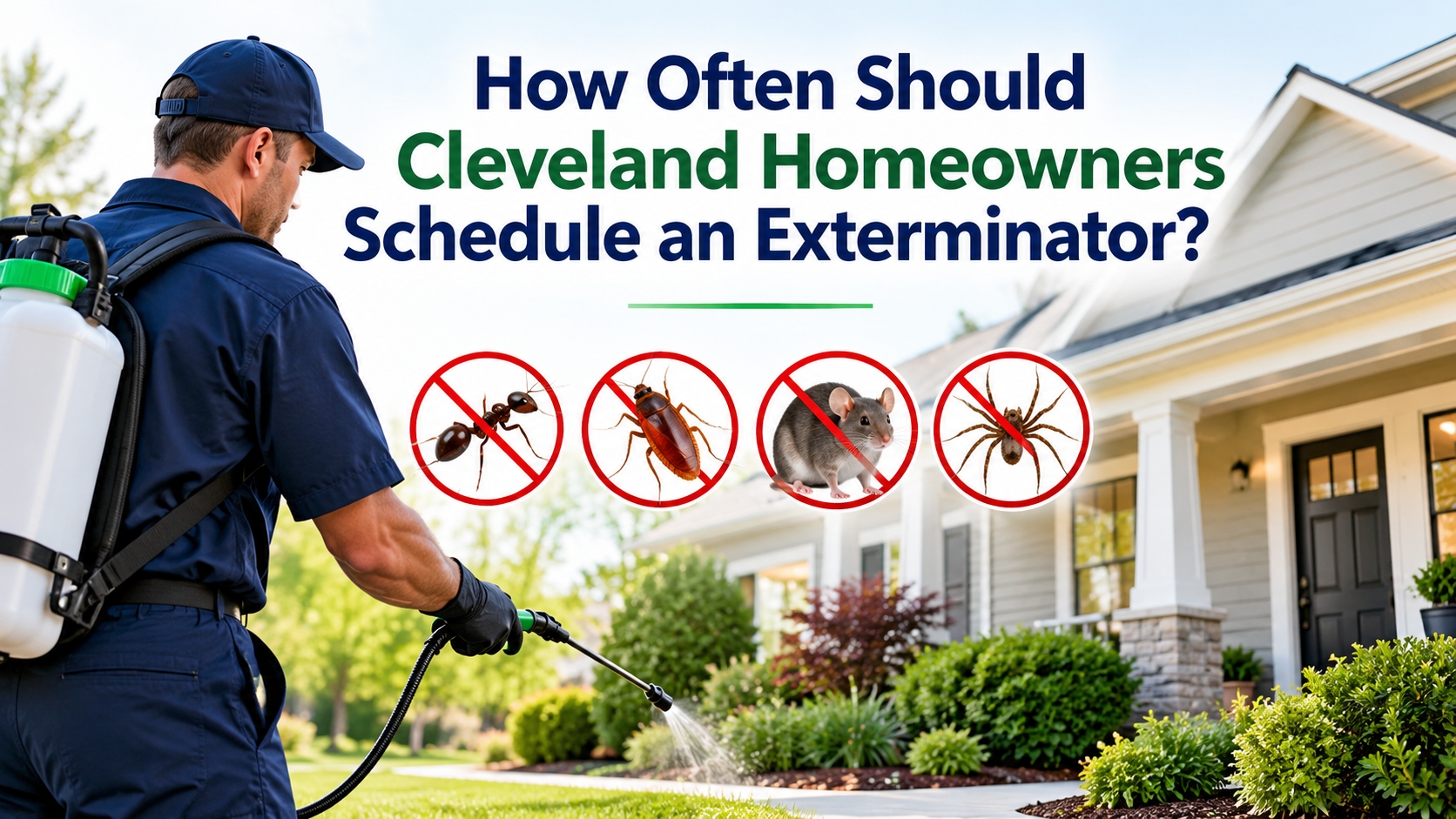
Pest activity in Northeast Ohio follows the seasons. Cold winters, humid summers, and a large supply of older homes all influence which pests enter a property and when they do so. For that reason, the right schedule for an exterminator in Cleveland, Ohio, depends on the time of year, the age and condition of the home, and the pest history of the property. This article explains common service intervals, the factors that change them, and the signs that call for a visit sooner than planned.
The Standard Recommendation: Quarterly Service
The most common recommendation for general pest control in Cleveland, Ohio, is one visit every three months, or four visits per year. This interval matches the natural cycles of insects and rodents in the region. Pest control products applied around a home lose strength over time because rain, snow, sunlight, and foot traffic break them down. A visit every three months replaces that protection before pests can establish themselves again.
Quarterly service also allows a technician to inspect the property on a regular basis. Small problems, such as a new ant trail or a gap near a utility line, are easier to correct early than after an infestation has grown. Homes with no recent pest problems often do well with this schedule, and many homeowners keep it year after year.
How the Seasons Affect Pest Activity
Spring
Warming temperatures wake insects that spent the winter inactive. Ants, spiders, and carpenter bees become active, and termite swarms often appear when the weather turns warm and damp. Spring is a common time to start a service plan because treatments can address pests before their numbers rise.
Summer
Heat and humidity speed up insect breeding. Mosquitoes, flies, wasps, and cockroaches are most active between June and September. Standing water, pet food, and outdoor trash bins attract many of these pests.
Fall
As temperatures drop, rodents, stink bugs, boxelder bugs, and spiders move indoors to find shelter. A fall visit focuses on sealing entry points and treating the outside of the home before cold weather arrives.
Winter
Pest activity slows outdoors but continues inside heated buildings. Mice and rats are the main concern, along with cockroaches in kitchens and bathrooms. Many service plans include a winter visit to check basements, attics, and crawl spaces.
Factors That Change the Schedule
Age and Construction of the Home
Older homes in the Cleveland area often have stone or brick foundations, small cracks, and gaps around pipes. These features give pests easy access. Such properties may need quarterly service or more frequent visits during fall and winter. Newer homes with tighter construction may need fewer visits, though they are still exposed to ants, spiders, and other common pests.
Property Location and Landscaping
Homes near wooded areas, creeks, or Lake Erie face more pressure from insects that prefer moisture, as well as from ticks and wildlife. Dense shrubs against the house, firewood stacked near the walls, and overgrown yards also create shelter. Properties with these conditions often need closer attention than homes on open lots.
Pest History
A property with a past infestation of cockroaches, bed bugs, or rodents usually needs follow-up visits. Providers of general pest control in Cleveland, Ohio, often schedule these visits every two to four weeks at first, then move to a quarterly plan once activity stops.
Household Needs
Larger households, homes with young children, and homes with pets may choose a schedule based on how pests could affect them. Apartment buildings and food service businesses often follow monthly schedules because more people use the space.
Service Timing by Pest Type
Different pests call for different timing. Ants, spiders, silverfish, and cockroaches are usually handled with quarterly service. Rodents require a different approach. Technicians commonly check traps and entry points every few weeks until activity ends, then shift to seasonal visits.
Termites are managed through an annual inspection, since damage develops slowly and may stay hidden for years. Wasps, hornets, and bed bugs are treated as needed, with one or two follow-up visits to confirm the problem is gone. Mosquito and tick control is seasonal and usually runs from late spring through early fall.
Signs That Call for an Earlier Visit
Certain signs indicate that a scheduled visit should not wait. These include droppings, gnaw marks, or scratching sounds in walls. Other signs are live insects in kitchens or bedrooms, small piles of sawdust near wood, mud tubes along foundation walls, and small dark spots or bite marks on bedding. Homeowners who notice any of these signs may contact an exterminator in Cleveland, Ohio, to schedule an inspection outside the regular plan. Early action usually limits the amount of treatment needed.
What a Typical Service Visit Includes
A standard visit begins with an inspection of the exterior and interior. The technician checks entry points, moisture problems, and areas where pests hide. Treatment is then applied to the foundation, eaves, and other targeted areas. The technician may also place monitoring devices or bait stations.
After the visit, the homeowner receives a summary of findings and suggested steps, such as trimming plants, repairing screens, or storing food in sealed containers. Companies that offer scheduled general pest control in Cleveland, Ohio, usually build their plans around this routine. G & G Exterminating is one local provider that offers recurring service plans along with one-time treatments for specific problems, which allows homeowners to match service to the needs of their property.
Steps Homeowners Can Take Between Visits
Regular visits work best alongside basic home upkeep. Sealing cracks, fixing leaky pipes, and keeping gutters clear reduce moisture around the home. Storing food in airtight containers and taking out trash often limit what attracts pests. Moving firewood away from the house and trimming branches that touch the roof also remove common access routes.
Conclusion
No single schedule suits every property in Northeast Ohio. Quarterly service remains the standard starting point, while rodents, termites, and past infestations may call for a different timeline. Homeowners who review the age of the home, the season, and the pest history of the property can select an interval that fits their situation. A licensed exterminator in Cleveland, Ohio, can inspect a home and recommend a plan based on those details.


