
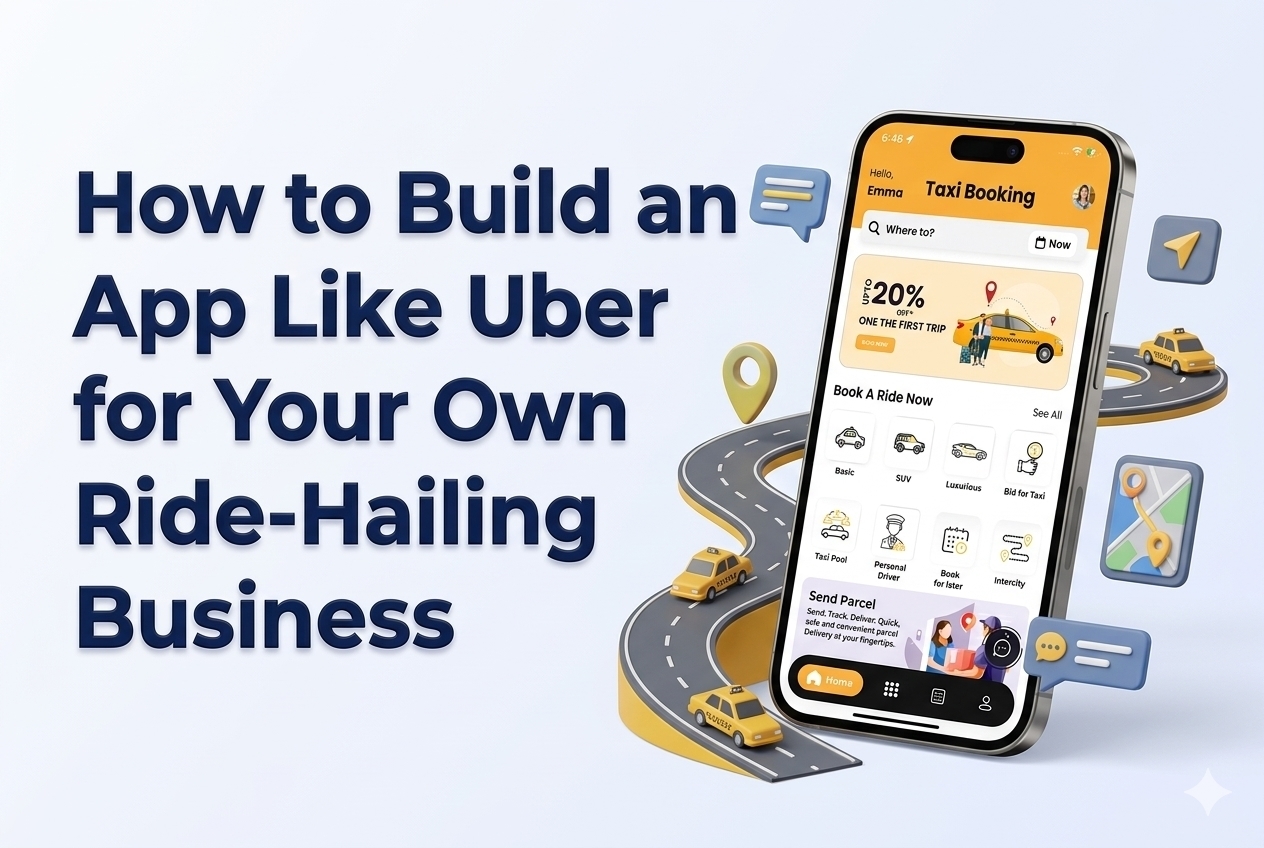
The transportation industry is increasingly moving toward digital-first business models. Customers expect convenient booking, transparent pricing, real-time tracking, and digital payment options, while transportation companies need technology that can simplify fleet operations and support business growth.
For entrepreneurs, startups, fleet operators, and established transportation companies, building an App Like Uber can provide a way to establish a branded ride-hailing platform without depending entirely on third-party marketplaces.
However, launching such a platform is not simply about creating a passenger application. A commercially viable solution needs technology for customers, drivers, administrators, payments, fleet management, reporting, and business operations.
Why Businesses Are Investing in Ride-Hailing Platforms
A dedicated ride-hailing platform gives businesses greater control over their digital operations.
Instead of relying on an external marketplace, a company can build its own customer base, define its pricing structure, manage driver relationships, and create services specifically for its target market.
Businesses can develop platforms for:
City-based taxi services
Corporate transportation
Airport transfers
Premium transportation
Fleet management
Rental services
Outstation transportation
Electric vehicle services
Specialized transportation
This flexibility allows the business model to be designed around a particular market rather than forcing the company to operate within a predefined marketplace structure.
Define Your Business Requirements Before Development
The first step in developing an App Like Uber should be business planning.
Identify your target customers, operating locations, transportation categories, pricing strategy, and revenue model.
For example, a fleet operator may want centralized vehicle management, while a startup targeting corporate customers may need business accounts, scheduled bookings, invoices, and corporate billing.
Important questions include:
Who are your target customers?
Which cities or regions will you serve?
Will you own the fleet or onboard independent drivers?
Which vehicle categories will you offer?
Will rides be instant, scheduled, or both?
Which payment methods will customers use?
How will your business generate revenue?
Answering these questions early helps determine the technology and features required for the platform.
Build the Platform Around Three Business Components
A professional ride-hailing platform generally requires three primary interfaces.
1. Passenger App
The passenger application is the customer-facing component. It should make booking convenient while providing customers with visibility throughout the ride.
Core capabilities can include:
Registration and login
Pickup and destination selection
Fare estimation
Instant booking
Scheduled rides
Vehicle selection
Real-time driver tracking
Digital payments
Promo codes
Ride history
Ratings and reviews
Notifications
Customer support
Businesses can customize these functions according to their target market and service model.
2. Driver App
The driver application supports day-to-day transportation operations.
Drivers can use it to:
Register with the platform
Submit documents
Manage availability
Receive ride requests
Accept or reject bookings
Navigate to pickup locations
Update trip status
View earnings
Check ride history
Manage profiles
Receive notifications
For fleet-based businesses, driver management can also be connected with vehicle information and administrative controls.
3. Admin Dashboard
The admin dashboard is particularly important from a B2B perspective because it gives the business operational control.
Administrators can manage:
Customers
Drivers
Vehicles
Bookings
Service locations
Pricing
Commissions
Payments
Promotions
Reports
Driver verification
Customer support
A centralized dashboard can help management monitor operations and identify areas requiring attention.
Choose Features That Support Your Business Model
Not every business needs the same feature set.
A startup launching economy taxi services may prioritize instant bookings and affordable pricing, while a corporate transportation company may require scheduled rides, business accounts, invoices, and multiple passenger profiles.
Additional functionality can include:
Dynamic Pricing
Businesses can configure pricing according to factors such as distance, vehicle category, demand, time, or service area.
Scheduled Bookings
Customers can reserve transportation in advance, making the feature useful for airport transfers, corporate travel, and planned journeys.
Multiple Vehicle Categories
Businesses can offer economy, premium, SUV, electric, or other categories depending on their market.
Corporate Accounts
B2B transportation providers can create dedicated accounts for companies that regularly book rides for employees or customers.
Driver Verification
Document collection and verification workflows can help businesses manage driver onboarding according to their operational requirements.
Add AI Where It Creates Business Value
AI can be integrated into an App Like Uber to support specific business processes.
For example, AI Driver Earnings Assistance can analyze ride activity and provide drivers with useful insights.
Risk and Fraud Detection can help identify unusual booking or transaction patterns for further review.
Dynamic Surge Pricing can support configured pricing strategies based on demand and driver availability.
Businesses can also introduce Taxi Booking Assistance to automate selected customer interactions.
Another option is WhatsApp Taxi Booking, which can provide an additional channel for customers to initiate ride-related interactions.
The objective should be to use AI where it solves an identifiable operational or customer-experience problem.
Customize the Platform for Your Brand
A business investing in ride-hailing technology should not have to operate under another company's identity.
A customizable platform can be adapted with:
Business name
Logo
Brand colors
Fonts
App interface
Vehicle categories
Pricing rules
Commission settings
Payment methods
Service locations
Promotional campaigns
This allows companies to establish a recognizable digital transportation brand.
For businesses entering different markets, additional localization can include currencies, languages, payment gateways, map services, and region-specific configurations.
Consider an Uber Clone Script as a Starting Point
Developing every component from scratch is one approach, but it is not the only option.
Businesses can also consider a ready-made Uber Clone Script that provides the core architecture for a ride-hailing platform.
Depending on the solution, it may include passenger and driver apps, an admin panel, booking management, GPS tracking, payment integration, notifications, and other standard functionality.
The advantage for a business is that development can begin with an established foundation rather than building every basic component from zero.
However, businesses should evaluate customization capabilities, source-code access, scalability, integrations, security, technical support, and maintenance before selecting a solution.
Plan for Business Scalability
A platform designed for a small launch should also have the ability to support future expansion.
Your technology infrastructure may eventually need to handle:
More drivers
More customers
Higher booking volumes
Multiple cities
Additional vehicle categories
New payment methods
Corporate customers
Additional transportation services
Scalability should therefore be considered during architecture and development rather than after the platform has already experienced rapid growth.
Think About Revenue From Day One
Technology should support a clearly defined monetization strategy.
A ride-hailing business can consider revenue models such as:
Ride Commission: The platform retains a percentage of each completed booking.
Service Fees: Customers may pay a platform or booking fee.
Driver Subscription: Drivers can pay recurring fees for access to platform services.
Premium Services: Businesses can introduce higher-priced transportation categories.
Corporate Accounts: Companies can provide transportation services to businesses through dedicated accounts or contracts.
A business can also combine multiple revenue streams depending on its target market.
What Does It Cost to Build an App Like Uber?
There is no universal development price for an App Like Uber. The investment depends on the scope of the platform.
Major cost factors include:
Number of applications
UI/UX requirements
Custom features
Third-party integrations
Payment gateways
Map and GPS services
AI capabilities
Backend infrastructure
Security requirements
Development approach
Maintenance and support
A business should first prepare a feature and integration requirement list before requesting a project estimate.
Launch With a Business-First Strategy
Successful ride-hailing technology requires more than attractive applications. Businesses also need a plan for driver acquisition, customer acquisition, pricing, service coverage, customer support, and operational management.
Start with a defined market rather than trying to serve everyone immediately. Establish the services your customers need, identify your operational requirements, and then build the technology around those priorities.
An App Like Uber can then become more than a booking application—it can serve as the digital infrastructure connecting your customers, drivers, fleet, payments, and business operations.
Build Your Own Ride-Hailing Business
For entrepreneurs, fleet owners, startups, and transportation companies, developing an App Like Uber can provide a foundation for creating an independent digital mobility business.
The key is customization. Your platform should reflect your brand, pricing strategy, target market, transportation services, and expansion plans.
Whether you choose a custom-built solution or a customizable Uber Clone App, focus on scalable technology, essential business functionality, reliable integrations, and a user experience that serves both riders and drivers.
Ready to Launch Your Ride-Hailing Platform?
Build a branded App Like Uber with passenger and driver applications, an admin dashboard, real-time tracking, payment integration, configurable pricing, and advanced business features.
Talk to our team to discuss your ride-hailing business requirements and explore a customizable platform built around your market and growth plans.
FAQs
1. What is an App Like Uber?
An App Like Uber is a digital ride-hailing platform that connects passengers with drivers. A complete solution generally includes passenger and driver applications along with an admin dashboard for managing bookings, users, payments, pricing, and operations.
2. Can businesses customize an App Like Uber?
Yes. Businesses can customize branding, vehicle categories, pricing, payment methods, service areas, commission structures, features, and integrations according to their operational requirements.
3. Is an Uber Clone Script suitable for a startup?
A ready-made Uber Clone Script can provide a foundation for startups that want to launch a ride-hailing platform without developing every standard component from scratch. Businesses should evaluate customization, scalability, source-code access, integrations, security, and support before choosing a solution.
4. How can a ride-hailing business generate revenue?
Common models include ride commissions, service fees, driver subscriptions, premium transportation services, and corporate transportation accounts. Businesses can select or combine revenue models based on their market and operating strategy.