
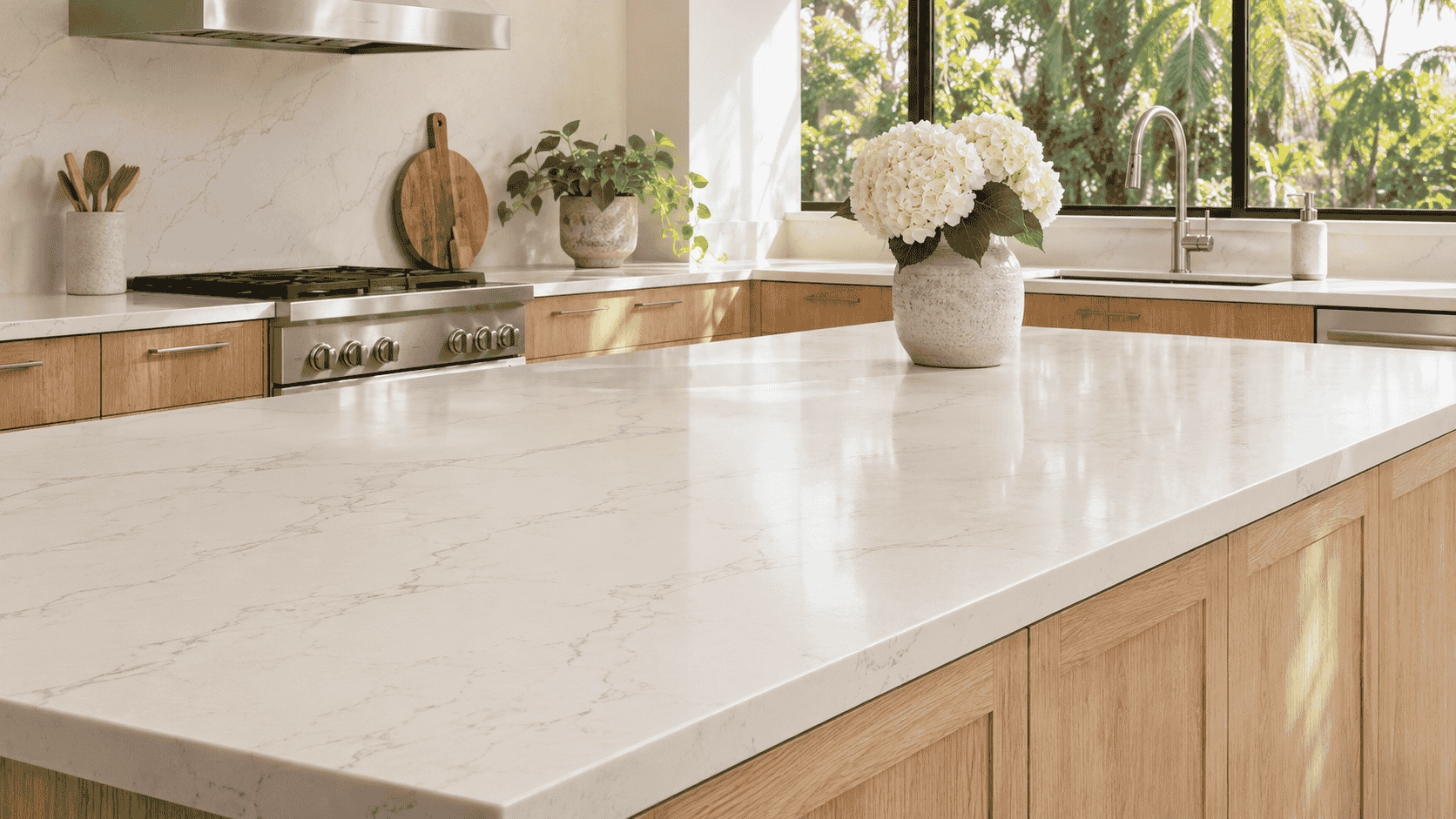
The countertop sample looks good beside your cabinet door, and the tile looks good on the display wall. Then you bring them home, put them together, and realize one looks warmer than you expected. If you’re choosing kitchen countertops for a Tampa Bay home, compare them with your backsplash before ordering either one. The two surfaces meet right where you cook and clean, so it’s worth seeing how their colors, patterns, and edges will work together in your kitchen.
Start With What You’re Keeping
Set out a cabinet door sample or use a door already in the room. Include the floor and any wall paint you plan to keep. If the cabinets are cream, for example, take a moment to look at them beside a bright white tile. You might like the contrast, or you might find that it makes the cream look yellower than you remember. Either reaction is useful.
If you’re keeping your existing backsplash, bring countertop samples to the wall rather than relying on a picture of the tile. Place each sample against a few different spots, including one under the cabinets and another near a window. If you’re keeping the counter and replacing the tile, do the reverse. Start with the surface that has to stay and let it narrow down your choices.
Look at the Samples in Their Installed Positions
Put the countertop sample flat and hold the tile upright behind it. That’s how you’ll see them once they’re installed. Two samples lying next to each other on a table can give you a different impression from the same pieces meeting at a right angle, especially beneath the lights you use after dark.
Leave the samples in place through part of the day if you can. Look from your usual spot at the sink, then from the doorway. You might be fine with a slight difference in tone up close but notice that the whole combination looks too cool from across the room. If you’re comparing several choices, change one sample at a time. Keeping the counter sample in place while you swap tiles makes it easier to tell what you prefer.
Decide Which Pattern You Want to Notice First
If your favorite countertop has strong veining, try it with a backsplash that gives the pattern some room. That could mean a simple tile in a color you already see in the slab. If you’re drawn to a lively tile pattern, put it beside a quieter counter and see whether the tile still feels like the part of the room you want to feature.
You can use two patterns together if you like the result. The key is to see more than a single tile and a small piece of counter. Ask to see several tiles laid out together, and look at a larger sample or an image of the proposed slab. A tile with a little variation on its own may look much busier when repeated across a wall. That may be exactly what you want behind the stove, but it’s easier to decide once you can picture the whole section.
Compare Grout as Part of the Tile Choice
If you’re using tile, put a grout sample beside it before making a final decision. A color close to the tile can make the wall read more quietly. A contrasting color can draw attention to the individual tiles and the way they’re arranged. The same tile can give you two very different looks depending on which detail you want to see.
Think about the grout where the backsplash meets the counter, too. A shade that looks good against the tile might be more noticeable next to a light countertop. If you’re using an installer’s sample board, check what the grout looks like against the rest of the materials you’re keeping. Ask the installer to explain how the joint at the counter will be finished, so you know what color and line you’ll see there.
Work Out Where the Backsplash Will End
Stand at the end of the counter and look at the cabinets above it. Do the upper and lower cabinets stop in the same place? Is there a window, doorway, or open shelf nearby? If you haven’t decided where the backsplash will stop, these are good places to start. You may want the tile to end at the counter edge or line up with a nearby feature. Try marking a few options with painter’s tape and look at them from the room entrance.
The area behind the stove deserves a separate look. If the backsplash will continue higher there, check how that section relates to the rest of the wall. For any part that involves a range, hood, outlets, or switches, have the installer and the appropriate trades review the plan before cutting or ordering. It’s easier to settle those details while the backsplash is still a drawing.
Compare Tile With a Slab Backsplash
If you’re considering extending the countertop material up the wall, ask to see how the proposed wall pieces would look. A vein that runs lengthwise across the counter might meet the wall at a point where the pattern changes. Decide whether that transition matters to you, then ask the fabricator how the pieces could be laid out before they’re cut.
Tile gives you another way to add color, shape, or texture. You could choose a wall pattern you love and keep the counter simple, or use a small section of decorative tile and a quieter treatment elsewhere. Compare the two ideas against the actual wall rather than assuming the option you prefer in a photo will suit your room. Include the corners, the outlets, and the space beneath the upper cabinets in both plans.
Put the Counter and Wall Work on the Same Schedule
When more than one person is working in the kitchen, make sure everyone knows who is doing what at the joint between the two surfaces. Ask when the counter will be measured and installed, when the backsplash work can begin, and who will handle any wall preparation. If you’re removing old tile or keeping part of an existing backsplash, tell both crews before they quote the job.
Before you approve the order, put the countertop, tile or slab backsplash, and grout samples together one last time. Look at the spot beside the sink and the wall you see when you walk in. If you like how the pieces meet in both places, you’ve answered the question that matters most: how the materials will look together in the kitchen you use, under the light you actually have.



