
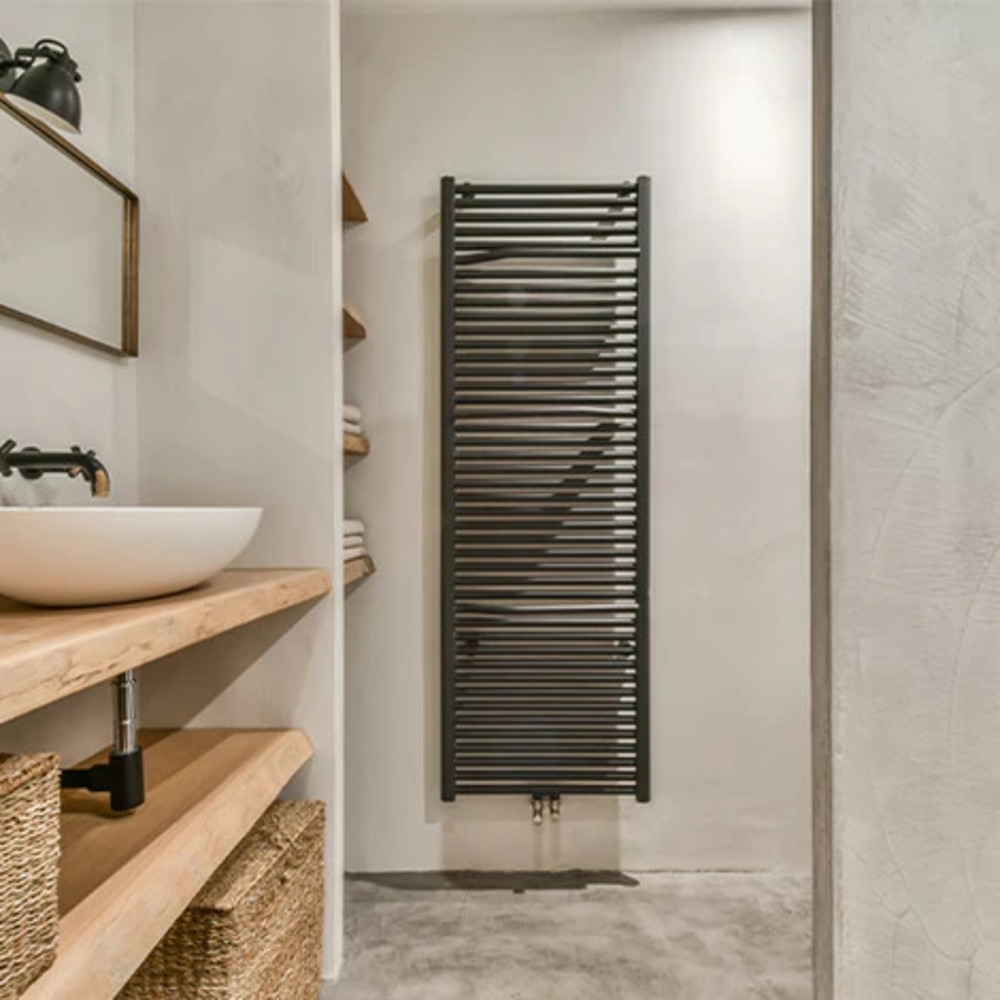
A towel rail might seem like a small detail in bathroom design, but choosing the right size can make a big difference in both comfort and practicality. Too small, and it won’t heat the room or dry towels properly. Too large, and it can overpower the space or waste energy. Getting the balance right ensures your bathroom stays warm, your towels dry efficiently, and the overall layout feels just right.
Many people choose towel rails based purely on appearance, only to discover later that they don’t deliver enough heat or don’t fit well with the room’s layout. Sizing a towel rail correctly involves more than just measuring wall space—it’s about understanding heat output, towel capacity, and how you actually use your bathroom.
This guide breaks down everything you need to know to size a towel rail for maximum heat and everyday convenience, helping you make a confident, long-term choice.
1. Understanding What a Towel Rail Needs to Do
Before choosing a size, it’s important to be clear about what you expect from your towel rail. Some people want it mainly to warm towels, while others rely on it as a primary heat source for the bathroom.
If your towel rail is meant only to dry towels and add a touch of warmth, you can choose a smaller model focused on convenience. But if it’s the main source of heating, the rail must produce enough heat to comfortably warm the entire room, especially in colder months.
The size of the bathroom plays a key role. Larger bathrooms with high ceilings or poor insulation need more heat output, which usually means a taller or wider towel rail. Smaller bathrooms, en-suites, and cloakrooms can often be heated efficiently with compact models.
You should also consider how many towels the rail needs to hold. A household with multiple users may need space for several towels at once, while a guest bathroom may only need one or two. Understanding your needs helps you avoid choosing a rail that looks good but doesn’t perform well.
2. Calculating the Right Heat Output for Your Bathroom
Heat output is one of the most important factors when sizing a towel rail. It’s usually measured in watts or BTUs and determines how effectively the rail can heat the space.
Start by calculating the approximate heat requirement of your bathroom. This depends on the room’s size, ceiling height, insulation quality, and number of external walls. Bathrooms typically need a higher heat output than other rooms because of moisture and ventilation.
Once you have an estimated heat requirement, choose a towel rail that meets or slightly exceeds it. If the rail’s output is too low, the bathroom will feel cold, and towels will take longer to dry. If it’s too high, the room may overheat and waste energy.
Keep in mind that hanging towels on the rail reduces heat output. Towels act as insulation, meaning the rail produces less warmth for the room when fully loaded. Choosing a slightly larger rail than your calculations suggest helps compensate for this.
If you’re unsure, it’s usually better to size up slightly rather than down. A rail with sufficient output ensures comfort and efficient towel drying throughout the year.
3. Choosing the Right Height, Width, and Bar Spacing
Once heat output is considered, physical dimensions become the next priority. Height, width, and bar spacing all affect how practical and convenient the towel rail will be.
Height
Tall towel rails are ideal for maximizing heat output without taking up much horizontal wall space. They work especially well in narrow bathrooms or next to vanities and showers. Taller rails also allow towels to hang fully, improving drying efficiency.
Width
Wider towel rails offer more space for towels but require more wall space. They’re best suited for larger bathrooms where wall space isn’t limited. In small bathrooms, overly wide rails can feel bulky or obstruct movement.
Bar Spacing
The spacing between bars affects how easily towels can be hung and how well they dry. Closely spaced bars look sleek but may slow drying if towels are folded over. Wider spacing improves airflow and drying performance.
Choosing the right proportions ensures the towel rail is both functional and visually balanced within the bathroom.
4. Placement and Accessibility for Everyday Convenience
Where you place the towel rail is just as important as its size. Even the perfect rail won’t feel convenient if it’s awkward to reach or poorly positioned.
Ideally, the towel rail should be within easy reach of the shower or bath so you can grab a warm towel without crossing the room. At the same time, it shouldn’t be so close that towels get splashed constantly.
Height from the floor matters too. The rail should be low enough for easy access but high enough to allow towels to hang freely without touching the floor. This improves hygiene and drying efficiency.
Also consider door swings, windows, and other fixtures. The towel rail shouldn’t block doors or interfere with storage units. In smaller bathrooms, vertical rails placed strategically can save space while maintaining functionality.
Thinking about daily use ensures your towel rail enhances comfort rather than becoming an obstacle.
5. Balancing Style, Energy Efficiency, and Long-Term Use
While size and heat output are essential, style and energy efficiency shouldn’t be overlooked. The towel rail should complement your bathroom design while remaining practical and economical to run.
Sleek, minimalist rails suit modern bathrooms, while more traditional ladder-style designs work well in classic or transitional spaces. Choosing a finish that matches your taps and fixtures helps create a cohesive look.
Energy efficiency is another important factor. A correctly sized towel rail heats more efficiently than one that’s too small or excessively large. Pairing it with a timer or thermostat improves control and reduces energy waste.
Finally, think about long-term use. A well-sized towel rail should serve you comfortably even if your household changes or your bathroom usage increases. Investing in the right size now prevents the need for upgrades later.
Conclusion
Sizing a towel rail correctly is about more than filling empty wall space. By understanding your heating needs, choosing the right dimensions, and planning thoughtful placement, you can enjoy a bathroom that feels warm, comfortable, and convenient every day.
A properly sized towel rail dries towels efficiently, heats the room effectively, and enhances your bathroom’s overall design. With careful consideration, it becomes a practical and stylish feature that delivers comfort long after installation.