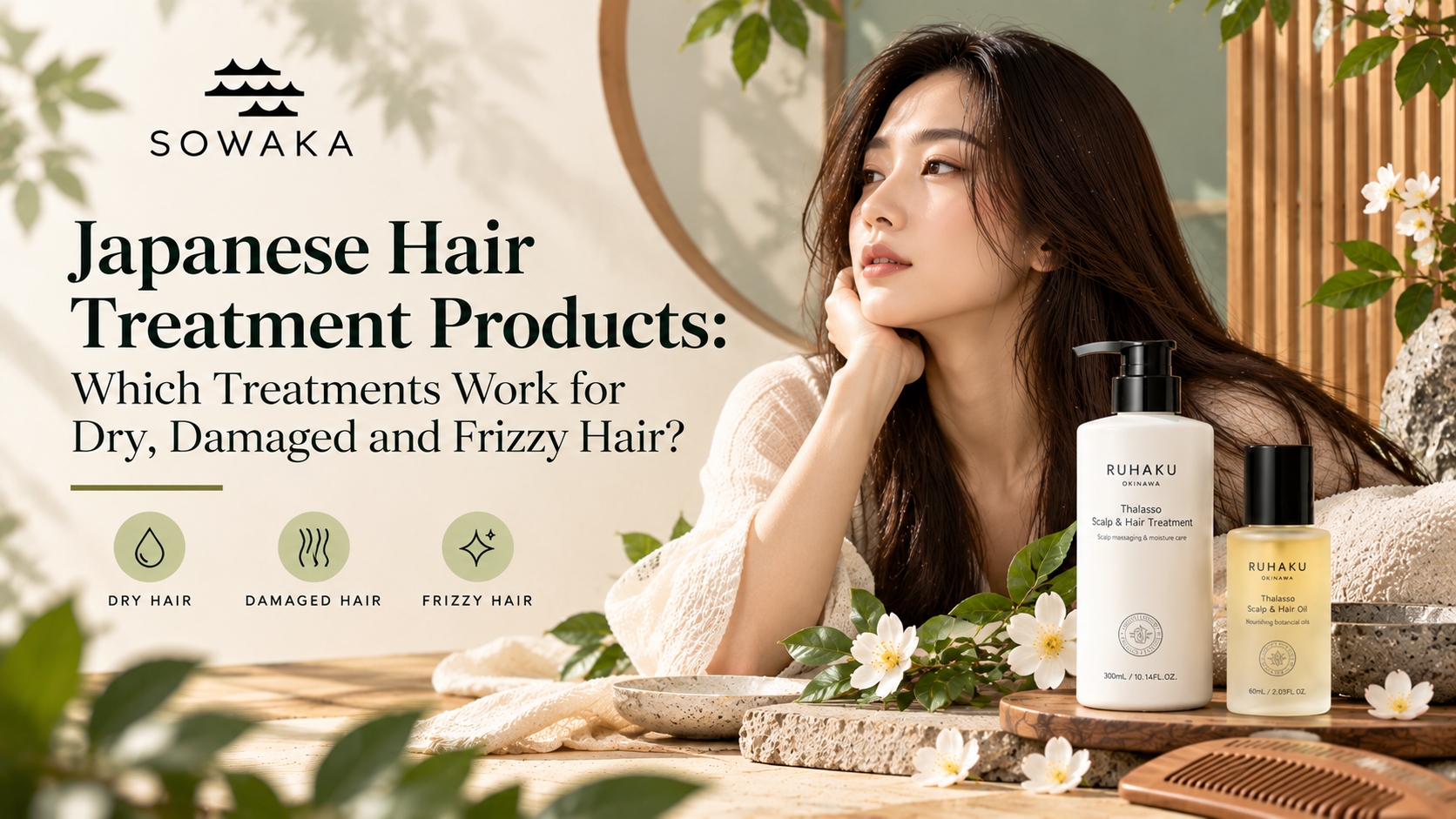
Hair that feels rough after washing, breaks after a blow-dryer pass, or puffs up the moment humidity rises usually points to a worn cuticle and moisture escaping. Japanese hair treatment products can help, but only when the treatment matches the problem. Hydrating masks suit dry hair, conditioning and bond-building treatments suit damaged hair, and leave-in products suit frizz. None of them rebuild hair permanently. What they do is improve softness, reduce friction, and make strands easier to manage. Here is how to match each approach to your hair.
Why Japanese Treatments Can Help Dry and Damaged Hair
Japanese hair care is often built around a routine rather than a single miracle product: gentle cleansing, conditioning, and protecting hair between washes. This layered approach lines up with mainstream dermatology advice, which stresses conditioning after shampooing and limiting heat.
Certain ingredients appear often in these formulas. Camellia oil, a traditional emollient, lightly coats the strand to add slip and shine. Humectants such as glycerin and panthenol draw water into the hair, and rice-derived ingredients, including rice bran oil and hydrolyzed rice protein, are typically used for conditioning and smoothing. Not every formula contains them, and a traditional ingredient is not automatically proven to repair hair. Their dependable benefits are cosmetic: better moisture retention, hair cuticle protection, and a smoother feel.
Which Treatment Works Best for Your Hair Concern?
For Dry Hair: Focus on Hydration and Conditioning
Dry hair lacks both water and surface lipids, so it feels rough and looks dull. A hydrating conditioner used regularly, plus a nourishing hair mask about once a week, can noticeably soften the strand. Look for humectants paired with emollients, so moisture is drawn in and then sealed. Fine hair generally does better with lighter formulas, while thick or coarse hair can handle richer creams.
For Damaged Hair: Choose Targeted Repair Treatments
Heat styling damage and bleaching roughen the cuticle and weaken the strand. Rinse-out conditioning treatments and masks containing proteins or amino acids can temporarily fill rough spots and improve elasticity. Some bond-building products are designed for chemically processed hair, and a leave-in treatment adds protection between washes. Still, cosmetic products cannot permanently restore severely damaged hair to its original condition. Regular trims remain the only way to remove split or broken ends.
For Frizzy Hair: Reduce Friction and Protect the Hair Surface
Frizz often appears when a raised cuticle absorbs humidity and strands push away from each other. Conditioning agents smooth the surface, while lightweight oils and leave-in conditioners help control flyaways. A suitable heat protectant adds a buffer before blow-drying or flat ironing. Results depend on humidity, hair texture, and existing damage, so expect better manageability rather than frizz that never returns.
How to Build a Simple Japanese Hair Treatment Routine
You do not need every product in one routine. A practical sequence looks like this:
Cleanse the scalp gently with a shampoo suited to your scalp type.
Apply conditioner or a rinse-out treatment from mid-lengths to ends.
Add a hair mask, following the product directions, when hair needs extra conditioning.
Use a leave-in conditioner or heat protectant before styling.
Minimize excessive heat, rough towel drying, and unnecessary friction.
Start with steps one, two, and five, then add a mask or leave-in only if a specific concern remains.
Choosing Japanese Hair Care Products That Suit Your Hair
Hair thickness is the first filter. Fine hair is easily weighed down by heavy creams, while thick or coarse hair often needs richer conditioning. Scalp condition matters too: an oily scalp usually does well with lighter products kept away from the roots, while a dry or sensitive scalp may prefer gentler, fragrance-free options. Chemical processing, frequent heat styling, and daily habits all change what your hair needs, so a product that works well for a friend may not suit you.
Japanese hair care products vary widely in texture, ingredients, and purpose, and no country of origin guarantees better results. Read the ingredient list, check the intended use, and introduce one new product at a time so you can see what is helping. Readers curious about Japanese beauty and hair-care options can explore Sowaka Nyc as one place to compare what is available.
Final Thoughts
The best treatment is the one that addresses your specific concern and fits the routine you will actually follow. Dry hair needs hydration, damaged hair needs gentle conditioning and protection, and frizzy hair needs a smoother surface. Consistency matters more than adding products, and realistic expectations help. Combined with gentler styling habits, such as less heat and softer towel drying, even a simple routine can leave hair feeling smoother and easier to manage over time.