Most conversations about chocolate quality focus on heat. Fewer focus on humidity, which is a mistake in a climate like Hong Kong's, where the two problems rarely show up separately. Understanding the actual mechanics behind bloom. And why humidity causes a different failure mode than temperature alone changes how a supply chain should actually be managed here. This post explains how to keep chocolate in good condition during Hong Kong’s hot and humid summers.
Two Kinds of Bloom, Two Different Causes
Chocolate bloom is not one problem. It is two distinct issues that happen to look similar on the surface, and confusing them leads to the wrong fix.
Fat bloom happens when temperature fluctuates enough to melt and re-solidify the cocoa butter within the chocolate. As it re-solidifies, larger fat crystals migrate to the surface, creating the dull, greyish-white coating most people associate with "bad" chocolate. This is primarily a temperature-cycling problem, not a moisture problem. And it can happen even in relatively dry conditions if temperature swings enough during transit or storage. Experienced FMCG distributors and retailers are already aware of all this.
Sugar blooms are different. It happens when moisture condenses on the chocolate's surface. It dissolves a thin layer of sugar and then evaporates. That leaves behind a rough, grainy crystalline residue. This is specifically a humidity problem, most often triggered when chocolate moves from a cold environment into a warmer and more humid one too quickly. That causes condensation to form on the surface. Connecting with a trusted FMCG supplier in Hong Kong that provides a robust warehousing and storage system ensures providing chocolate in its original condition.
Why Hong Kong's Climate Creates Both Failure Modes at Once
Hong Kong's subtropical climate means high humidity for a large part of the year. Alongside genuine heat during summer months. This combination creates conditions for both fat bloom and sugar bloom simultaneously. It is particularly during the transition points in a supply chain. A container coming off a ship into warm, humid air, or a delivery truck door opening into a humid loading dock after time in air-conditioned transport.
A supply chain built only around temperature control, without accounting for humidity. And the condensation risk at these transition points. It still leaves chocolate vulnerable. This is the gap that catches a lot of otherwise well-managed cold chains off guard here.
Managing the Transition Points, Not Just the Storage
The riskiest moments in a chocolate supply chain are rarely the long, stable stretches of transport or storage. They are the transitions: unloading, transferring between vehicles, or moving from a climate-controlled space into ambient conditions. A few practical principles help manage this risk:
● Avoid sudden temperature swings. It allows the product to acclimate gradually. It is not like moving it directly between very different conditions.
● Keep humidity-controlled storage genuinely controlled, not just cooled. The temperature control alone does not address condensation risk.
● Minimize the time chocolate spends at transition points. This is where both fat bloom and sugar bloom risks concentrate.
What This Means for Retail Buyers
For category managers and quality leads sourcing chocolate wholesale, this technical reality translates into a very practical question to ask any supplier. How is humidity specifically managed, not just temperature? A chocolate supplier in Hong Kong who can only describe their cold-chain process in terms of temperature control is missing half the picture in a climate like Hong Kong's. And connecting with them can lead you to getting poor-quality products that you must not want to have with you.
It is also worth asking how gift-formatted and premium confectionery are. That often sits in inventory longer than everyday bars and is protected during that extended storage period. Longer dwell time in imperfect conditions compounds bloom risk, even if the initial handling was done correctly.
How This Plays Out in Practice
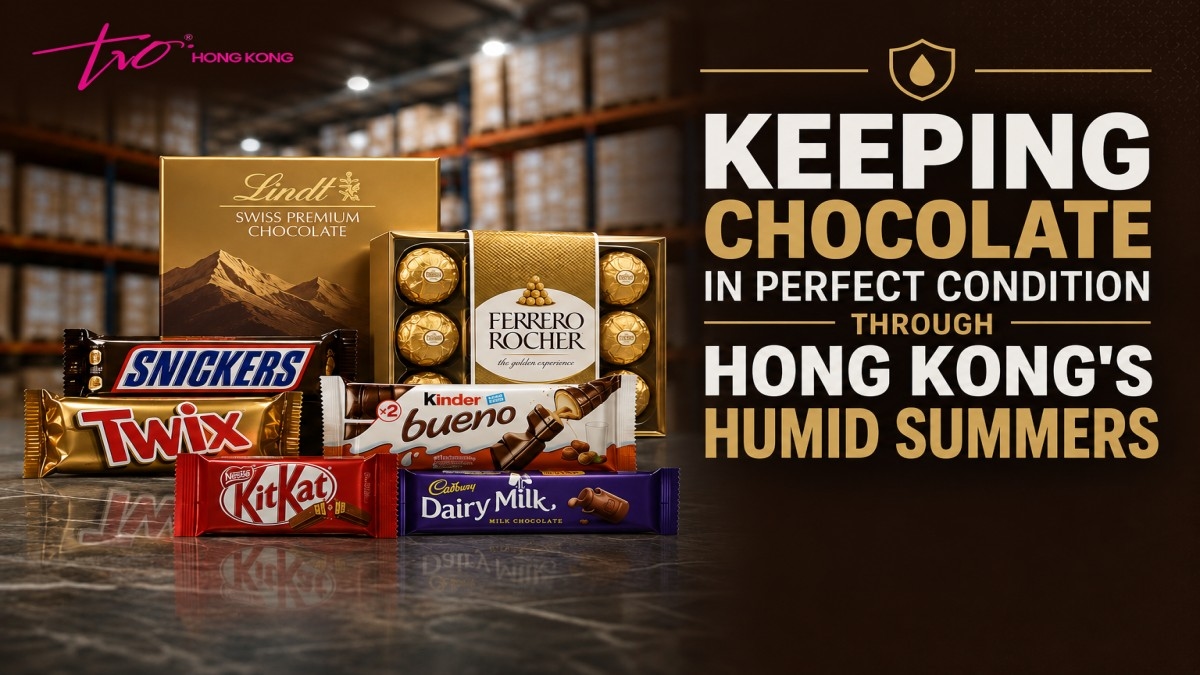
Distributors that manage this well tend to treat humidity control as a distinct discipline from temperature control. It assumes one solves the other. Treasure Orbit Group is a leading FMCG distributor and supplier in Hong Kong. We source confectionery brands, including Mars, Snickers, Kit Kat, and Lindt, through a Hong Kong-based distribution network.
We carry a range of chocolate categories like chocolate bars, sharing packs, premium chocolate, pralines, and assorted chocolate confectionery in bulk. Treasure Orbit Group is one example of a supplier operating in exactly this climate, where both fat bloom and sugar bloom risk have to be managed together rather than treated as a single problem.
Retailers evaluating a wholesale chocolate supplier in Hong Kong should ask directly how humidity-specific handling is built into their process, separate from standard temperature control, particularly for gift-format stock that may sit in storage longer than everyday bars.
Final Thoughts
Chocolate quality failures in a climate like Hong Kong's rarely come down to a single cause. Fat bloom and sugar bloom have different mechanisms, and a supply chain built to address only one leaves the other risk unmanaged. A genuinely capable chocolate supplier in Hong Kong treats humidity control as seriously as temperature, particularly at the transition points where most of the real damage happens.