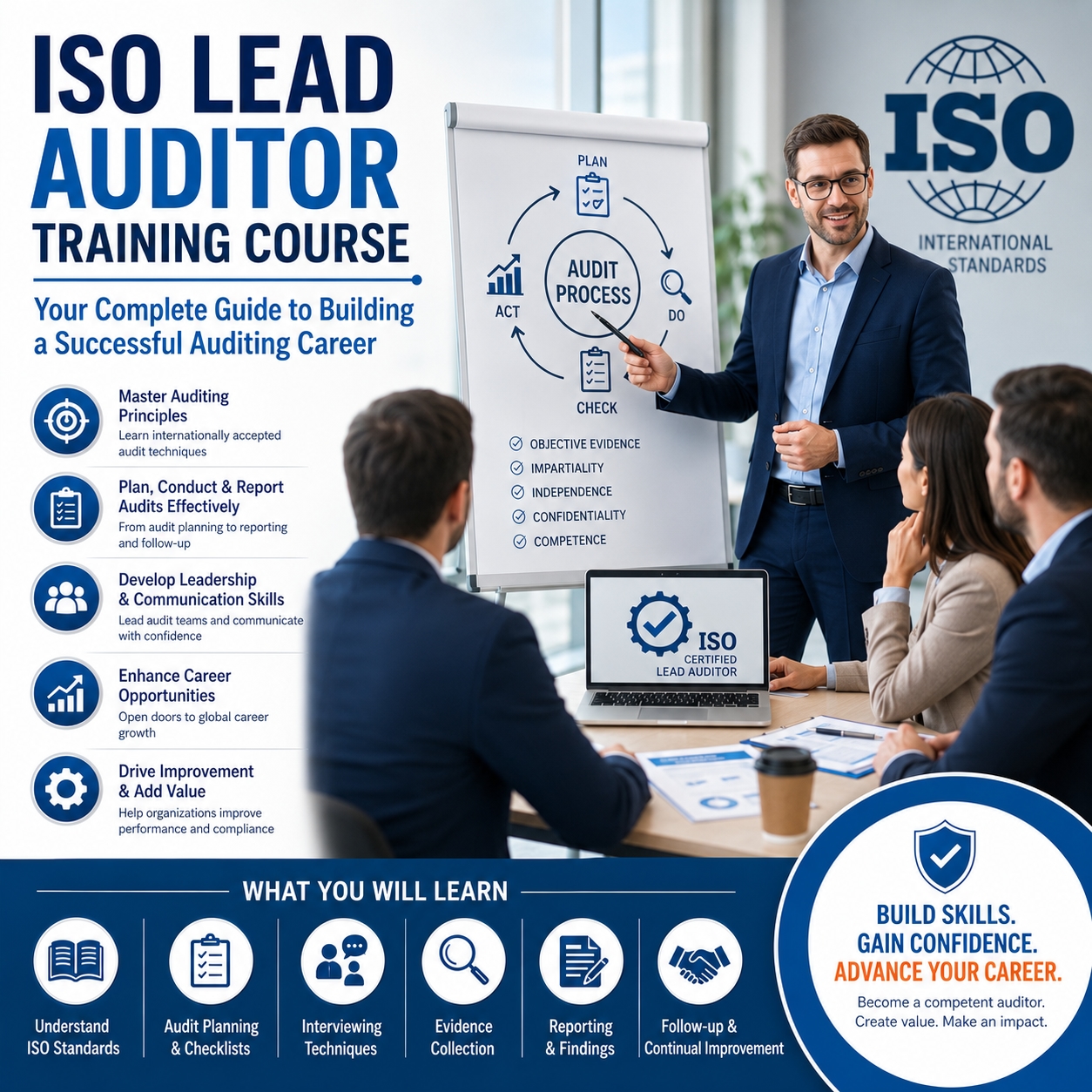
Good auditors aren't born knowing how to do the job. The skill set asking the right questions, gathering solid evidence, writing clear findings is learned through structured practice. That's exactly what a lead auditor training course is designed to provide.
Whether you're stepping into auditing for the first time or building on experience you already have, this kind of training gives you a consistent, reliable process to follow. It replaces guesswork with a method that holds up across industries and audit types.
What the Role Actually Involves
A lead auditor plans the audit process, coordinates the audit team if there is one, interviews staff, reviews documentation and records, and evaluates whether the management system in place actually meets the standard it's certified against.
At the end of the process, the auditor puts together a report that summarizes findings clearly and objectively. This isn't just paperwork it's the document that guides what happens next, from corrective actions to broader process improvements.
Why Formal Training Is Worth It
Learning a Consistent Method
Without training, audits can vary wildly depending on who's conducting them. A structured course teaches a consistent methodology so that findings are objective and comparable, no matter who's running the audit.
Practicing Before It Counts
Training courses typically use mock audits and case studies, which give participants a safe space to practice interviewing, evidence-gathering, and reporting before doing it in a real audit setting.
What You Can Expect to Learn
Courses generally start with the basics: audit terminology, the structure of the relevant management system standard, and an overview of the audit lifecycle. From there, they build toward more applied skills like planning an audit and conducting productive interviews.
Group exercises and simulated audits are a common feature, since they let participants test what they've learned in a realistic but low-pressure setting.
A well-designed lead auditor training course balances classroom instruction with hands-on practice, which tends to make the difference between understanding audit concepts and being able to actually apply them.
Who This Training Is For
This course tends to attract quality professionals, compliance officers, and internal auditors, but it's far from limited to those roles. Operations staff, EHS coordinators, and process owners often take it to sharpen how they evaluate their own systems.
It's also a strong option for anyone considering a shift toward audit-focused work, since it provides a structured way to build and demonstrate real audit skills.
Skills That Carry the Most Weight
Structuring an Audit Plan
Learning how to define scope and set clear objectives up front keeps the whole audit process organized and efficient.
Interviewing With Purpose
Good interview technique is central to a strong audit. Training helps participants ask open-ended questions that surface useful, honest information.
Writing Findings That Hold Up
Clear, fact-based reporting is a skill on its own. Courses dedicate real time to helping participants write findings that are specific and defensible.
Getting Ready Before Class Starts
A little preparation goes a long way. Familiarizing yourself with the basic structure of the relevant standard beforehand can make the technical portions of the course easier to follow.
It also helps to think through real examples from your own workplace, since bringing that context into discussions tends to make the material easier to retain.
How This Course Compares to General Standard Training
Beyond Awareness-Level Understanding
General awareness sessions cover what a standard requires, but they don't typically teach the mechanics of assessing conformity. A training course goes further, walking participants through the actual process of planning, conducting, and reporting on an audit.
Developing Practical Judgment
Knowing what a standard says is different from knowing how to judge whether an organization is actually meeting it. Courses build this judgment through repeated exposure to realistic scenarios, which helps participants develop instincts they can rely on during a real audit.
Where These Skills Show Up Beyond Formal Audits
The structured thinking developed through this training tends to extend well beyond scheduled audits. Reviewing a process after something goes wrong, assessing a supplier's performance, or simply checking whether a documented procedure is actually being followed all draw on the same core skills.
Over time, this shows up as a general shift in how people approach problems relying more on verifiable evidence and less on assumptions, which tends to lead to more accurate, defensible conclusions.
Keeping Your Skills Sharp
Audit skills, like most practical abilities, need regular use to stay strong. Looking for opportunities to apply what you've learned soon after the course whether through supporting an internal audit or simply reviewing a process against its documented requirements helps reinforce the training.
Revisiting the relevant standard from time to time, rather than only before a scheduled audit, also helps keep your knowledge current and ready when you need it.
What Distinguishes a Strong Course
Course quality can vary quite a bit depending on how much emphasis is placed on practical exercises versus lecture-based instruction. Courses built around detailed case studies, mock audits, and individual feedback tend to leave participants noticeably more prepared than those relying mainly on passive learning.
It's worth paying attention to how much interaction and feedback the course structure allows for, since that hands-on engagement is often what turns theoretical knowledge into a skill you can genuinely rely on during a real audit.
Putting the Training to Work
The real value of a training course shows up after it ends in how confidently you can plan an audit, ask the right questions, and document findings that hold up to scrutiny.
These are skills that improve with repetition. The more audits you're involved in, the more natural the entire process becomes, and the more useful the training turns out to be over time. Over the long run, that steady accumulation of experience is what separates a capable auditor from someone who simply completed a course once and moved on. Organizations benefit from this too, since having people on staff who genuinely understand how to evaluate a management system tends to strengthen how well that system performs over time.