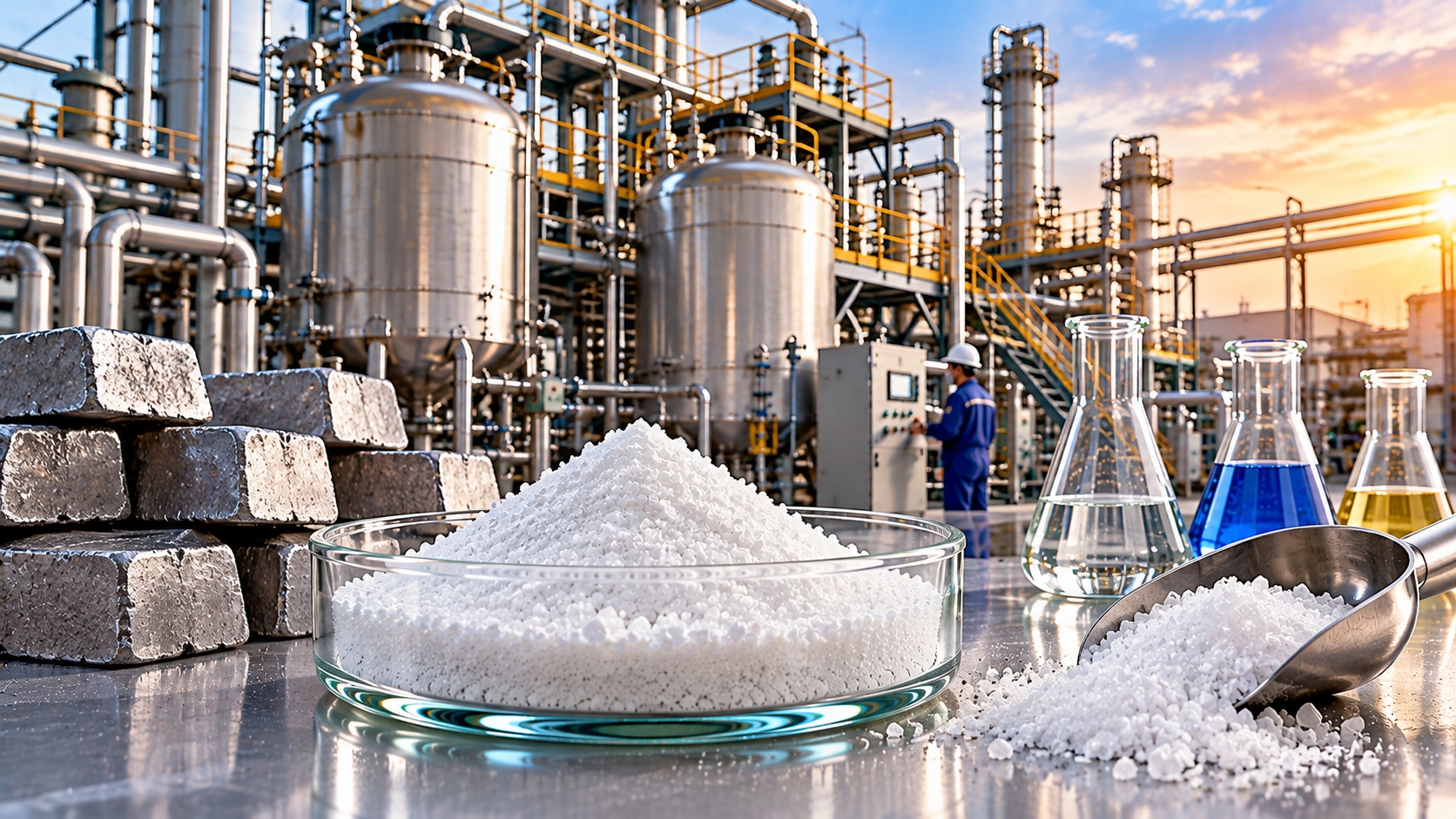
Lead(II) nitrate is a small-volume inorganic chemical with a surprisingly wide reach. It goes into heat-stabilized nylon and polyester coatings, photothermographic paper, pyrotechnics, specialty explosives, gold cyanidation, and as a laboratory reagent and precursor for other lead compounds. Demand is niche and steady. Regulation is the wild card, since lead compounds face tight controls on handling, emissions and worker exposure almost everywhere.
That makes cost modeling less straightforward than the chemistry suggests. Investors, business brokers, corporate advisers and lenders can't judge a plant from a supplier price sheet. They need a structured, sourced breakdown, and a Lead(II) Nitrate Production Cost Report is built to deliver one. Without it, it's easy to underestimate the compliance spend that comes with any lead-handling facility.
What a Lead(II) Nitrate Production Cost Report Covers
The report opens with the process: the reaction route, operating conditions, yields and the mass and energy balance. Raw material consumption follows, stated per tonne of finished product with price assumptions for each input.
Utilities include steam, cooling water, power, process water and compressed air. Crystallization and drying carry the main energy load. Infrastructure covers land, buildings, segregated storage, ventilation, dust and fume control, and effluent treatment with heavy metal removal. Machinery typically means dissolution reactors, filtration units, crystallizers, centrifuges, dryers and packing lines, all built in materials that resist nitric acid.
Manpower matters here because workers need training in lead safety, along with medical monitoring. Packaging is usually lined drums or bags, sealed and clearly labeled. Transportation covers inbound lead and nitric acid plus outbound product, and hazardous goods rules apply to both directions. Frankly, environmental and occupational safety lines are what separate a realistic budget from an optimistic one.
Raw Materials Required for Lead(II) Nitrate
Two inputs do most of the work. The first is a lead source, either metallic lead, lead oxide (litharge) or lead carbonate. The second is nitric acid, usually in the 50 to 68 percent range. Water rounds out the essentials.
Lead metal and oxide prices follow the LME lead market, which is tied to battery demand and recycling flows. Much of the world's lead comes from secondary sources, so scrap supply matters. Nitric acid comes from ammonia via the Ostwald process, so its price tracks natural gas and ammonia markets. Some plants add a little hydrogen peroxide or an oxidant to speed up dissolution of metallic lead.
Purity is worth watching. Antimony, copper, silver and bismuth in the lead feed carry into the product, so higher grades need cleaner feedstock or extra purification.
Industrial Production Process
The standard route is dissolving a lead source in nitric acid. With lead oxide, the reaction is a simple neutralization forming lead nitrate and water. With metallic lead, the acid attacks the metal and releases nitrogen oxide gases, so an oxidant is often used and scrubbing is essential. Dilute nitric acid is preferred, as concentrated acid can passivate lead by forming a crust of lead nitrate that slows further reaction.
Once dissolved, the solution is filtered to remove insolubles, sometimes adjusted for pH to precipitate impurities, and then concentrated by evaporation. Lead nitrate crystallizes on cooling as colorless crystals. They're separated by centrifuge, washed lightly and dried at moderate temperature, since the compound decomposes on strong heating.
Mother liquor is recycled to lift yield. Off-gases from the reaction go through NOx scrubbers, and wastewater passes through heavy metal treatment before discharge. Batch operation is the norm at commercial volumes.
Capital Investment and Plant Setup Costs
Land and site development come first, and siting is heavily shaped by permits. Regulators look closely at lead facilities, so location away from dense residential areas, with good effluent and air emission compliance options, saves trouble later. Proximity to a lead smelter or recycler can also lower feedstock cost.
Equipment is the biggest block. Acid-resistant reactors, filtration, crystallizers, centrifuges and dryers are needed, and NOx scrubbing and dust collection add meaningfully. Engineering, safety systems, containment, ventilation and pollution control are frequently underbudgeted, though they're not optional.
Working capital needs planning too. Lead and nitric acid must be stocked, and specialty buyers can take time to qualify and pay. Underfund it, and a technically sound plant can still run short of cash.
Operating Cost Factors
Variable costs are dominated by the lead source and nitric acid, followed by steam, power, water, packaging and freight. Yield losses to mother liquor or filter cake affect cost per tonne directly.
Fixed costs include salaries, plant overheads, insurance, environmental monitoring, worker health surveillance, waste disposal and maintenance. Lead-contaminated waste has to be handled properly, and that cost recurs every year. Acid conditions are hard on equipment, so maintenance allowances should be realistic.
Financing costs depend on the funding structure, and depreciation spreads the capital outlay across the asset life. Neither changes cash cost per tonne, but both shape investor returns, so a good report presents them separately.
What Pushes Lead(II) Nitrate Production Costs Up or Down
Lead pricing is the loudest driver. When LME lead moves, the raw material bill moves with it, and finished product prices in a niche market don't always adjust at the same pace. Nitric acid follows gas and ammonia costs, adding a second layer of volatility.
Regulation is the quieter but larger factor. Tighter limits on lead emissions, worker exposure or wastewater raise both capex and opex, and restrictions in some end uses can shrink the addressable market. Technology also matters: efficient NOx recovery, good crystallization control and mother liquor recycling all improve yield. Scale spreads fixed costs, though niche demand makes oversizing risky.
Region shapes labor, energy, permitting difficulty and access to lead feedstock. So where does a plant make the most sense? Typically near a reliable lead source, in a jurisdiction where compliance is achievable without unpredictable delays.
FAQs
Q1. Is lead nitrate a high-volume chemical?
No. It's a specialty inorganic with modest demand, so sizing matters.
Q2. What's the biggest cost item in production?
Lead feedstock, in most cases, followed by nitric acid. Together they typically account for the bulk of operating cost, and because lead trades on a global exchange, its price swings can move margins quickly, which is why sensitivity analysis on this input is essential.
Q3. How much does regulation affect the economics?
A lot. Permits, emission controls, worker monitoring and waste handling all add cost, and rules can tighten over time, so a good model builds in some buffer.
Q4. How long does it take to set up a plant?
Typically one to two years, depending on approvals and construction. Environmental and hazardous chemical permits are often the slowest step, so lenders should plan for delays before assuming a quick start and steady revenue.
Q5. Can I just use my own spreadsheet?
You can start there. But banks and buyers want traceable consumption norms, price assumptions and sensitivities, and a professional report supplies those in a form they'll accept.
Why a Professional Cost Report Matters
A lead nitrate plant looks simple on paper, since it's really just metal or oxide plus acid. The trouble sits in the details: feed purity, NOx handling, heavy metal effluent, worker safety and permits. A professional Lead(II) Nitrate Production Cost Report ties process economics, capex, operating costs and sensitivities into one reference, so decisions rest on data rather than instinct. It helps advisers compare routes, helps brokers value an operating asset, and gives finance companies a basis they can underwrite.