For UK organisations entering certain financial transactions, obtaining a Legal Entity Identifier can be an important part of establishing a standardised entity identity. Understanding the LEI Registration Process before applying can make it easier to prepare the required information and avoid unnecessary delays.
A Legal Entity Identifier UK is not a separate UK-specific identifier. An LEI is a globally standardised 20-character alphanumeric code linked to reference information about a legal entity. This guide explains how LEI registration works, what information may be required, and what businesses should expect during validation and issuance.
What Is a Legal Entity Identifier?
A Legal Entity Identifier, or LEI, is a unique 20-character code used to identify legal entities participating in financial transactions.
The Global Legal Entity Identifier Foundation (GLEIF) supports the operational integrity of the Global LEI System. LEIs are issued and maintained by accredited LEI issuing organisations, commonly known as Local Operating Units (LOUs).
An LEI record connects the unique identifier with reference information about the legal entity. This creates a standardised method of identifying organisations across jurisdictions and financial markets.
Who May Need a Legal Entity Identifier in the UK?
Not every UK business automatically needs an LEI. Whether an organisation requires one depends on its activities and the financial-market or reporting requirements that apply to it.
LEIs are widely used within financial markets to identify legal entities involved in transactions and regulatory reporting.
Before starting LEI registration, an organisation should determine whether an LEI is required for its specific activity. A bank, broker, investment firm or professional adviser may also inform an entity when an LEI is needed for a particular transaction.
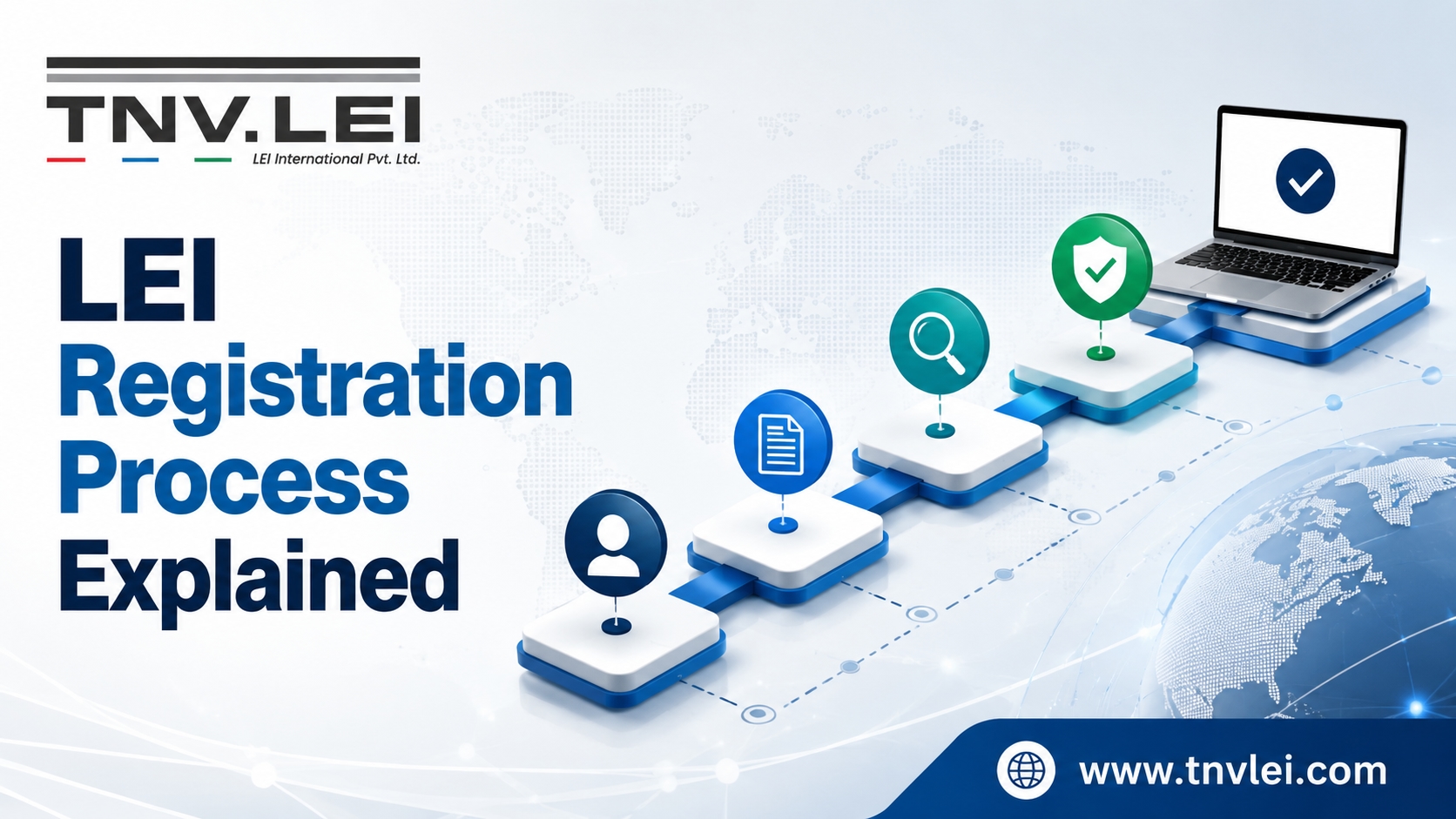
How to Get LEI: The Registration Process Explained
For businesses researching how to get LEI, the process can be understood in a few clear stages.
Step 1: Check Whether an LEI Already Exists
Before submitting a new application, search for the legal entity in the global LEI database.
This step matters because a legal entity should not obtain multiple LEIs simply by applying through different providers.
Search using information such as the entity's:
legal name;
existing LEI, if known;
registration details; or
jurisdiction.
If an LEI already exists, the appropriate action may be renewal or transfer rather than applying for another identifier.
Step 2: Choose an LEI Service
The next stage in the LEI application steps is selecting an appropriate service through which the application can be submitted.
Businesses should understand the role of the organisation handling their application and, where relevant, the accredited LEI issuer responsible for issuing and maintaining the resulting LEI.
For organisations considering the TNV LEI process, the application journey can be started online, allowing users to submit the required entity information for processing.
Step 3: Provide Legal Entity Information
To register LEI number information correctly, the applicant needs to provide accurate details about the legal entity.
Information commonly required can include:
official legal entity name;
registered address;
legal jurisdiction;
company or entity registration information;
entity type; and
relevant relationship information where applicable.
The exact information required can depend on the legal entity and available authoritative sources.
Accuracy is important. Information entered during the application should correspond with official entity records wherever applicable.
Step 4: Submit the LEI Application
Once the required information has been entered and reviewed, the application can be submitted.
At this point, applicants should double-check details rather than treating the process as a simple purchase of a number.
An LEI is linked to entity reference data, so correct information is fundamental to the value of the identifier.
This is why a well-structured LEI Registration Process includes validation rather than automatically generating a code immediately after an application is submitted.
Step 5: Entity Information Is Validated
Validation is one of the most important stages.
The information submitted by the applicant is checked against authoritative sources where available. This helps establish that the LEI reference data accurately represents the legal entity.
If information cannot be verified immediately or differs from available records, additional review may be required.
This means LEI registration time can vary between applications rather than having one guaranteed processing time for every entity.
Step 6: The LEI Is Issued
After the required validation has been successfully completed, the responsible LEI issuer can issue the unique LEI.
The LEI and its associated reference information then become available within the Global LEI System.
Businesses can subsequently search for the identifier and review the entity information connected with it.
How Long Does LEI Registration Take?
There is no single processing time that should be assumed for every application.
The timeline may depend on factors such as:
completeness of the application;
accuracy of submitted entity information;
availability of authoritative registration data;
whether additional validation is required; and
complexity of the entity's reference information.
Providing accurate information from the beginning can reduce avoidable questions during validation.
Businesses that need an LEI for an upcoming transaction should therefore avoid waiting until the last possible moment to begin registration.
What Happens After LEI Registration?
Receiving an LEI is not necessarily the end of LEI lifecycle management.
LEI reference information needs to remain current. Periodic renewal is used to revalidate the entity data associated with the identifier.
If an entity already has an LEI but wants another provider to manage it, an LEI transfer may also be available. Transferring an LEI changes the organisation responsible for maintaining the record. It does not normally mean obtaining a new LEI number.
Key Takeaway
The LEI Registration Process involves more than requesting a 20-character code. Businesses first need to check for an existing LEI, provide accurate entity information, submit an application and complete the necessary validation before an LEI is issued.
For organisations seeking a Legal Entity Identifier UK, understanding these steps can make the application process clearer and help prevent common issues such as duplicate applications or inaccurate entity details.
The simplest approach is to prepare accurate business information, understand who is handling the application, and allow sufficient time for validation before the LEI is required.
Frequently Asked Questions
How do I get an LEI in the UK?
An eligible organisation can apply through an LEI service channel by providing its legal entity information for validation and subsequent LEI issuance.
What should I do before registering an LEI?
Search the global LEI database first to determine whether the entity already has an LEI.
What information is required for LEI registration?
Applications commonly require the entity's legal name, registered address, jurisdiction and registration information, along with other relevant reference data.
Can I register an LEI online?
LEI applications can be submitted online through providers offering digital registration services.
Do I receive a new LEI when changing providers?
Generally, no. An existing LEI can be transferred between managing issuers where applicable while the identifier itself remains associated with the legal entity.