You approved the budget. Then three quotes arrive and they sit 30 percent apart. Same plot, same floor area. What gives? Usually one bidder priced a shed and another priced a working hub. Logistics park design is what separates the two, and it happens before any steel is ordered.
Here is where the money goes, where it leaks, and what to lock down first. We write this from the fabrication side, so the numbers come from a factory floor, not a sales deck.
Plan in zones, build in phases
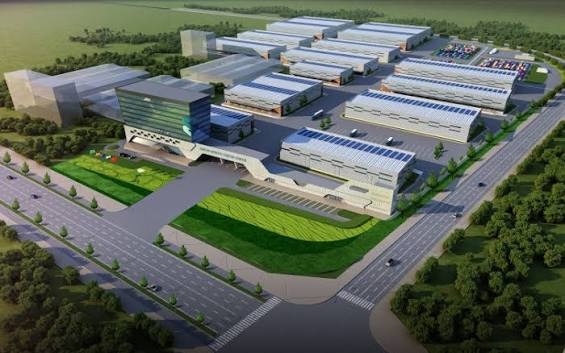
Most parks never open at full size. So split your plot into three zones. Zone one is what you need on day one. Zone two is what you will need in two years. Zone three is land you simply hold.
Good logistics park design puts all three on one master plan, even if you only build the first. Size the drains, power lines and internal roads for the final layout. Digging up a finished road to fit a bigger pipe costs far more than laying the right pipe once.
The steel is a smaller slice than you think
On a typical warehouse, the structure takes roughly 35 to 45 percent of total spend. The slab, yard paving, drainage, fire fighting, electrical and docks eat the rest.
Yet buyers argue for weeks over the steel rate and then lose more money in the yard. Spend your attention where the money sits. Ask every bidder for a split quote: structure, roofing and cladding, civil, docks, fire, electrical. Without that split, you are comparing apples to bricks.
Logistics Park Design choices that cut cost
A few decisions save real money, and none of them hurt performance.
Repeat your bay. Pick one bay size, say 9 m, and repeat it down the building. Identical frames run smoothly through our Nalagarh factory. Custom frames for every bay slow the line and push up your price.
Right-size the span. A 40 m clear span costs more per square metre than a 30 m span. If your racking needs 24 m of clear width, do not pay for 40.
Set eave height from the racks, not from habit. Going from 9 m to 12 m adds steel, but it adds storage volume faster than it adds cost.
Use tapered built-up members. PEB frames put steel only where the bending moment is high. That is where the weight saving comes from, and it is why PEB beats hot-rolled sections on big spans.
Time costs money too
Every month of delay is rent paid elsewhere or a contract you cannot start. For a 50,000 sq ft warehouse, a realistic plan looks like this. Design and approvals take three to four weeks. Fabrication takes six to eight weeks, and it runs while your crew casts foundations. Erection takes another six to ten weeks.
Freeze your drawings before fabrication starts. A change after cutting begins costs steel and days. A change before it costs a phone call.
The leaks nobody budgets for
Some costs hide until the project is half done.
Soil. Get a geotechnical report before design, not after. Ground near the hills around Nalagarh can behave very differently from plains soil near Mohali, and your foundation size follows the soil.
Drainage. Slope the yard about 1 in 100 toward storm drains. Flat yards hold water, and water wrecks pavement.
Insulation. Skipping it saves money in the quote and loses it in spoiled stock every June.
Crane and hoist provision. Add one later and you may need to strengthen the frame. Add it now and it is a small line item.
Fire. Sprinkler pipework and water load sit on your roof structure. Tell your designer early.
What PEB changes in your budget
A lighter frame means lighter foundations, which trims concrete and excavation. Factory fabrication cuts site wastage. Bolted erection means fewer weeks of cranes and crews on your payroll.
Our Nalagarh unit covers 70,000 sq ft and turns out over 1,000 MT a month. Design, fabrication and erection all sit with one team. That matters for budgets, because most overruns start at the handoff between drawing office, workshop and site. A dedicated partner for logistics park design removes two of those handoffs.
How to compare bids without getting fooled
Make every bidder price the same thing. Same design loads. Same steel grade, such as IS 2062 E350 for main frames. Same codes: IS 800:2007 for design, IS 875 Part 3 for wind, IS 1893 Part 1 for seismic. Same coating system. Same sheet thickness.
That last one catches people. A bid using 0.4 mm sheeting will beat a bid using 0.5 mm on price every time, and it will dent and leak sooner. Put the specifications side by side before you look at the totals.
Then ask each bidder who does the erection. If the answer is “a subcontractor”, ask who answers for a wrong dimension on site.
Get the brief right, then get a price
A tight brief saves you more than hard bargaining ever will. Before you approach anyone, know your daily truck count, your racking type, your eave height, your phase-two plan and your go-live date. With those five answers, your logistics park design brief is specific enough to price properly.
Building in Punjab, Haryana or Himachal? Send Synergy PEB your plot size and storage needs. Our engineers will return a logistics park design outline with span, height, dock count and a split cost breakdown, so you can see exactly where each rupee goes.