With over 2,500 kilometers of pristine Indian Ocean coastline, Mozambique is a world-class playground for scuba divers. While its turquoise waters are famed for encounters with megafauna like whale sharks, manta rays, and humpback whales, another world lies submerged beneath the surf: legendary historic shipwrecks.
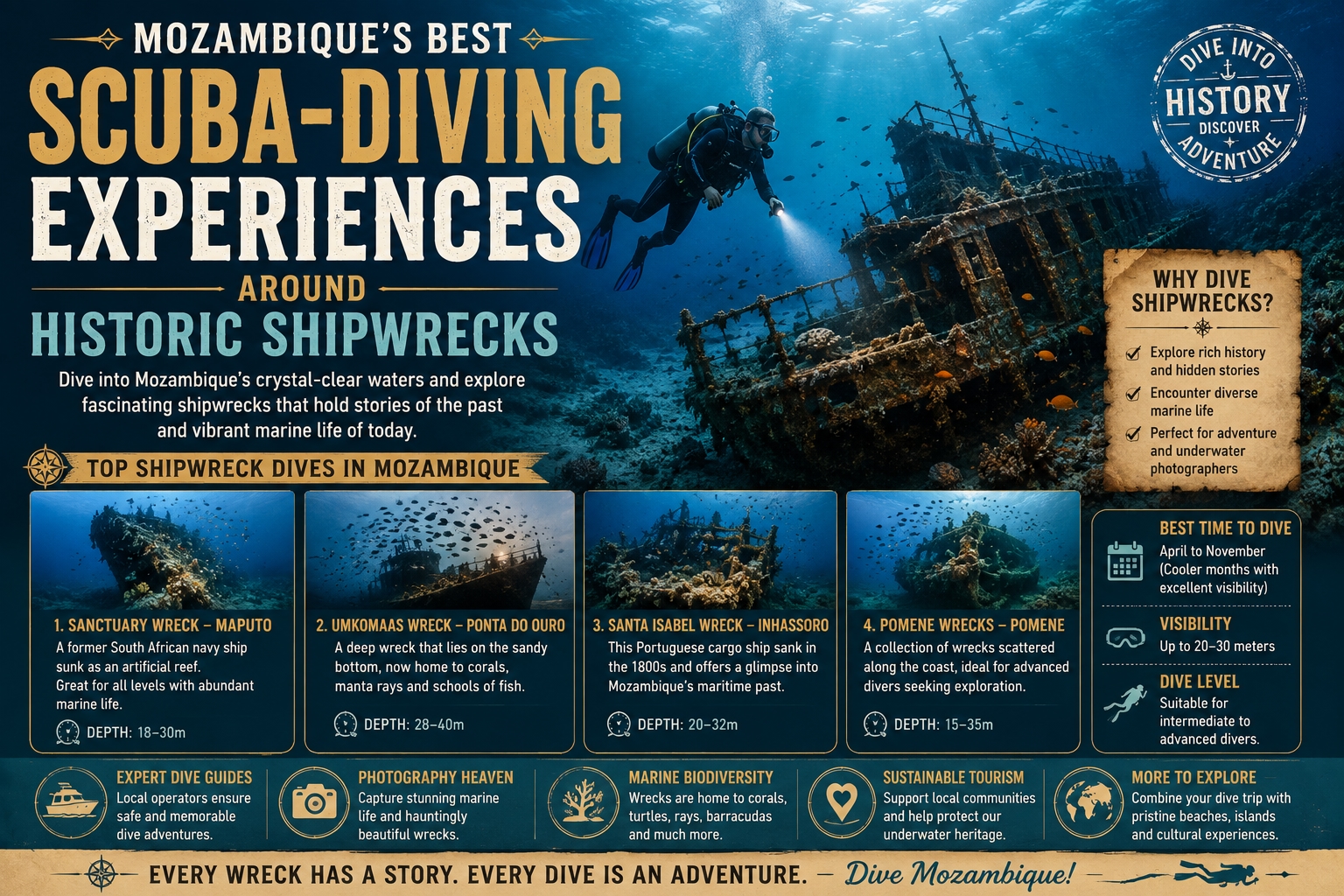
From centuries-old galleons along the historic spice route to mid-century passenger liners and artificial reefs, Mozambique's underwater graveyard has transformed into vibrant marine sanctuaries.
Whether you are an advanced technical diver or an eager underwater photographer, here is your definitive guide to the best shipwreck diving experiences in Mozambique.
1. The SS Klipfontein (Zavora) – Mozambique’s Most Iconic Deep Wreck
Located off the coast of Praia de Zavora in southern Mozambique, the SS Klipfontein is arguably the country’s most famous deep-water wreck.
The History: In January 1953, this 525-foot Dutch ocean liner struck a hidden reef off Zavora point and split in two before settling on the ocean bed.
Depth & Level: 34 to 52 meters (111 to 170 feet) — Technical & Advanced Deep Divers.
Marine Life: The massive hull now attracts large pelagics, giant brindle bass, potato groupers, schools of jacks, and reef sharks. Between July and October, you may even hear the songs of migrating humpback whales echoing around the steel beams.
2. Rio Saiñas (Zavora) – A Flourishing Artificial Reef
Just a short boat ride from the Klipfontein lies the Rio Saiñas, a Spanish cargo vessel that sunk in 2013 and now serves as one of Mozambique's most vibrant artificial reefs.
The History: Sitting upright on the sandy floor, the wreck remains almost entirely intact, making navigation clear and enjoyable.
Depth & Level: 20 to 35 meters (65 to 114 feet) — Advanced Open Water Divers.
Highlights: Dense clusters of soft corals, schools of batfish, scorpionfish, and large honeycomb moray eels have made this wreck their home. During summer, manta rays frequently swoop over the bridge.
3. The Lighthouse Wreck & Baixo Danae (Inhaca Island, Maputo Bay)
Just off the coast of Maputo, Inhaca Island guards the entrance to the bay and is home to several shallow-to-medium depth wrecks.
The Dive Experience: Resting at depths between 15 and 25 meters, the Inhaca Lighthouse Wreck features a broken superstructure that has become an oasis for macro life, anemonefish, nudibranchs, and loggerhead turtles.
Best For: Open Water to Advanced divers looking for accessible wreck diving combined with rich coral life close to the capital city.
4. The Ancient Wrecks of Ilha de Moçambique (UNESCO Heritage Waters)
For divers captivated by maritime archaeology, the historic Island of Mozambique (Ilha de Moçambique) in the north is unmatched.
Centuries of Maritime Lore: For over four centuries, this island was a primary trading port connecting Europe, Arabia, and India. Dozens of 16th- to 19th-century Portuguese caravels and merchant ships wrecked across its shallow bays and reefs.
What You'll See: While many sites are protected for archaeological preservation, local dive operators run guided heritage dives where you can spot ancient anchors, ballast stones, and encrusted 17th-century cannon barrels amidst thriving hard corals.
5. Matemo & Bazaruto Archipelago Wrecks
While the Bazaruto and Quirimbas archipelagos are best known for vibrant coral atolls and gentle dugongs, both areas shelter smaller cargo and fishing wrecks that sank over the last century.
Atmosphere: Shallow, sunlit waters with exceptional visibility (often exceeding 30 meters).
Wildlife: Reef sharks, green turtles, devil rays, and massive schools of barracuda circling the rusted hulls.
Quick Guide: Best Season & Conditions for Mozambique Wreck Diving

Essential Travel Tips for Scuba Divers Visiting Mozambique
Bring Your Certification Cards & Logs: Deep wrecks like the SS Klipfontein strictly require Advanced Open Water, Deep Specialty, or Technical dive certifications.
Pack Your Own Dive Computer & Torches: Wrecks offer dark swim-throughs and crevices where marine life hides; a reliable primary and backup dive light is essential.
Secure Your Travel Visa in Advance: Ensure your travel documents and entry permits are verified before booking remote dive charters.
Plan Your Mozambique Dive Expedition Hassle-Free
Getting ready to explore the sunken treasures of the Indian Ocean? Before packing your regulator and fins, securing your travel authorization is the first critical step.
Check if your passport qualifies by reviewing the Mozambique eVisa Eligible Countries List to start your application early.
Why Choose Us for Your Mozambique Visa?
Reliable Travel Visa Services: Our global approach has assisted numerous travelers in obtaining their visa smoothly and securely.
Round-the-Clock Assistance: Reach out to us 24/7, and our dedicated visa experts will respond promptly within 72 hours.
Experienced Visa Consultants: Receive expert guidance and document pre-checks to maximize the approval rate of your application.
Efficient Visa Application Process: Apply for your Mozambique eVisa in minutes with our simplified, traveler-friendly online form.
Frequently Asked Questions (FAQ)
Can beginners dive the shipwrecks in Mozambique?
Yes. While deep wrecks like the SS Klipfontein require advanced technical certifications, shallower wrecks around Inhaca Island, Bazaruto, and the Rio Saiñas are accessible to Open Water and Advanced Open Water divers.
What is the visibility like around Mozambique's wrecks?
Visibility averages between 15 and 30 meters depending on tides and currents. The clearest waters generally occur during the dry winter months (May to October).
Do I need a visa to enter Mozambique for a diving holiday?
Most international travelers require a tourist visa or an approved eVisa before arrival. You can check entry requirements and eligibility online.