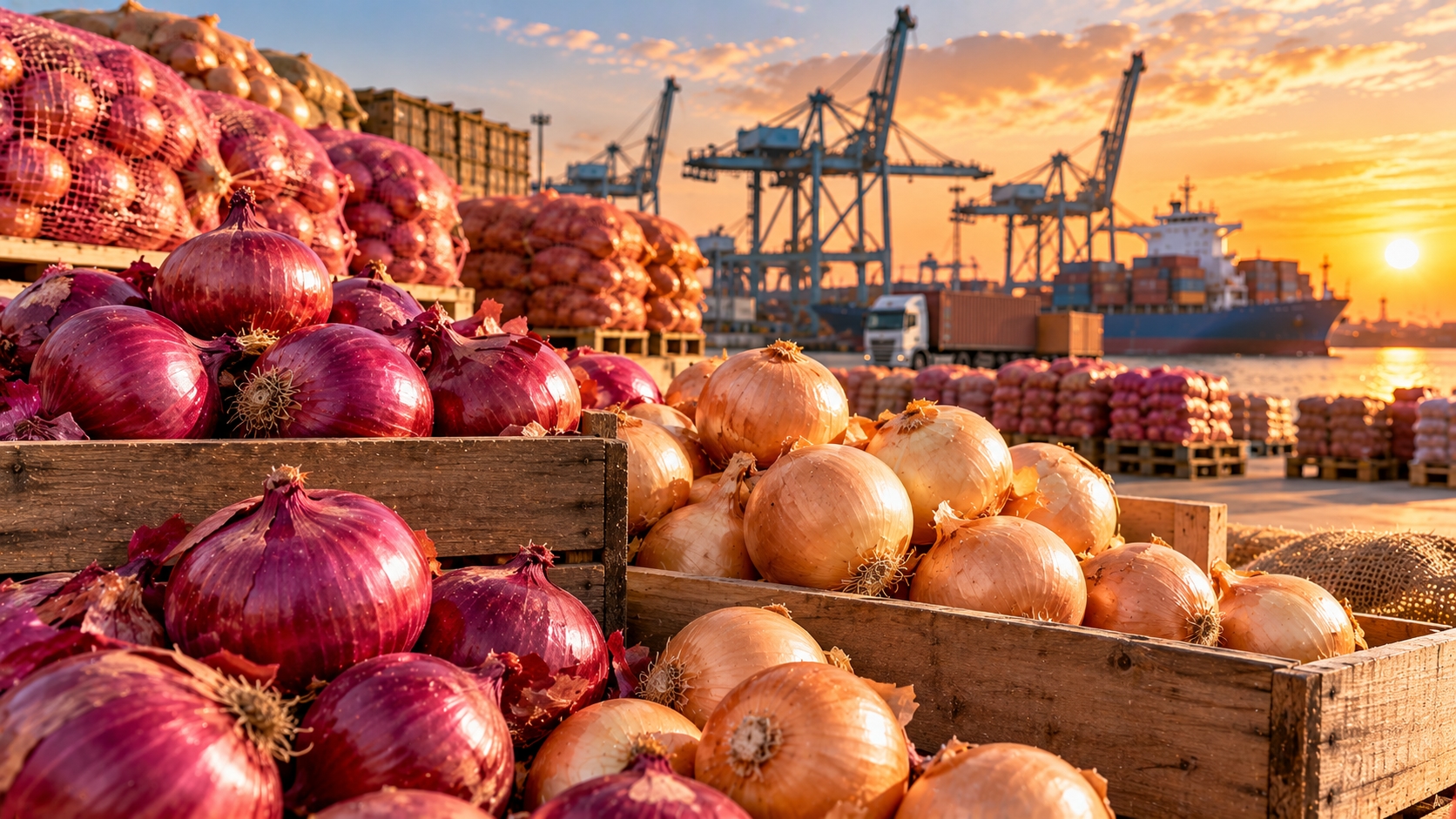
August 2026 data just landed, and the onion price trend shows something buyers can’t really ignore. China’s onion is priced at USD 214.68/MT on an FOB basis. India’s is sitting much lower, USD 157.90/MT, CIF. That’s a difference of over USD 56 per metric ton between the two. For an agricultural commodity this price sensitive, that’s a meaningful gap.
Onions aren’t glamorous. But they’re one of the most traded food commodities globally, and pricing swings here hit everyone from food processors to retail buyers fast. Worth watching closely this quarter.
Current Onion Prices: China vs India
Product | Region | Incoterm Basis | Price | Last Updated |
|---|---|---|---|---|
Onion | China | FOB | USD 214.68/MT | August 2026 |
Onion | India | CIF | USD 157.90/MT | August 2026 |
China sits almost USD 57 higher than India. That’s not a small spread for a commodity like this.
Quick things to keep in mind:
China’s price is FOB, cost at the port of origin, before freight and insurance get added.
India’s price is CIF, meaning freight and insurance are already baked into that number.
Both figures are from August 2026. Onion prices shift fast, sometimes within days during harvest season.
Comparing FOB to CIF directly skews things a bit. India’s figure should theoretically be higher once you add shipping costs on top of a comparable base price, yet it’s still lower than China’s FOB. That tells you something about underlying production costs and supply conditions, not just logistics.
Why Onion Prices Move the Way They Do
Onion markets are notoriously volatile. A few forces explain most of the swings.
Harvest timing and crop output. Onion supply runs in cycles tied to planting seasons. A strong harvest floods the market and prices fall. A poor one, and prices spike within weeks. China and India run on different crop calendars, which partly explains why their pricing doesn’t move in sync.
Weather disruptions. Onions are water intensive and sensitive to both drought and excess rainfall. Flooding during harvest in producing regions can wipe out a sizable chunk of marketable stock almost overnight.
Export policy. India has a history of adjusting onion export duties and minimum export prices to manage domestic supply. These policy shifts can swing landed costs for importers with very little warning.
Storage and logistics. Onions don’t store as easily as grains. Spoilage losses during transit or storage push up effective costs, and that gets reflected in the final price quoted to buyers.
A Quick Q&A on the Price Gap
So why is China’s onion more expensive than India’s, even before freight?
Labor costs in China’s agricultural sector run higher than India’s. Add tighter domestic demand and comparatively lower yields per hectare in some growing regions, and production costs climb. India benefits from large-scale cultivation in states like Maharashtra and Karnataka, which keeps base costs down even after accounting for export logistics.
Does that mean Indian onions are always the cheaper option?
Not necessarily. India’s export policies can change that picture quickly. A sudden minimum export price hike, which has happened before, can push Indian onion costs above Chinese levels within a single trading cycle. The current gap reflects August 2026 conditions, not a permanent rule.
What This Means for Buyers and Investors
Food processors and bulk importers sourcing onions should treat this spread as more than a passing data point.
Buyers leaning on India’s lower CIF price get a real cost advantage right now. But India’s export policy risk is real too. Relying too heavily on one supplier region without a backup plan leaves procurement exposed if duties shift mid-contract.
China’s higher FOB price might still make sense for buyers needing shorter shipping distances within Asia, or those prioritizing supply consistency over the lowest possible landed cost.
Investors tracking agri commodity markets should note that a gap this size often narrows or reverses within a single season. Onion pricing doesn’t stay still for long, and positioning around a snapshot from one month carries real risk.
Looking Ahead: Q3 2026 Outlook
What happens next with this spread? Hard to say with full confidence, onion markets rarely cooperate with forecasts.
A few things seem likely though. If India’s harvest conditions stay favorable through Q3, its CIF pricing probably holds near current levels or drifts lower. China’s costs, tied more to labor and domestic consumption patterns, tend to move more gradually.
Buyers locking in long-term contracts right now should build in flexibility. August figures are a snapshot, not a promise of where things sit in October.
Conclusion
The onion price trend for Q3 2026 points to a clear divide: China at USD 214.68/MT FOB, India at USD 157.90/MT CIF, both as of August 2026. The gap comes down to production costs, crop cycles, and export policy, not just shipping terms. Anyone sourcing onions or advising clients who do should keep tracking this closely, because a market this volatile rarely holds still for long.
FAQ Section
What is the current onion price trend in China and India?
As of August 2026, China’s onion is priced at USD 214.68/MT FOB, while India’s sits at USD 157.90/MT CIF. The gap reflects production cost differences, crop cycles, and export policy conditions in each country rather than freight terms alone.
Why is China’s onion price higher than India’s?
Higher labor costs and lower per-hectare yields in parts of China push production costs up. India benefits from large-scale cultivation in major growing states, which keeps base costs lower even with export logistics factored into the CIF figure.
What causes onion prices to fluctuate so much?
Harvest timing, weather events like drought or flooding, export policy changes, and storage losses all play a role. Onions don’t store well compared to grains, so spoilage during transit adds real cost pressure that shows up quickly in market pricing.
How reliable is India as a low cost onion source?
Fairly reliable under normal conditions, but India’s export duties and minimum export prices can change with little notice. Buyers depending heavily on Indian supply should watch policy announcements closely and keep a secondary sourcing option available.
What’s the outlook for onion prices in Q3 2026?
India’s pricing likely holds steady or softens if harvest conditions stay favorable. China’s costs tend to shift more gradually, tied to labor and domestic demand. Buyers should treat August figures as a reference point, not a fixed forecast for the rest of the quarter.