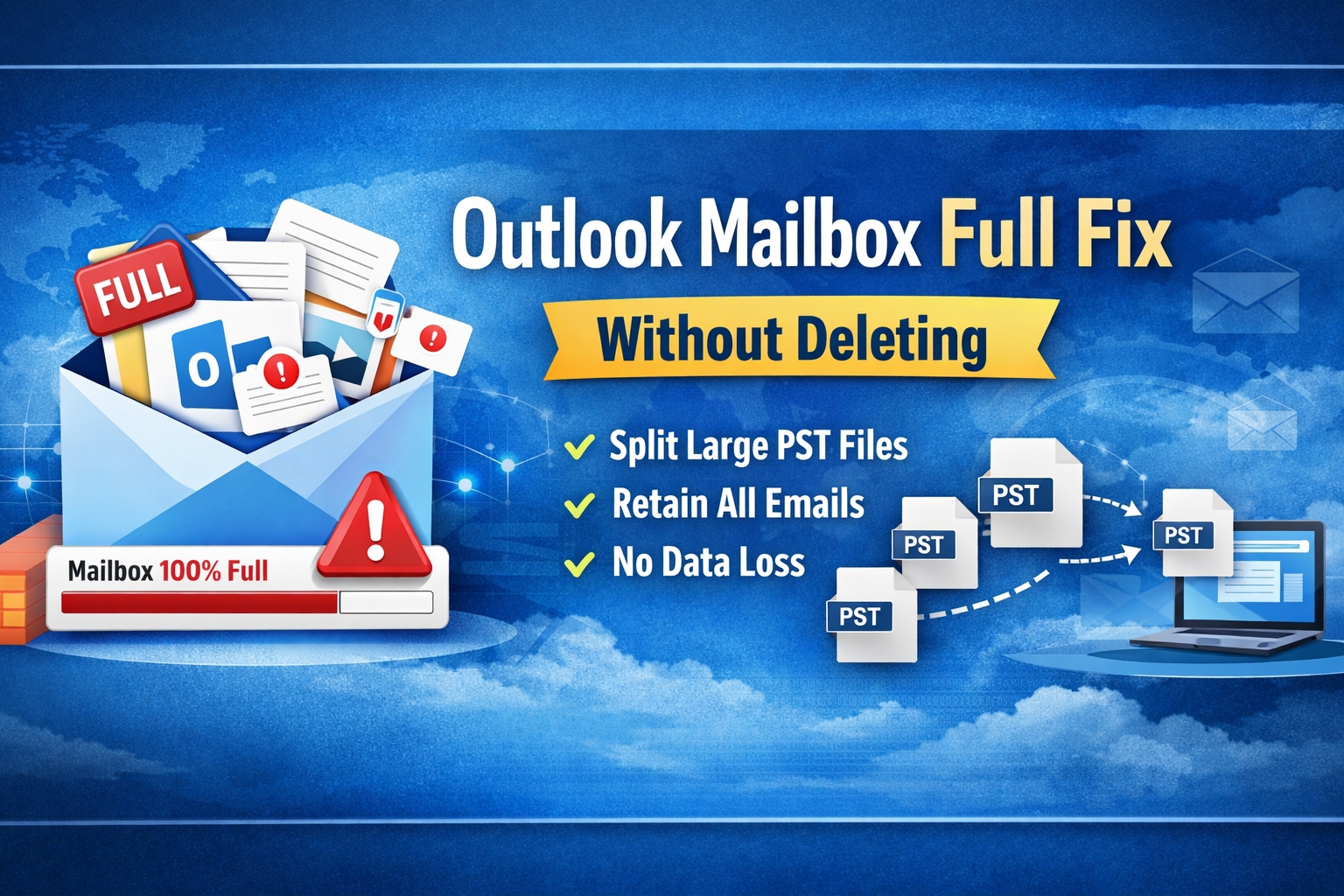
Running into the “mailbox full” issue in Microsoft Outlook can be frustrating—especially when you don’t want to delete important emails. Whether you're managing business communication or personal archives, removing data isn’t always an option. The good news is that there are practical ways to fix the Outlook mailbox full problem without deleting your emails, while still keeping your data organized and accessible.
Why Does the Outlook Mailbox Get Full?
The mailbox full issue usually occurs due to storage limitations associated with your Outlook account or data file. For users connected to Exchange or Microsoft 365, mailbox quotas are defined by the server administrator. Once the limit is reached, sending and receiving emails may stop.
For desktop users, Outlook stores data in PST files. These files also have size limitations—older ANSI PST files support up to 2 GB, while Unicode PST files can grow up to 50 GB depending on the Outlook version. Over time, large attachments, years of email accumulation, and calendar entries contribute to mailbox size, triggering the full mailbox warning.
A Smarter Way to Manage Large Mailboxes
One practical approach to resolve this issue without deleting data is to split large Outlook data files into smaller, manageable parts. The FreeViewer PST Splitter is designed for this exact purpose. It helps break oversized PST files into smaller segments without affecting data integrity. The tool maintains folder hierarchy, email properties, and attachments during the split process. It offers multiple split options such as by size, date, folder, or year, giving users flexibility based on their needs. Additionally, a free version is available that allows users to evaluate its functionality before opting for a full version. This makes it a reliable option for users looking to manage mailbox size efficiently without data loss.
Manual Methods to Fix Outlook Mailbox Full Issue
You can try the following built-in techniques to manage mailbox size without deleting important emails:
Use AutoArchive Feature - Go to File > Options > Advanced > AutoArchive Settings. Enable AutoArchive and choose a time range. Older emails will be moved to a separate PST file stored locally, reducing the size of your primary mailbox.
Save Attachments Outside Outlook - Open emails with large attachments, download them to your system, and then remove attachments from the email. This frees up space without losing the actual files.
Clean Up Mailbox - Navigate to File > Info > Tools > Mailbox Cleanup. Use options like “Find items older than” or “Find items larger than” to manage heavy content efficiently.
Empty Junk and Deleted Items Folder - Regularly clear unnecessary emails from Junk and Deleted Items folders to free up additional storage space.
Compact PST File - Go to File > Account Settings > Data Files > Settings > Compact Now. This helps reduce file size by removing unused space within the PST file.
Limitations of Manual Methods
While manual techniques can provide temporary relief, they come with several limitations. Archiving can make data scattered across multiple files, making it harder to manage. Saving attachments manually is time-consuming and not practical for large mailboxes. Compressing PST files only works when there is already unused space available—it doesn’t reduce active data size.
Additionally, these methods require continuous effort. As your mailbox grows again, you may need to repeat the same steps regularly, which can become inefficient in the long run.
Why Choose a Tool Over Manual Methods?
Using a dedicated solution provides a more structured and long-term approach. Instead of manually handling data, a tool automates the process of managing mailbox size. It reduces the risk of data loss, maintains file integrity, and eliminates repetitive tasks.
Tools designed for PST management are especially useful for users dealing with large volumes of emails, such as professionals, marketers, and organizations. They ensure that mailbox performance remains smooth without requiring users to constantly intervene.
How Does the Tool Work?
The process is straightforward and does not require technical expertise. After launching the application, you simply add the PST file that has grown too large. The tool scans and displays the mailbox structure, allowing you to choose how you want to split the file.
You can define parameters such as size limits or date ranges. Once configured, the tool processes the file and creates multiple smaller PST files. These files can then be opened in Outlook individually, ensuring that your primary mailbox remains within limits.
Throughout the process, the tool preserves all metadata, including email formatting, attachments, and folder structure, so there is no impact on data usability.
Conclusion
Fixing the Outlook mailbox full issue without deleting emails is completely possible with the right approach. While manual methods can offer short-term solutions, they often fall short when dealing with large or continuously growing mailboxes. Splitting PST files into smaller parts provides a more efficient and sustainable way to manage Outlook storage. By choosing a reliable solution, users can maintain access to all their data while ensuring smooth email performance and avoiding storage-related disruptions.