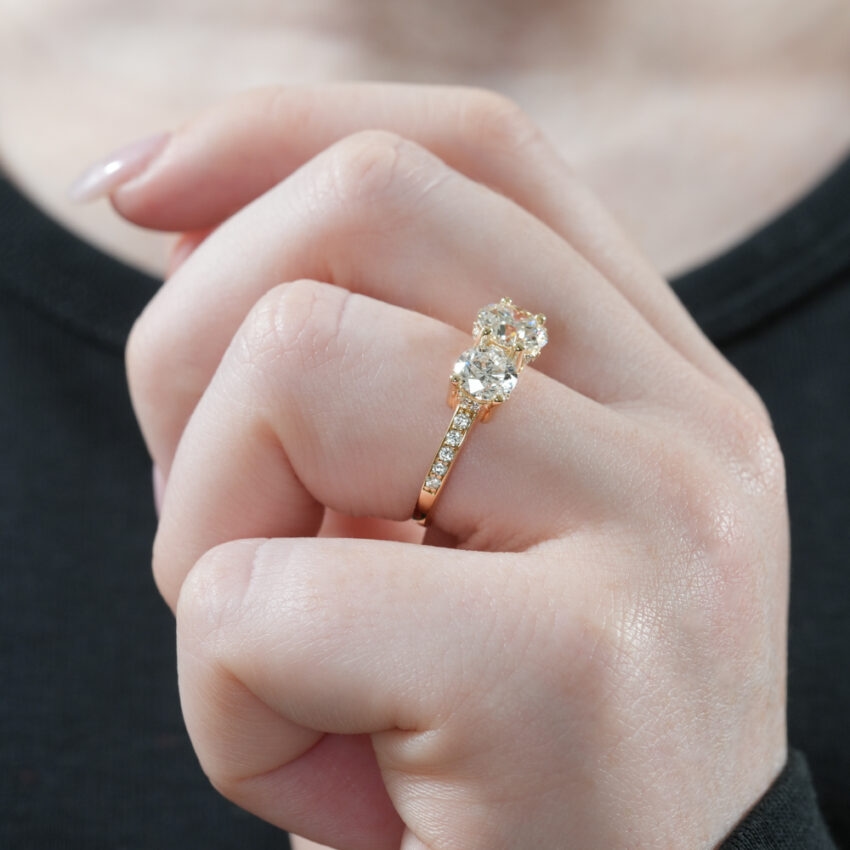
A pave diamond ring creates its visual impact through many small stones set closely across the metal surface. Instead of relying only on one large center stone, the design uses tiny diamonds to add shimmer around the band, shoulders, or halo. This setting style can make a ring look refined, detailed, and bright without adding bulky metalwork. The effect depends on stone size, setting quality, ring shape, and how the piece will be worn.
Why a Pave Diamond Ring Looks So Bright
Pave settings place small diamonds in tight rows, with very little visible metal between them. Jewelers secure the stones with tiny beads or prongs that are often shaped from the surrounding metal. Because more of each diamond remains exposed, light can reach the stones from several angles.
The visual result is a continuous field of sparkle. Even very small diamonds can create strong brilliance when they are matched well and arranged evenly. A pave diamond ring often appears more detailed than a plain band because the eye notices both the center design and the fine surface texture.
Full Pave, Half Pave, and Accent Pave
Pave coverage can vary. A full pave band carries small diamonds around most or all of the ring. This creates a seamless look, but resizing may be more difficult because stones cover so much of the shank.
Half pave or three-quarter pave designs leave part of the lower band plain. That can make future sizing easier and may improve comfort for some wearers. Accent pave places small stones only in selected areas, such as beside the center stone or along a halo.
Stone Size and Spacing Matter
The small diamonds in a pave setting need consistent proportions. If some stones are noticeably larger, darker, or set at different heights, the surface can look uneven. Good craftsmanship makes the stones appear balanced while keeping the metal structure secure.
Spacing also affects the final appearance. Stones placed closely together create a smoother, more continuous sparkle. Wider gaps show more metal and may make the design look less delicate. Neither approach is automatically better, but the setting should match the ring's style.
Matching the Center Stone
Pave can support many center stone shapes, including round, oval, cushion, emerald, pear, and marquise cuts. The surrounding detail should complement the center rather than compete with it.
For example, a delicate band can make a larger center stone appear more prominent. A wider pave band may create a stronger visual presence and suit a larger setting. Balance matters because too much detail around a small center can make the design feel crowded.
Metal Choice Changes the Appearance
White gold and platinum can blend visually with small diamonds, which helps the stones appear more continuous across the surface. Yellow gold creates more contrast, so the sparkle stands out against a warmer background. Rose gold offers a softer contrast with pink or copper tones.
Durability also matters. Platinum is dense and strong, while gold alloys vary based on karat and composition. The best choice depends on budget, color preference, skin sensitivity, and how often the ring will be worn.
Accent Stones and Diamond Origin
Small accent stones are available in both mined and lab made diamonds, and the choice does not change the basic setting method. Both can be cut and graded using the same common quality factors, including color, clarity, cut, and carat weight.
For pave work, visual consistency is often more important than examining each tiny stone individually. The stones should match in color and brightness so the surface looks even. Buyers may also want to ask whether the accent stones have been selected to complement the center diamond.
Comfort Should Be Part of the Decision
A detailed ring should still feel comfortable during daily wear. Some pave bands have raised edges or exposed bead work that can feel textured against neighboring fingers. Trying on a similar setting can help reveal whether the ring feels smooth enough for regular use.
Band width matters too. Very thin bands may feel light and delicate, while wider bands can feel more secure but more noticeable. The right balance depends on hand shape, personal preference, and lifestyle.
Think About a Wedding Band Pairing
If the ring will sit beside a wedding band, check how the two pieces meet. Some center settings extend outward and prevent a straight band from sitting flush. A curved or contoured band may fit more closely.
Pave on both rings can create a highly detailed look, but two textured bands may rub against each other. Ask a jeweler whether the setting design is suitable for stacking and whether a small gap between rings could reduce wear.
Daily Wear and Maintenance
A pave diamond ring has many small stones and setting points, so regular care is useful. Dirt, lotion, soap, and skin oils can collect around the stones and reduce sparkle. Gentle cleaning with mild soap, warm water, and a soft brush can help keep the setting clear.
Avoid harsh household chemicals and rough handling. Small prongs or beads can wear over time, especially if the ring is worn during lifting, sports, gardening, or other hands-on tasks.
Professional inspections are also worth considering. A jeweler can check for loose stones, worn metal, or damaged setting beads before a small issue becomes more serious. The inspection schedule may vary based on how often the ring is worn.
Resizing Can Be More Complex
Pave coverage affects how easily a ring can be resized. A plain section at the bottom of the band gives a jeweler more room to adjust the ring without disturbing stones. Full pave designs can be harder to resize because diamonds continue around the shank.
That does not mean resizing is impossible, but the range may be limited. Buyers who expect future size changes may prefer partial pave or a design with a plain sizing area.
Details to Check Before Buying
Look closely at the uniformity of the setting. The diamonds should appear evenly spaced, and the beads or prongs should not look oversized or irregular. The ring should also feel smooth when lightly touched along the sides.
Ask how the small stones are secured and whether replacement stones can be matched if one is lost. It is also useful to confirm the metal type, ring width, center setting height, and resizing options before purchase.
A well-made pave design balances sparkle with practical construction. The setting should support the visual style without making the ring difficult to wear, clean, or maintain.
A Thoughtful Choice Comes Down to Details
The strongest pave designs combine careful stone matching, secure setting work, balanced proportions, and a band that feels comfortable. Metal color, coverage, center stone shape, and future resizing all affect how the ring performs over time.
Buyers considering lab made diamonds can use the same design principles and focus on consistency, workmanship, and personal preference. A ring that looks beautiful in a display case should also feel practical enough for everyday life.