The growing need for effective food allergy management is transforming the global healthcare industry. Increasing awareness of peanut allergies, improved diagnostic capabilities, and the development of advanced therapeutic solutions are creating new opportunities for pharmaceutical and biotechnology companies. The Peanut Allergy Treatment Market is gaining importance as healthcare providers move beyond conventional symptom management toward therapies designed to reduce allergic sensitivity and improve long-term patient outcomes.
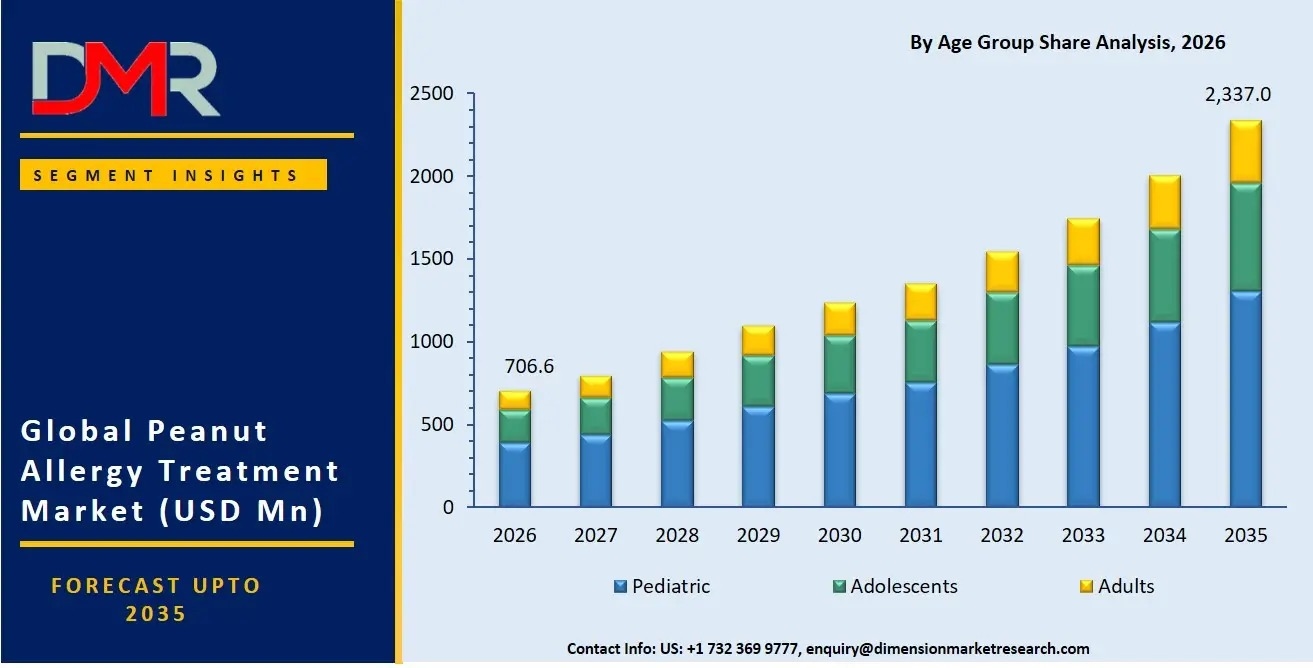
According to Dimension Market Research, the global Peanut Allergy Treatment Market is projected to reach USD 706.6 million in 2026 and expand to USD 2,337.0 million by 2035, registering a CAGR of 14.2% during 2026 to 2035. Rising food allergy awareness, increasing diagnosis rates, regulatory support for innovative treatments, and advancements in immunotherapy are supporting this expansion.
The market is also experiencing a significant shift toward disease-modifying treatment approaches. Oral immunotherapy, biologic therapies, and alternative allergen delivery technologies are creating new possibilities for managing peanut allergies, particularly among pediatric patients who require long-term clinical supervision.
What Is the Peanut Allergy Treatment Market?
The Peanut Allergy Treatment Market includes pharmaceutical products, immunotherapy solutions, emergency medications, and supportive healthcare services designed to prevent, manage, or reduce allergic reactions caused by peanut exposure.
Peanut allergy is an immune-mediated condition that can cause reactions ranging from mild symptoms to severe anaphylaxis. Treatment approaches include oral immunotherapy (OIT), epicutaneous immunotherapy (EPIT), sublingual immunotherapy (SLIT), biologic therapies, epinephrine auto-injectors, antihistamines, and corticosteroids.
While conventional treatments primarily focus on symptom management and emergency preparedness, newer therapeutic approaches aim to modify immune responses and improve tolerance to peanut allergens in eligible patients.
Why Is the Peanut Allergy Treatment Market Growing?
One of the major growth drivers is increasing awareness and diagnosis of food allergies. Better access to allergy testing and greater recognition of severe allergic reactions are encouraging patients and healthcare providers to seek appropriate treatment and long-term management solutions.
The growing focus on pediatric allergy management is another important factor. Children represent a significant patient population, encouraging pharmaceutical companies and researchers to develop therapies that address early diagnosis, treatment safety, and long-term allergy management.
Technological and pharmaceutical innovation is also influencing market development. Advances in biologic medicines and allergen-specific immunotherapy are creating opportunities for more targeted treatment approaches. These developments are gradually changing the industry from a predominantly emergency-focused treatment model toward more comprehensive disease management.
Get a Free Sample of the Peanut Allergy Treatment Market Report
Explore detailed market forecasts, treatment segmentation, regional opportunities, competitive analysis, and emerging therapeutic developments with Dimension Market Research.
https://dimensionmarketresearch.com/request-sample/peanut-allergy-treatment-market/
Peanut Allergy Treatment Market Segmentation and Key Opportunities
The market is segmented by treatment type, age group, distribution channel, and end user.
Oral Immunotherapy is projected to remain the leading treatment type, accounting for approximately 42.5% of the global market in 2026. OIT works through controlled exposure to peanut allergens under specialist supervision, with the objective of increasing tolerance in eligible patients.
Biologic therapies are expected to represent the fastest-growing treatment segment. These therapies target specific immune pathways and offer opportunities for more personalized allergy management. Continued investment in monoclonal antibodies and combination therapies is supporting research in this area.
The pediatric segment is expected to dominate the age group category, accounting for approximately 55.8% of the market in 2026. Increasing emphasis on early diagnosis, childhood allergy management, and specialist-supervised treatment is supporting this position.
Hospital pharmacies are projected to lead the distribution channel segment with approximately 48.2% share in 2026. Hospitals also represent the leading end-user category, accounting for approximately 45.6% of the market, supported by specialist departments, diagnostic capabilities, emergency facilities, and treatment monitoring requirements.
Online pharmacies are expected to experience the fastest growth among distribution channels as digital healthcare adoption and medication delivery networks expand.
Regional Outlook: North America Leads the Market
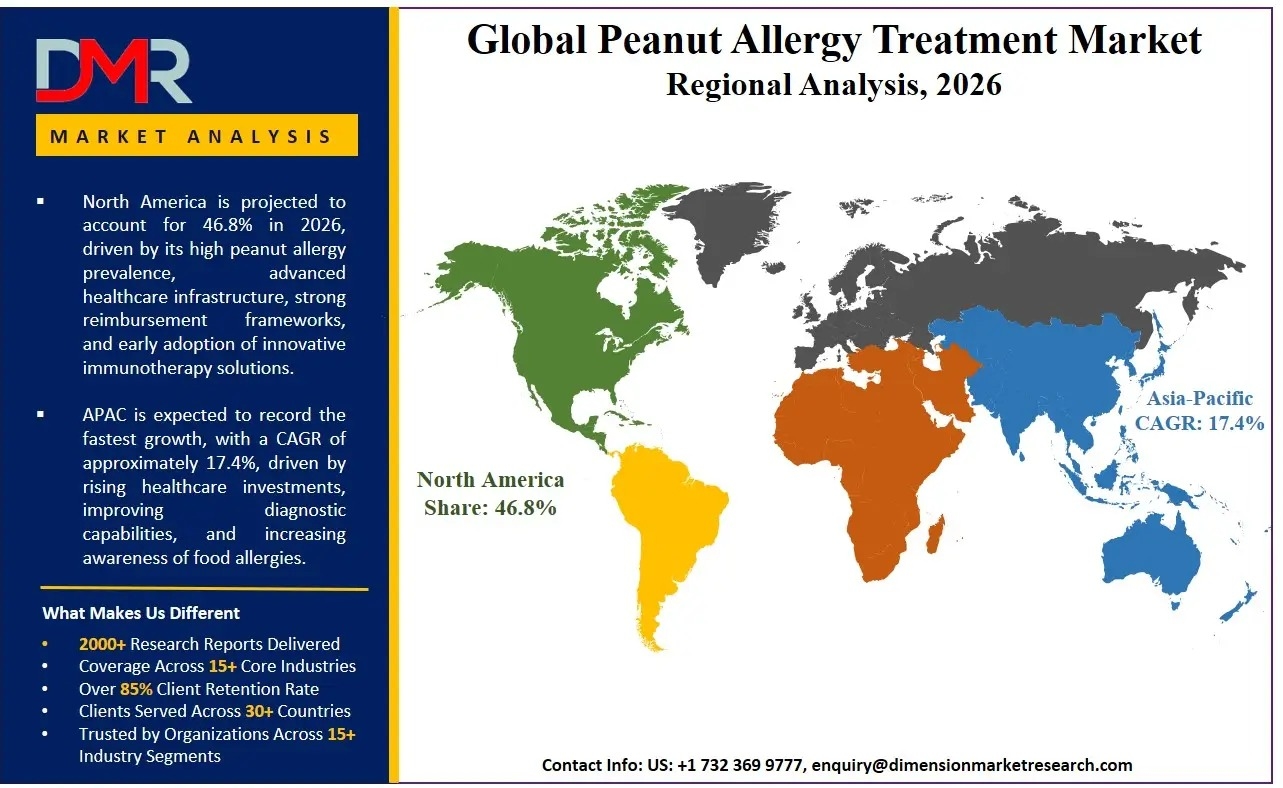
North America is projected to dominate the Peanut Allergy Treatment Market, accounting for approximately 46.8% of global market share in 2026. The region benefits from advanced healthcare infrastructure, established reimbursement frameworks, clinical research investments, and greater adoption of innovative immunotherapy solutions.
The United States is the largest individual country market, with an estimated value of USD 278.0 million in 2026. Its market is projected to expand at a CAGR of 13.3% during the forecast period.
Europe represents another important market, with an estimated value of USD 162.5 million in 2026. Increasing food allergy diagnosis, clinical research, and adoption of advanced therapeutic approaches are supporting regional demand.
Asia-Pacific is expected to record the fastest regional growth. Improving healthcare infrastructure, expanding specialist networks, increasing awareness, and rising access to advanced allergy treatments are creating opportunities across Japan, China, South Korea, and India.
Technology Trends and Competitive Landscape
Digital healthcare is becoming increasingly relevant to peanut allergy management. Remote patient monitoring, electronic health records, mobile applications, and telemedicine platforms can help healthcare professionals monitor treatment progress, identify adverse reactions, and improve patient follow-up.
Artificial intelligence is also creating opportunities in allergy research and management. AI-powered systems can analyze patient histories and diagnostic information to support risk assessment and personalized treatment planning. Machine learning applications may also assist researchers in identifying therapeutic targets and improving clinical trial processes.
Competition in the Peanut Allergy Treatment Market is driven by pharmaceutical innovation, clinical research, regulatory approvals, and product differentiation. Prominent companies identified by Dimension Market Research include Stallergenes Greer, ALK-Abelló, Aimmune Therapeutics, Nestlé Health Science, DBV Technologies, Sanofi, Regeneron Pharmaceuticals, Genentech, Novartis, and Aravax.
Companies are increasingly focusing on safer immunotherapy delivery, biologic development, research partnerships, and treatment accessibility. Developments in oral and skin-based immunotherapy are particularly important as manufacturers explore alternatives to conventional treatment approaches.
Challenges and Future Growth Opportunities
Despite strong growth potential, the market faces several challenges. Safety concerns associated with immunotherapy remain important because treatment may require gradual dose escalation, patient selection, and continuous medical supervision.
High treatment costs, limited specialist availability, and differences in healthcare access can also restrict adoption, particularly in emerging economies. Furthermore, not all patients achieve complete tolerance, making treatment outcomes and long-term effectiveness important considerations.
However, improving healthcare infrastructure, expanding clinical research, and increasing awareness are creating opportunities for manufacturers. Advanced biologics, personalized treatment strategies, and digital monitoring solutions are expected to influence the industry's future development.
Explore the Complete Peanut Allergy Treatment Market Analysis
Get access to comprehensive market intelligence covering global forecasts, treatment categories, regional developments, competitive positioning, and emerging investment opportunities.
https://dimensionmarketresearch.com/checkout/peanut-allergy-treatment-market/
Frequently Asked Questions About the Peanut Allergy Treatment Market
1. What is the global Peanut Allergy Treatment Market size?
The global Peanut Allergy Treatment Market is projected to reach USD 706.6 million in 2026 and USD 2,337.0 million by 2035.
2. What is the CAGR of the Peanut Allergy Treatment Market?
The market is expected to grow at a CAGR of 14.2% between 2026 and 2035.
3. Which treatment segment leads the Peanut Allergy Treatment Market?
Oral Immunotherapy is projected to lead the treatment type segment with approximately 42.5% market share in 2026.
4. Which region dominates the Peanut Allergy Treatment Market?
North America is projected to lead the global market with approximately 46.8% share in 2026.
5. What is the future outlook for the Peanut Allergy Treatment Market?
The market outlook is positive, supported by increasing food allergy awareness, pediatric treatment demand, immunotherapy innovation, biologic development, and digital healthcare integration.
Conclusion
The Peanut Allergy Treatment Market is entering an important phase of pharmaceutical and technological development. Increasing awareness, improved diagnosis, and demand for advanced treatment approaches are supporting strong market expansion. Oral immunotherapy currently leads treatment adoption, while biologics and digital healthcare technologies are creating new opportunities. With the market projected to reach USD 2.34 billion by 2035, continued innovation, improved treatment accessibility, and personalized allergy management are expected to shape its long-term development.
Related Food Allergy and Treatment Market Insights
The global Allergy Treatment Market was valued at USD 18.6 billion in 2024 and is projected to reach USD 34.5 billion by 2033, growing at a CAGR of 6.8%. Demand for antihistamines, immunotherapy, biologic treatments, and personalized allergy management solutions is supporting market development.
US Food Allergy Diagnosis and Treatment Market Share
The US Food Allergy Diagnosis and Treatment Market is projected to reach USD 484.7 million in 2026 and USD 877.1 million by 2035, registering a CAGR of 6.81%. Skin prick testing leads the diagnosis method segment, while medication represents the leading treatment category.
India Food Allergy Market Growth
The India Food Allergy Market report examines epidemiology, patient segmentation, conventional treatments, biologics, and emerging immunotherapy opportunities. Increasing awareness, improved diagnostic capabilities, specialist healthcare expansion, and demand for advanced treatment options are important factors shaping the Indian market. The report page does not publish a consolidated market size or CAGR figure.