
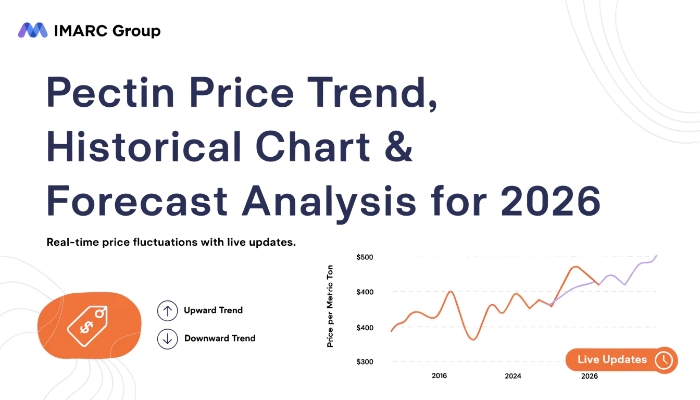
Global Pectin Prices Outlook – Q3 2026
During Q3 2026, the Pectin Price Trend reflected considerable regional differences, influenced by food processing demand, raw material availability, production costs, and international trade. Turkey recorded the highest benchmark at USD 13,748/MT, while China reported the lowest at USD 9,684/MT. Buyers can explore the Pectin Price Chart 2026 to understand regional price differences, historical benchmarks, and procurement conditions.
According to IMARC Group's Q3 2026 price-tracking database and methodology, pectin prices remained influenced by citrus peel and apple pomace availability, extraction expenses, and demand from food and beverage manufacturers. The market also experienced differences in regional production costs and supplier availability. These factors remained important for procurement managers evaluating sourcing opportunities, negotiating supply contracts, and managing ingredient expenditure.
Pectin Price Snapshot Q3 2026
USA: USD 11,672/MT
China: USD 9,684/MT
Germany: USD 10,897/MT
Thailand: USD 11,300/MT
Turkey: USD 13,748/MT
Turkey recorded the highest benchmark, indicating comparatively higher procurement costs among the reported markets. China remained the lowest-priced market, reflecting differences in production economics and supplier availability. The USA and Thailand reported relatively close prices, while Germany maintained an intermediate benchmark. Regional differences were influenced by raw material sourcing, extraction expenses, transportation, and local demand from food processing industries.
Regional-Wise Pectin Price Analysis: Q3 2026
North America: USA
- USA: Pectin prices reached USD 11,672/MT. Demand from processed food, dairy, confectionery, and beverage manufacturers supported purchasing requirements. Production expenses and imported ingredient availability also influenced procurement costs.
Asia-Pacific: China and Thailand
China: Prices stood at USD 9,684/MT, the lowest among the reported markets. Domestic manufacturing capacity and raw material availability influenced regional supply conditions.
Thailand: The benchmark reached USD 11,300/MT. Demand from food processing and beverage manufacturers supported consumption, while imported raw materials and production costs influenced pricing.
Europe and Eurasia: Germany and Turkey
Germany: Prices reached USD 10,897/MT, influenced by demand from confectionery, dairy, and processed food manufacturers.
Turkey: Prices stood at USD 13,748/MT, the highest among the reported markets. Raw material sourcing, processing expenses, and regional supply conditions contributed to its higher benchmark.
Overall, the reported markets demonstrated a considerable difference in procurement costs. China remained the most competitive market, while Turkey recorded the highest price. The USA and Thailand occupied the middle range, with Germany reporting a comparatively lower benchmark. These variations highlight the importance of evaluating local production economics, raw material availability, and transportation expenses before selecting international suppliers.
Pectin Supply and Demand Overview – Q3 2026
Pectin supply remained closely connected to the availability of citrus peels and apple pomace, which serve as important raw materials for commercial extraction. Seasonal fruit processing activity influenced the quantity of suitable feedstock available to manufacturers.
On the demand side, food and beverage manufacturers continued to use pectin as a stabilising, thickening, and gelling ingredient. Applications in jams, fruit preparations, dairy products, confectionery, and plant-based foods supported industrial consumption.
Pharmaceutical and nutraceutical applications also contributed to demand. However, differences in extraction capacity, raw material quality, and processing expenses created variations in regional supply conditions.
Pectin Price Trend & Historical Analysis: Quarterly Market Movement
The Pectin Price Trend during Q3 2026 highlighted substantial differences between international procurement markets. The five reported benchmarks ranged from USD 9,684/MT in China to USD 13,748/MT in Turkey.
China maintained the lowest benchmark, while Turkey occupied the highest position. The USA and Thailand recorded intermediate pricing levels, and Germany remained below both markets.
Historical quarterly comparisons help procurement teams understand cost fluctuations and identify changes in supplier competitiveness. The pectin price history chart can support purchasing decisions by showing how regional benchmarks change over time.
A verified Q2 2026 comparison is necessary to establish the exact quarterly percentage movement and determine whether the overall market experienced an uptrend or downtrend.
Pectin Price Forecast 2026: Next 12 Months
The outlook for pectin prices will depend on fruit processing activity, raw material availability, extraction costs, and demand from food manufacturers.
Important factors to monitor include:
Citrus peel availability: Changes in citrus processing volumes may affect the supply of extraction feedstock.
Apple pomace supply: Seasonal apple processing activity could influence raw material availability.
Food industry demand: Growing consumption of processed foods, dairy products, and confectionery may support pectin requirements.
Production expenses: Energy, labour, and processing costs could influence manufacturers' selling prices.
International trade: Freight expenses and supplier availability may affect regional procurement costs.
Overall, the pectin price forecast 2026 will depend on the balance between raw material availability and downstream consumption. Buyers should monitor supplier quotations and seasonal feedstock conditions when negotiating long-term contracts.
Key Factors Affecting Pectin Prices: Q3 2026 Perspective
Several commercial factors influence pectin procurement costs:
Raw material availability: Citrus peel and apple pomace availability directly influence extraction operations.
Energy expenses: Electricity and fuel costs affect drying, extraction, concentration, and processing activities.
Food processing demand: Requirements from beverage, dairy, confectionery, and packaged food manufacturers influence consumption.
Freight costs: International transportation and logistics expenses affect delivered prices.
Production capacity: Manufacturing efficiency and extraction capacity influence regional supply.
Currency movements: Exchange rate fluctuations affect international purchasing and import expenses.
What Is Pectin and Where Is It Used?
Pectin is a naturally occurring polysaccharide found in the cell walls of fruits, particularly citrus fruits and apples. It is commercially extracted and processed into a functional ingredient widely used across food, pharmaceutical, and personal care industries.
Its major applications include:
Food processing: Used in jams, jellies, fruit preparations, and confectionery.
Dairy products: Helps improve texture and stability in yoghurt and flavoured milk.
Beverages: Used in fruit drinks and other formulations requiring stabilisation.
Pharmaceuticals: Used in selected formulations and specialised applications.
Plant-based foods: Supports texture and consistency in various food alternatives.
Its gelling, thickening, and stabilising properties make it an important ingredient for commercial food manufacturers.
Recent Developments in the Pectin Market: Q3 Highlights
Food industry demand: Continued requirements from processed food and beverage manufacturers supported the importance of pectin in industrial formulations.
Raw material sourcing: Citrus peel and apple pomace availability remained important for extraction and production planning.
Product innovation: Growing interest in clean-label ingredients encouraged manufacturers to evaluate naturally derived stabilising agents.
Regional manufacturing: Differences in extraction capacity and processing infrastructure continued to influence supplier competitiveness.
These developments highlight the importance of monitoring fruit processing volumes, manufacturing investments, and food industry demand when evaluating future procurement opportunities.
Frequently Asked Questions About Pectin Prices
What factors influence the Pectin Price Trend in 2026?
Raw material availability, citrus and apple processing activity, energy costs, extraction capacity, and food industry demand are the main factors influencing pectin prices. Freight expenses and regional supplier availability also affect procurement costs.
Where can buyers find the Pectin Price Chart and historical data?
Buyers can explore IMARC Group's pectin pricing report for regional benchmarks, historical price movements, quarterly comparisons, and market analysis. These insights help procurement teams evaluate supplier markets and manage purchasing strategies.
What is the Pectin Price Forecast 2026?
Pectin prices will largely depend on citrus peel and apple pomace availability, manufacturing expenses, and demand from food processing industries. Changes in seasonal raw material supply and international trade could influence future procurement costs.
How IMARC Group Helps Businesses Understand Pectin Prices
IMARC Group helps businesses understand pectin price movements through detailed pricing reports and market insights. Its analysis covers regional prices, historical trends, supply and demand, and key industry developments. These insights help procurement managers compare suppliers, monitor cost changes, and make better purchasing decisions. Going forward, tracking raw material availability, production costs, and food industry demand will be important for understanding future pectin prices.
Browse More Related Reports:
Anhydrous Ammonia Price Trend Analysis: https://www.imarcgroup.com/anhydrous-ammonia-price-trend
Ammonia Price Trend Analysis: https://www.imarcgroup.com/ammonia-pricing-report
Contact Us:
IMARC Group
134 N 4th St., Brooklyn, NY 11249, USA
Email: sales[@]imarcgroup.com
Tel No:(D) +91 120 433 0800
United States: +1-201971-6302




