
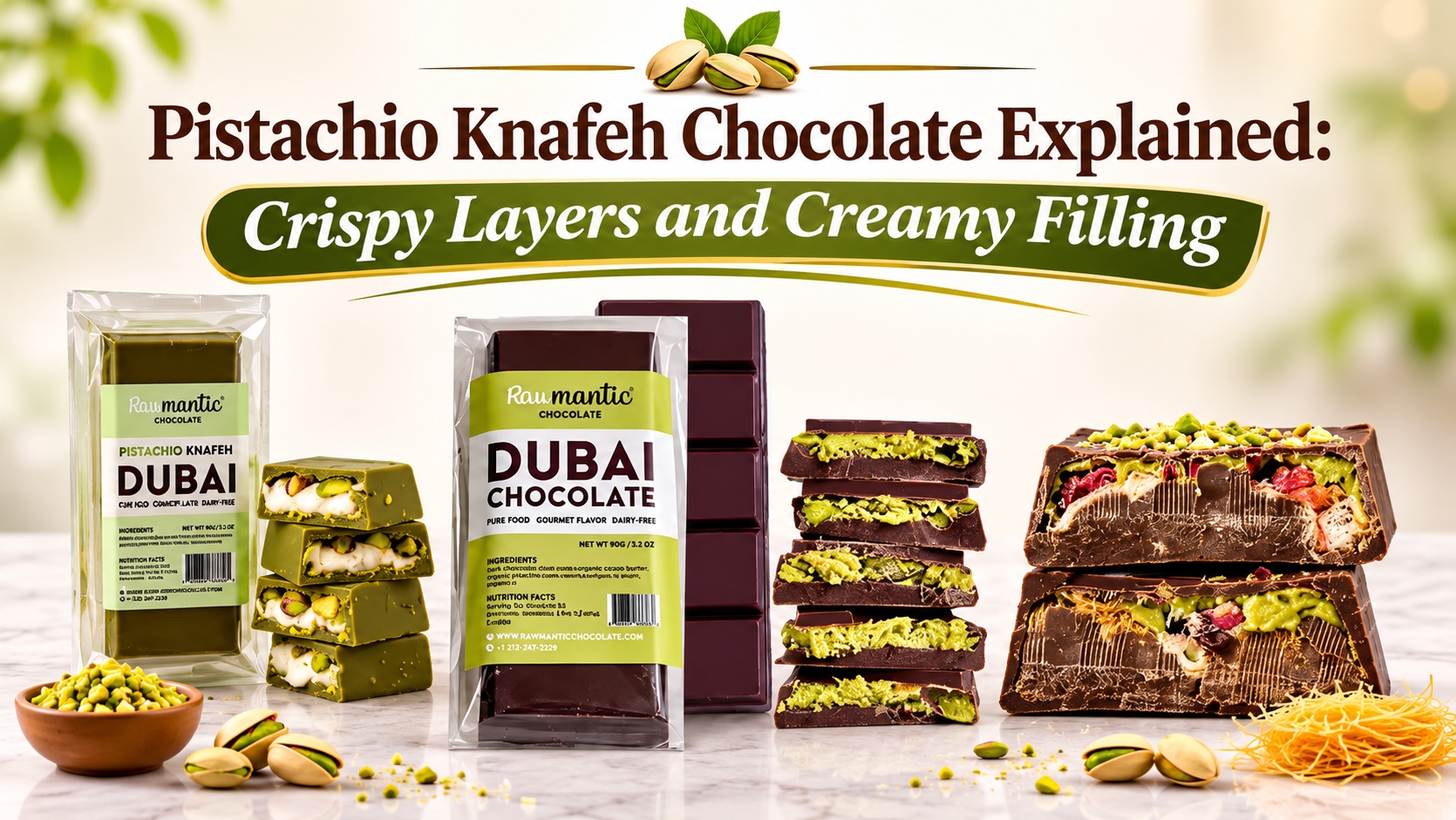
Pistachio knafeh chocolate is a filled chocolate that combines a snappy shell, a crunchy pastry layer, and a smooth green cream. It draws on a traditional Middle Eastern dessert and became widely known through social media in recent years. This article explains what the product is, how it is made, which ingredients it contains, and what buyers can check on a label.
What the Product Is
The Dessert Behind the Name
Knafeh, also spelled kunafa or kanafeh, is a dessert found across the Levant, Turkey, and Egypt. Traditional versions use thin strands of dough or semolina, a soft cheese or cream filling, and a sugar syrup. The dessert is usually served warm and is often topped with crushed pistachios.
How the Chocolate Version Developed
The chocolate version replaces the warm, syrupy format with a bar or a filled shell. Its popularity grew after a filled bar from Dubai circulated widely online, and many makers around the world now produce similar items. Because no legal standard exists for the name, recipes and layer thicknesses differ from one maker to another.
The Main Components
The Chocolate Shell
The outer layer is usually milk or dark chocolate, though white chocolate is also used. The shell is tempered, which means it is heated and cooled in a set pattern so the cocoa butter sets with a glossy surface and a clean snap. A thin shell allows the filling to stand out, while a thicker shell gives a firmer bite.
The Crispy Layer
The crunch comes from kataifi, a pastry made from very fine strands of wheat dough. The strands are shredded, toasted in butter or oil until golden, and then mixed into the filling. Toasting removes moisture, which helps the pastry stay crisp inside the bar.
The Creamy Filling
The filling is typically made from pistachio paste, a blend of ground pistachios, sugar, and fat. Many recipes also include tahini, white chocolate, or milk powder to improve smoothness. The kataifi pieces are folded into this cream, which creates the contrast between crisp and soft textures.
Ingredients and Sourcing
Pistachios
Pistachios used in confections come from several regions, including Iran, Turkey, California, and Sicily. Growing conditions affect color, flavor, and oil content. The nut contains natural fats that give the filling a rich mouthfeel. Raw pistachios are often roasted before grinding, which deepens the flavor and makes the nuts easier to turn into a smooth paste. Some pastes use only roasted pistachios, while others use a blend of nuts and added oils.
Color and Flavor
Pistachio paste can range from pale green to deep green depending on the nuts and the roasting level. Some products use natural or artificial colors to create a brighter shade. The ingredient list shows whether color has been added.
Chocolate Quality
The percentage of cacao in the shell, the type of fat, and the use of emulsifiers such as soy lecithin affect taste and texture. Chocolate made with cocoa butter generally melts more smoothly than products that replace it with other fats.
How the Filled Bar Is Made
Preparing the Filling
Makers first toast the kataifi until it is crisp. Separately, they prepare the pistachio cream by blending paste with other ingredients until smooth. The cooled pastry is then mixed into the cream in measured amounts.
Molding and Setting
A thin coat of tempered chocolate is brushed or poured into a mold and allowed to set. The filling is spooned in and leveled, and a final layer of chocolate seals the bar. The mold is cooled so the layers set evenly before the bar is removed.
Why Moisture Control Matters
Moisture is the main risk to the crisp layer, and it explains why the pastry is toasted before it is added. Water from the filling can soften the pastry over time, so makers keep the cream low in water and store finished bars in cool, dry conditions. Sealed packaging also helps protect the texture, and some makers add a thin barrier layer of chocolate or cocoa butter between the filling and the shell.
Variations on the Format
Makers adjust the style in several ways. Some use dark chocolate to balance the sweetness of the cream, while others add rose water, cardamom, or sea salt. A pistachio chocolate bar can also be sold as small squares, filled bonbons, or thick slabs. Smaller pieces allow for a higher ratio of chocolate to filling, while larger slabs show the layers more clearly.
Some companies offer vegan or minimally processed versions, which replace dairy with plant-based ingredients. Brands such as Rawmantic® Chocolate are among those that work with cacao in this category, and buyers can compare ingredient lists to see how recipes differ.
What to Check Before Buying
Reading the Ingredient List
Ingredients are listed in order by weight. For pistachio knafeh chocolate, the list should show chocolate or cocoa ingredients, pistachios, and kataifi or wheat flour. A higher position for pistachios suggests a larger share of nut content, although labels do not always state exact percentages. Shoppers who compare each pistachio chocolate bar may also check for added oils or colors.
Allergens and Dietary Notes
Pistachios are tree nuts, which are a major food allergen under US law. Kataifi is made from wheat, so the product contains gluten unless a different pastry is used. Tahini adds sesame, and many versions contain milk and soy. People with allergies should read the full allergen statement and any facility warnings about shared equipment.
Freshness and Storage
The bar keeps best in a cool, dry place away from sunlight and strong odors. Heat can cause the chocolate to bloom, which appears as a pale film on the surface. Bloom changes appearance but is generally not harmful. If the bar tastes stale or the pastry feels soft, moisture or age may have affected the filling.
Conclusion
Pistachio knafeh chocolate combines a tempered shell, a toasted pastry layer, and a smooth nut cream. The quality of each part, along with moisture control and ingredient choices, shapes the final texture and taste. Reading labels for nut content, allergens, and added colors gives buyers clear details for comparison, and understanding the structure of the product helps explain why recipes vary between makers.