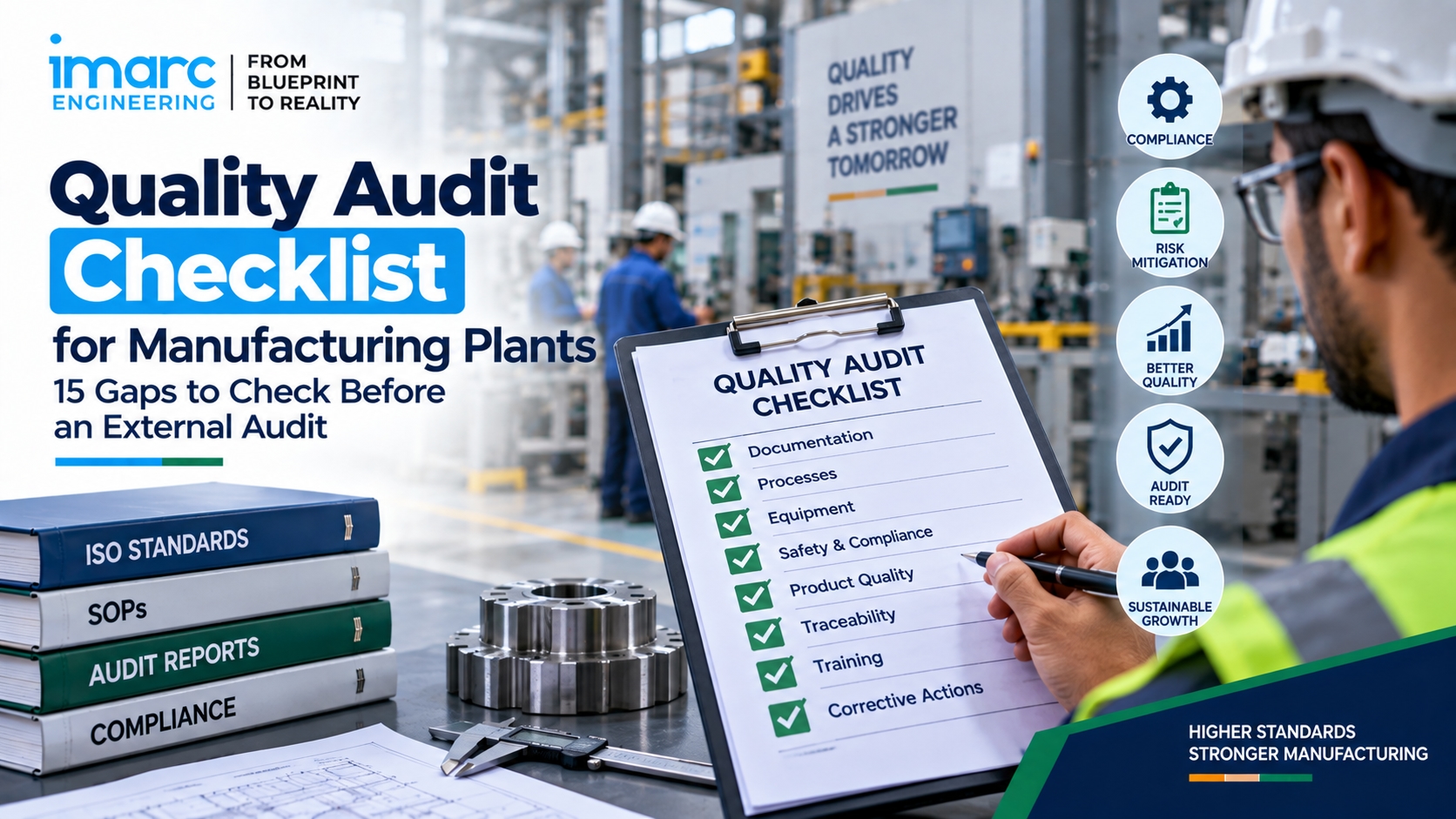
External quality audits are unforgiving on evidence. Auditors compare written procedures with shop-floor practice, test traceability across records, and ask whether deviations, changes and release decisions are controlled. Plants that prepare only by arranging files often still face findings because the real gaps sit in process discipline, record quality and ownership.
Quality Audit Consulting Services in India can help manufacturing plants identify those gaps early through structured pre-audit reviews. The purpose is not to create a longer document set. It is to verify whether quality controls work under audit conditions—before a customer, certification body or regulatory review begins.
Why Pre-Audit Gap Checks Matter
An external audit tests consistency. If one batch record is complete and the next is not, the system looks unreliable. If operators explain a method differently from the SOP, training effectiveness is questioned. If CAPA actions are closed without verifying impact, the quality system appears procedural rather than effective.
India’s manufacturing sector continues to expand under policy support and investment momentum:
Manufacturing growth is estimated at around 7% at constant prices in FY 2025-26 (MoSPI First Advance Estimates).
FDI into manufacturing rose 18% in FY 2024-25 to US$19.04 billion (Ministry of Commerce & Industry / DPIIT).
PLI cumulative investment has exceeded ₹2.16 lakh crore, with cumulative production and sales surpassing ₹20.41 lakh crore as of December 2025 (PIB).
Logistics costs have improved to an estimated 7.97% of GDP (DPIIT-NCAER study).
As more plants enter formal supply chains and certified quality regimes, audit readiness has become a commercial requirement. Pre-audit gap checks reduce last-minute surprises.
How to Use This Quality Audit Checklist
Walk the process with evidence in hand. For each gap area:
Check the written requirement.
Observe actual practice.
Review sample records.
Rank the issue by product and customer impact.
Assign corrective action before the external audit.
A checklist completed only in a meeting room is a desk exercise, not audit preparation.
15 Gaps to Check Before an External Audit
1. SOP and practice mismatch
Procedures are updated, but operators still follow older methods. Auditors treat this as a control failure, not a training formality.
2. Incomplete or non-contemporaneous records
Missing entries, delayed recording or unclear corrections weaken batch and process history.
3. Weak document control at point of use
Obsolete SOPs, uncontrolled printouts or multiple versions in the same area create immediate findings.
4. Traceability breaks
Material identity, process steps and dispatch records cannot be linked quickly for a selected batch.
5. Inconsistent in-process checks
Critical checks are defined but skipped under time pressure, or acceptance criteria are applied inconsistently across shifts.
6. Open deviations without clear disposition
Deviations exist, yet product impact assessment and final decisions are incomplete or poorly justified.
7. CAPA closed on activity, not effectiveness
Actions are marked complete because a task was done, without evidence that the recurring issue has reduced.
8. Change control gaps
Material, process, equipment or packaging changes were implemented before quality evaluation and document updates.
9. Training records without competence evidence
Attendance sheets exist, but role-based competency for critical tasks is not demonstrated.
10. Status control failures in stores and process areas
Quarantine, approved and rejected materials are not clearly segregated, or labels do not match system status.
11. Calibration and measuring-device control weaknesses
Gauges and instruments used for quality decisions are overdue, unidentified or lack clear status indication.
12. Supplier quality evidence gaps
Incoming materials lack required certificates, inspection records or approved-supplier linkage.
13. Housekeeping and area discipline issues
Mixed tools, unidentified containers, uncontrolled scrap or poor segregation in secondary areas often attract observations.
14. Customer complaint and feedback loop weaknesses
Complaints are logged, but root-cause analysis and preventive actions are shallow or delayed.
15. Internal audit and management review not driving action
Internal audits exist on schedule, yet recurring findings remain open or reappear without leadership intervention.
These fifteen gaps cover the areas external auditors examine most frequently across documentation, process control and quality-system behaviour.
Practical Pre-Audit Sequence
Select the product family and process areas in audit scope.
Review previous external and internal findings.
Sample recent batch records and deviation files.
Walk receiving, process, packing and storage areas.
Trace one batch from material receipt to dispatch.
Interview operators and supervisors on actual methods.
Rank gaps by risk to product quality and audit exposure.
Close critical gaps and verify evidence before the audit date.
This sequence converts the checklist into readiness, not paperwork volume.
What “Good Enough” Looks Like Before Audit Day
A plant is better prepared when:
Critical SOPs match observed practice
Sample batch records tell a complete story
Deviations and CAPA files show logic, not only forms
Material status is visible and consistent
Teams can retrieve evidence without delay
High-risk gaps from the last review are closed
Perfection is not required. Control, consistency and transparency are.
Common Pre-Audit Mistakes
Preparing documents without floor verification
Coaching only the audit route and ignoring adjacent areas
Closing CAPA the day before the audit without effectiveness checks
Treating stores and utilities as outside quality scope
Assuming certificates alone prove process control
No owner for each gap action
External auditors usually expand beyond the prepared path. Broad readiness matters more than selective presentation.
How IMARC Engineering Can Help
IMARC Engineering supports manufacturers who need stronger operational and quality-system readiness before external audits. Support focuses on aligning procedures, process discipline and evidence quality with real plant conditions.
Support may include:
Pre-audit gap reviews across documentation and shop-floor practice
Prioritisation of high-risk quality system weaknesses
Operational readiness inputs for manufacturing plants preparing for customer or compliance audits
Advisory across pharmaceuticals, food and beverage, chemicals, auto components, electronics, FMCG and discrete manufacturing
If your plant is preparing for an external quality audit, IMARC Engineering can help structure a practical gap review around the controls auditors test most often: https://www.imarcengineering.com/contact?service=quality-audit-services
Conclusion
A quality audit checklist for manufacturing plants is most useful when it exposes the fifteen recurring gaps that undermine external audit performance: procedure adherence, record integrity, traceability, deviation and CAPA quality, change control, competence, status control and leadership follow-through.
Plants that check these areas with floor evidence reduce finding risk and protect customer confidence. Plants that rely on last-minute file arrangement often meet the same observations again.
Audit readiness is demonstrated by controlled operations and retrievable evidence—not by the number of documents placed on the table.
Contact Us:
IMARC Engineering
Phone: +91-120-433-0800
Email: sales@imarcengineering.com
India: C-130, Sector 2, Noida, Uttar Pradesh 201301
LinkedIn: https://www.linkedin.com/showcase/imarc-engineering/