The phone call usually comes without warning. A parent, sibling or spouse in Tripura has been taken seriously ill, the local hospital is advising treatment elsewhere, and you are hundreds or thousands of kilometres away in another city or country. You cannot walk into the ward. You cannot hold the file. Yet decisions are waiting for you.
Many families in this position assume they must travel first and organise later. In practice, a great deal can be arranged from a distance, provided the work is split sensibly between what you can do on your phone and what needs a person on the ground. This article is built around that split.
Start With One Honest Question: What Can You Do From Where You Are?
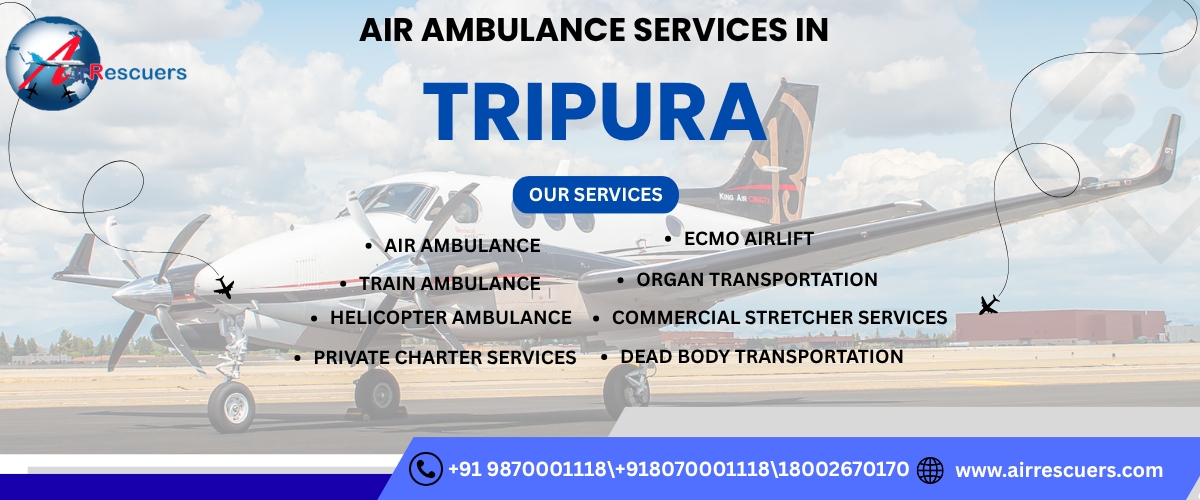
Distance changes your role. You become the coordinator, not the caregiver at the bedside. That is a real job, and it has a shape. Families who explore Air Ambulance Services in Tripura from outside the state tend to manage it best when they treat it as a small project with clear tasks, rather than a flood of calls.
The table below separates the work into two columns.
Task | Can you do it from afar? | How to make it work |
|---|---|---|
Speak to the treating doctor | Yes | Ask the hospital for a scheduled call with the doctor rather than waiting for a random update |
Collect medical reports | Partly | Ask a relative or hospital staff to photograph reports and send them to you |
Contact the air ambulance provider | Yes | Call or message with the details listed in the next section |
Confirm the destination hospital and bed | Yes | Speak to the receiving hospital’s admission desk directly |
Arrange consent and identification | Partly | Someone present must sign; you can guide them over a call |
Be at the bedside during shifting | No | Nominate a trusted local person, such as a neighbour or friend |
Pay and track documents | Yes | Keep a digital folder and ask for written confirmations |
Seeing the work in this form often reduces panic. Most rows are things you can handle from your own phone.
Build a One-Page Briefing Before You Call Anyone
Providers ask the same basic questions each time, and a family that has the answers ready saves precious time. Before calling, write down the following on a single page or in a note on your phone:
Patient’s name, age and current location (hospital name and city)
Main diagnosis in simple words, and the reason a transfer is being advised
Whether the patient is on oxygen, a ventilator or intravenous medicines
The hospital and doctor where the patient needs to go, if already decided
Your contact number and the number of the person present at the hospital
Preferred timing and any special needs, such as a relative who must travel along
When you speak to Airrescuers or any other provider, this page lets you answer clearly and keeps the call short.
Find a Local Pair of Hands
The biggest gap for a faraway relative is physical presence. Choose one person in Tripura who can act as your eyes: a close friend, a neighbour, a colleague or a relative living nearby. Their tasks are modest but important:
Be present when the medical team arrives.
Sign documents if the patient cannot, and if the hospital allows it.
Carry original reports and identification to the airport or ambulance.
Send you short updates by phone at each stage.
Give this person a clear, limited list. Asking them to do too much leads to confusion, while a short list lets them act with confidence.
Keep Communication in One Place
Remote coordination falls apart when information is scattered across calls, voice notes and half-remembered conversations. A few habits help:
One shared folder. Keep reports, identification copies and receipts together, shared with one or two trusted people.
One written thread. Use a single messaging group for the family so updates do not get lost.
One decision-maker. Agree who speaks to the provider and the hospital, so instructions do not conflict.
Written confirmations. Ask for key details, such as pickup time and destination, in writing.
Understanding the Money From a Distance
Cost is a natural concern, and it is easier to discuss calmly when you are not at the hospital. The Cost for Air Ambulance Services in Tripura depends on factors that differ from one patient to another, so a single number rarely applies to everyone. These usually include:
The patient’s medical condition and the equipment or medical staff needed
The destination city and the distance of the flight
The aircraft type used for the transfer
Ground ambulance arrangements at both ends
Permissions, paperwork and any waiting time
When you request a quotation, ask what is included and what is not. Request the details in writing so that every family member who is helping can see the same information. Clarity at this stage prevents misunderstandings later.
A Short Message You Can Send Right Now
If you are unsure how to begin, a short message to your provider can open the conversation. You may adapt something like this:
“My father is admitted at a hospital in Tripura and the doctors have advised shifting him to a hospital in another city. I am in a different state. Please tell me what details you need from me, how soon an air transfer can be arranged, and what the cost will depend on.”
That message names the situation, the distance and your three main questions, which is enough for a coordinator to respond usefully.
What Often Goes Wrong, and How to Avoid It
Waiting to travel first. Starting the arrangements while you are still on the way saves hours.
Relying on verbal updates. Ask for written summaries from the hospital where possible.
Having several callers. If three relatives phone the provider, details can become inconsistent.
Forgetting the receiving end. Confirm the destination bed and doctor before the flight is fixed.
Frequently Asked Questions
Can I arrange an air ambulance from outside Tripura without being there?
Yes, many steps can be handled by phone. You will need someone present with the patient to sign forms and accompany the stretcher where required.
Who should be the main contact for the provider?
Choose one family member and share their number with everyone else. This avoids mixed instructions.
What documents will be needed?
Medical reports, a doctor’s referral or summary, the patient’s identification and the details of the receiving hospital are usually the starting point.
Can a relative travel with the patient?
This depends on the patient’s condition and the available seating. Confirm it with the coordination team at the start.
How do I know what is included in the quotation?
Ask for a written breakdown and clarify anything that is unclear before agreeing.
Conclusion
Living far from a seriously ill relative is painful, but it does not leave you powerless. By splitting the work between what you can do remotely and what needs a local helper, preparing a one-page briefing and keeping communication in one place, you can coordinate a transfer with confidence. If your family is considering Air Ambulance Services in Tripura, Airrescuers can walk you through each step by phone, so that your distance from the bedside does not become a barrier to getting the patient where they need to be.
Air Rescuers Worldwide Private Limited
Mobile: +91 9870001118 / +91 8070001118 / 18002670170
Also Read:- From Hospital Bay to Tarmac: How the Handover Works When a Patient Leaves Dubai by Air Ambulance