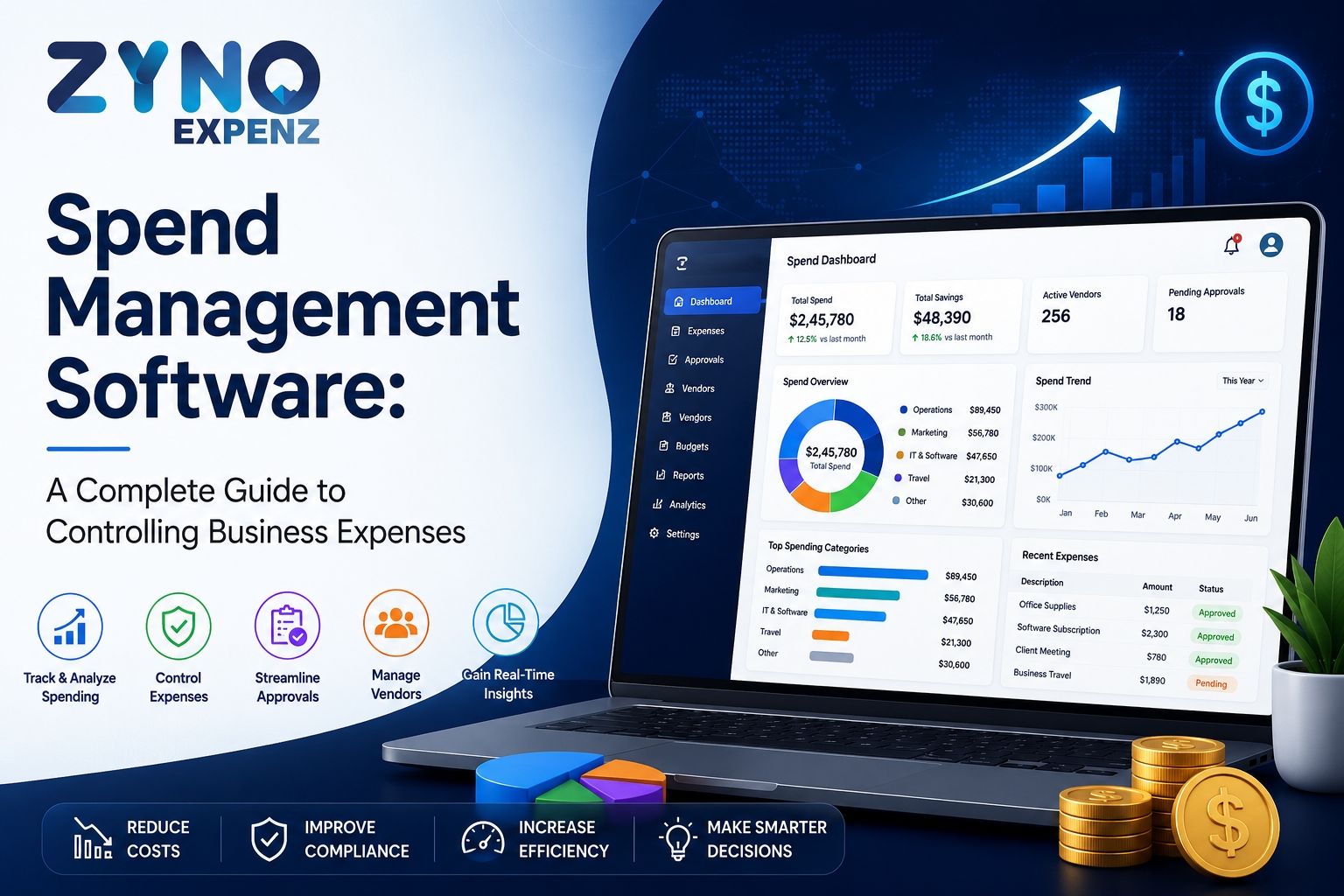
Managing business expenses is becoming more challenging as organizations grow. Companies often struggle with tracking employee expenses, vendor payments, subscriptions, procurement costs, and departmental budgets. Without proper visibility, unnecessary spending can quickly impact profitability.
This is where Spend Management Software helps. It provides businesses with a centralized platform to track, control, analyze, and optimize spending across the organization.
Whether you run a startup, a mid-sized company, or a large enterprise, spend management software helps finance teams gain better control over expenses while improving compliance and operational efficiency.
In this guide, we'll explore what spend management software is, its key features, benefits, and how to choose the right solution for your business.
What is Spend Management Software?
Spend management software is a digital platform designed to help businesses monitor, control, and optimize company spending.
It combines multiple financial processes such as:
Expense management
Procurement management
Budget tracking
Vendor management
Invoice processing
Accounts payable automation
Spend analytics
Financial reporting
The primary goal is to provide complete visibility into where company money is being spent and ensure every expense aligns with business objectives.
Instead of relying on spreadsheets, emails, and manual approvals, organizations can automate spending workflows and make data-driven financial decisions.
Why Businesses Need Spend Management Software
Many businesses lose money due to:
Duplicate payments
Unapproved purchases
Poor vendor management
Budget overruns
Manual expense tracking
Lack of spend visibility
Without a centralized system, finance teams spend significant time reconciling transactions and generating reports.
A spend management platform solves these challenges by providing real-time insights into business expenses and automating financial controls.
Key Features of Spend Management Software
1. Expense Tracking and Management
One of the most important features is automated expense tracking.
Employees can submit expenses digitally while managers can review and approve them through predefined workflows.
Benefits include:
Faster reimbursements
Reduced paperwork
Accurate expense records
Better compliance
2. Budget Management
Businesses can create department-wise budgets and monitor spending against allocated limits.
This helps organizations:
Avoid overspending
Improve forecasting
Increase financial discipline
Real-time budget monitoring ensures better financial planning.
3. Procurement Management
Procurement management helps businesses streamline purchasing activities.
The software allows organizations to:
Create purchase requests
Approve purchase orders
Manage suppliers
Track procurement expenses
This improves purchasing efficiency and reduces unnecessary spending.
4. Vendor Management
Managing suppliers effectively is critical for cost optimization.
Vendor management features help businesses:
Maintain supplier records
Monitor vendor performance
Compare pricing
Manage contracts
This leads to stronger supplier relationships and better negotiation opportunities.
5. Accounts Payable Automation
Manual invoice processing often creates delays and errors.
Accounts payable automation helps businesses:
Capture invoices automatically
Route approvals digitally
Schedule payments
Reduce processing costs
Finance teams can significantly improve productivity while reducing payment risks.
6. Spend Analytics and Reporting
Spend analytics provides valuable insights into company-wide spending patterns.
Organizations can identify:
Cost-saving opportunities
High-spending departments
Vendor concentration risks
Budget variances
Advanced dashboards make it easier to monitor financial performance in real time.
Benefits of Using Spend Management Software
Improved Financial Visibility
Businesses gain a complete view of spending across departments, projects, vendors, and employees.
This visibility supports better financial decision-making.
Better Cost Control
Companies can establish spending policies, approval workflows, and budget limits to prevent unnecessary expenses.
As a result, organizations can reduce waste and improve profitability.
Increased Efficiency
Automation eliminates repetitive manual tasks such as:
Expense approvals
Invoice processing
Data entry
Financial reporting
This allows finance teams to focus on strategic initiatives.
Stronger Compliance
Spend management software ensures every expense follows company policies.
Automated approval workflows create audit trails and reduce compliance risks.
Data-Driven Decision Making
Real-time reporting and spend analytics enable businesses to make informed financial decisions based on accurate data.
How Spend Management Software Works
A typical spend management workflow follows these steps:
Step 1: Expense Request
An employee or department submits a purchase request or expense claim.
Step 2: Approval Workflow
The request is automatically routed to designated approvers based on company policies.
Step 3: Expense Validation
Finance teams verify the request and ensure compliance with budget guidelines.
Step 4: Payment Processing
Approved expenses are processed through integrated payment systems or accounting software.
Step 5: Reporting and Analysis
All spending data is consolidated into dashboards for analysis and reporting.
This automated process reduces administrative burden while improving financial control.
Industries That Benefit from Spend Management Software
Almost every industry can benefit from spend management solutions.
Manufacturing
Manufacturers use spend management software to control procurement costs, supplier expenses, and operational spending.
Healthcare
Healthcare organizations manage vendor contracts, medical supplies, and operational expenses more efficiently.
IT and Technology
Technology companies track software subscriptions, cloud services, and employee expenses.
Retail
Retail businesses monitor inventory purchases, supplier payments, and store-level spending.
Professional Services
Consulting firms and agencies use spend management platforms to manage project expenses and reimbursements.
How to Choose the Best Spend Management Software
Selecting the right software depends on your organization's requirements.
Consider the following factors:
Scalability
Choose a solution that can grow with your business.
Integration Capabilities
The software should integrate seamlessly with:
ERP systems
Accounting software
Payroll systems
CRM platforms
Automation Features
Look for solutions that automate:
Expense management
Accounts payable
Procurement workflows
Reporting
User Experience
An intuitive interface encourages employee adoption and reduces training requirements.
Analytics and Reporting
Strong reporting capabilities help finance teams gain actionable insights from spending data.
Common Challenges Businesses Face Without Spend Management Software
Organizations that rely on manual processes often encounter:
Poor expense visibility
Budget overruns
Delayed approvals
Vendor management issues
Increased fraud risks
Inefficient reporting
These challenges can significantly impact profitability and operational efficiency.
Implementing a modern spend management solution helps eliminate these issues while improving financial governance.
Future of Spend Management Software
The future of spend management is increasingly driven by automation and artificial intelligence.
Modern solutions now offer:
AI-powered spend analytics
Automated expense categorization
Predictive budgeting
Fraud detection
Smart approval workflows
As businesses continue digital transformation initiatives, spend management software will play an even greater role in improving financial operations.
Conclusion
Spend management software has become an essential tool for organizations looking to improve financial control, reduce operational costs, and gain real-time visibility into business spending.
By combining expense management, procurement management, vendor management, budget tracking, and spend analytics into a single platform, businesses can make smarter financial decisions and improve overall profitability.
Whether you are a growing startup or an established enterprise, investing in the right spend management solution can help streamline financial processes, strengthen compliance, and support long-term business growth.
FAQ
1. What is direct procurement?
Direct procurement refers to purchasing raw materials, components, and goods that are directly used in producing products or delivering services. It has a direct impact on manufacturing operations and revenue generation.
2. How do you manage direct procurement effectively?
To manage direct procurement effectively, businesses should establish clear procurement goals, build strong supplier relationships, forecast demand accurately, automate workflows, and continuously monitor supplier performance.
3. What are the key steps in the direct procurement process?
The main steps include:
Identifying procurement requirements
Supplier sourcing and selection
Purchase order creation
Order ful fill ment and delivery
Invoice processing and payment
Performance evaluation
4. What is the difference between direct procurement and indirect procurement?
Direct procurement involves purchasing materials used in production, while indirect procurement focuses on goods and services required for daily operations, such as office supplies, software, and maintenance services.
5. Why is direct procurement important for businesses?
Effective direct procurement helps organizations reduce costs, maintain production continuity, improve supplier relationships, minimize supply chain risks, and enhance overall operational efficiency.
6. What are the common challenges in direct procurement?
Some common challenges include:
Supply chain disruptions
Supplier dependency
Rising material costs
Inventory shortages
Lack of visibility into procurement activities
Manual approval processes
7. How can procurement software improve direct procurement management?
Procurement software automates purchase requests, supplier management, approvals, inventory tracking, and reporting, enabling businesses to improve efficiency and reduce procurement costs.
8. What are the best practices for direct procurement management?
Best practices include:
Standardizing procurement processes
Diversifying supplier networks
Monitoring supplier performance
Using procurement analytics
Automating workflows
Maintaining compliance and governance
9. What metrics should businesses track for direct procurement performance?
Key procurement KPIs include:
Procurement cost savings
Supplier on-time delivery rate
Purchase order cycle time
Inventory turnover ratio
Supplier compliance rate
Spend under management
10. What features should businesses look for in procurement management software?
Important features include:
Supplier management
Purchase order automation
Approval workflows
Spend analytics and reporting
Inventory integration
Real-time dashboards
ERP integration capabilities
11. How does AI help in direct procurement management?
AI helps optimize demand forecasting, automate supplier selection, identify spending patterns, reduce procurement risks, and improve decision-making through predictive analytics.
12. Which industries benefit most from direct procurement management?
Industries that heavily rely on direct procurement include:
Manufacturing
Automotive
Retail and Consumer Goods
Food and Beverage
Pharmaceuticals
Electronics
Construction
Aerospace and Defense