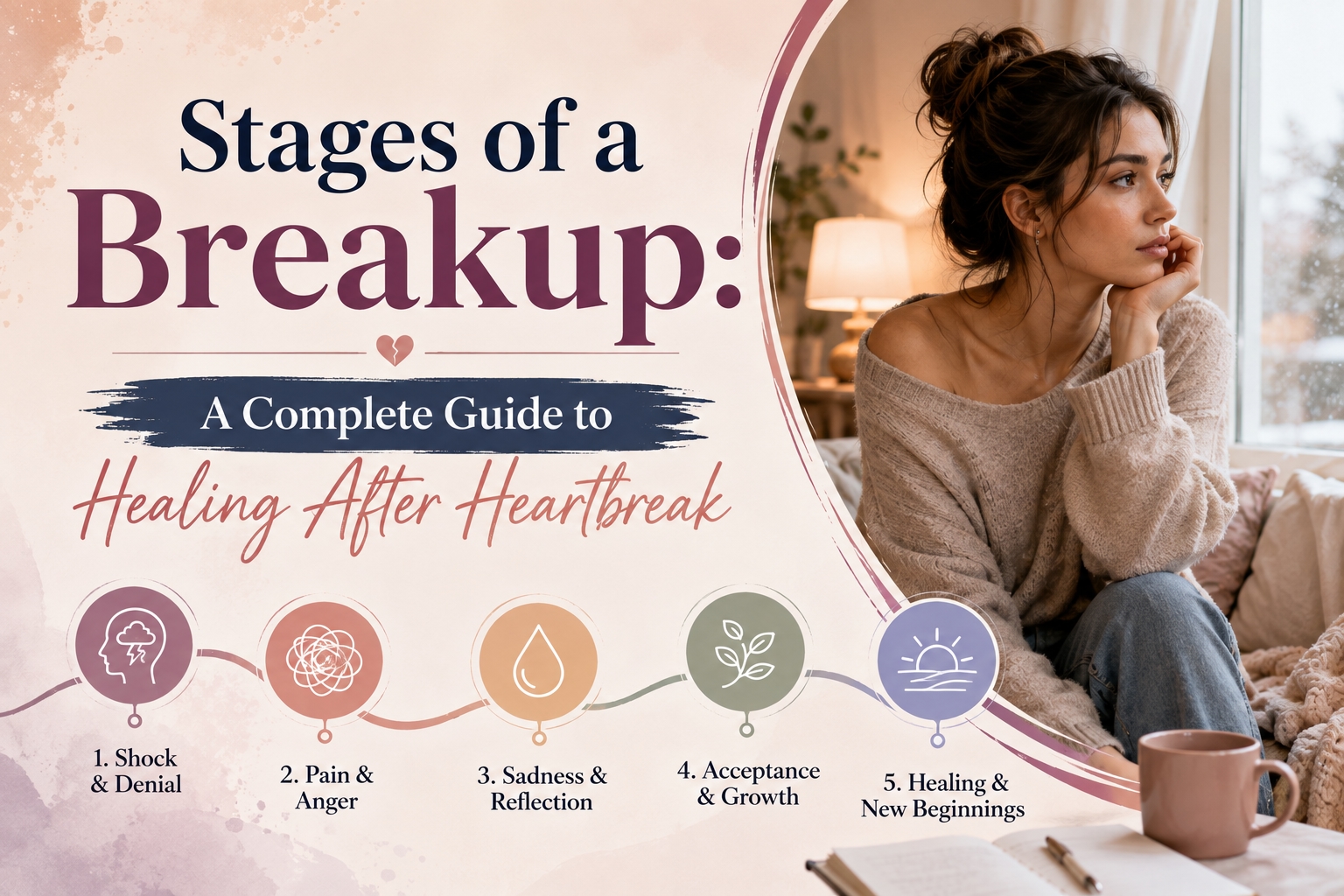
A breakup can change your daily life almost overnight. One day, you may be sharing routines, conversations, plans, and emotional support with someone. The next, you are trying to understand what happened and how to move forward. The stages of a breakup can help explain why emotions often feel confusing, unpredictable, and intense after a relationship ends.
There is no single timeline for healing. Some people feel relief before sadness. Others experience anger, denial, loneliness, and acceptance in no particular order. Understanding breakup stages is not about forcing yourself through a checklist. Instead, it can help you recognize that many of the emotions you experience are a natural response to loss.
Understanding the Stages of a Breakup
People often compare a breakup to other forms of grief because the end of a meaningful relationship involves losing an emotional connection, shared expectations, and sometimes an imagined future.
Research on relationship dissolution has found that breakups can have a significant effect on emotional well-being. The intensity may depend on factors such as the length of the relationship, attachment, the circumstances of the breakup, and whether the decision was mutual.
The most important thing to remember is that breakup stages are rarely linear. You may feel like you have accepted the situation one week and feel deeply sad again the next. That does not necessarily mean you are moving backward.
Stage 1: Shock and Denial
The first reaction to a breakup is often disbelief.
You may find yourself thinking:
"This cannot really be happening."
"Maybe they will change their mind."
"We just need some time apart."
"Things will go back to normal soon."
Even when a breakup has been building for months, the final conversation can still feel shocking. Your mind may need time to adjust to the fact that the relationship has changed.
During this stage, avoid making major emotional decisions based purely on panic. Repeatedly calling or messaging an ex in an attempt to immediately fix everything can sometimes make an already painful situation more difficult.
Instead, give yourself time to process what has actually happened.
Stage 2: Intense Sadness and Breakup Grief
For many people, this is one of the hardest stages of grief after a breakup.
You may miss the person, but you may also miss the relationship itself. Small things can suddenly become emotional triggers. A familiar restaurant, a song, or even a particular time of day may remind you of shared memories.
Breakup grief can also involve grieving the future you expected to have.
For example, imagine a couple who had talked about moving in together later in the year. After the breakup, one person may not only miss their former partner. They may also need to let go of the plans, routines, and expectations connected to that future.
Practical ways to handle sadness
When sadness feels overwhelming, try focusing on basic stability:
Keep a regular sleep routine.
Eat regular meals, even if your appetite has changed.
Spend time with supportive friends or family.
Limit activities that make you repeatedly revisit the breakup.
Write down your thoughts instead of sending every emotion to your ex.
Allow yourself to feel sad without judging yourself for it.
Healing does not mean avoiding difficult emotions. It means learning how to experience them without allowing them to control every decision.
Stage 3: Anger and Searching for Answers
After the initial sadness, anger may appear.
You may become frustrated about how the relationship ended, mistakes that were made, or things you ignored while you were together. You may also replay conversations and search for a single explanation.
Questions often include:
Why did this happen?
Was the breakup preventable?
Did they ever truly care?
What could I have done differently?
Looking for answers is understandable, but it is possible to become stuck in constant analysis. Not every breakup has one clear explanation that will make the pain disappear.
Turn anger into useful reflection
Instead of only asking, "What did they do wrong?" try asking:
What did I learn about my needs?
Which problems did I overlook?
What boundaries would I set differently in the future?
What qualities do I value in a relationship?
This type of reflection can turn a painful experience into useful personal insight.
Stage 4: Bargaining and Second-Guessing
Bargaining is often an overlooked part of the stages of a breakup.
This is the stage where you may imagine different outcomes.
"If I had been more patient, would we still be together?"
"If I change this one thing, could we get back together?"
"If I send one more message, maybe they will understand."
Reflection can be healthy. Constantly trying to rewrite the past usually is not.
A helpful distinction is to separate responsibility from control. You can acknowledge your own mistakes without assuming you had complete control over the outcome of the relationship.
Every relationship involves two people, their circumstances, communication patterns, needs, and choices.
Stage 5: Rebuilding Your Identity
Long-term relationships often become part of a person's identity. You may get used to thinking in terms of "we" instead of "I."
After a breakup, one important part of healing is rediscovering who you are outside the relationship.
This does not require dramatic changes. Start with small choices.
Ways to reconnect with yourself
You might:
Return to a hobby you stopped doing.
Spend more time with friends.
Set a new personal or professional goal.
Change your routine.
Learn something new.
Travel or explore places independently.
Reconnect with interests that are entirely your own.
For example, someone who spent every weekend following their partner's interests might realize they have not thought about their own hobbies in years. Trying new activities can create fresh experiences that are not connected to the past relationship.
Stage 6: Acceptance and Moving Forward
Acceptance does not mean forgetting the relationship or deciding that it never mattered.
It means accepting that the relationship ended and that your life can continue.
At this stage, memories may still bring sadness occasionally, but they no longer dominate your everyday thoughts. You may begin to think more about your future than your past.
This is often where getting over a breakup becomes less about actively trying to stop caring and more about naturally creating a life that feels meaningful again.
Acceptance can also include recognizing that a relationship can contain both good memories and genuine reasons why it was not right for the future.
How to Get Over a Breakup in a Healthy Way
If you are wondering how to get over a breakup, focus less on finding a perfect recovery timeline and more on building healthy habits.
Give yourself realistic space
Constantly checking an ex's social media can keep emotional wounds open. Creating some distance may help you process the relationship more clearly.
Avoid using a new relationship as an escape
Meeting new people can eventually be a positive part of moving forward. However, starting another relationship solely to avoid loneliness may prevent you from processing unresolved emotions.
Talk to someone you trust
A supportive conversation can help you organize your thoughts. If the breakup is seriously affecting your ability to function or your emotional well-being, speaking with a qualified mental health professional may also be helpful.
Focus on progress, not perfection
Some days will feel easier than others. A difficult day does not erase the progress you have made.
When Breakup Stages Do Not Follow a Pattern
The stages described above are common experiences, not rules.
You may feel anger before sadness. You may experience acceptance and then suddenly feel grief after seeing an old photograph. Some people feel relief immediately after leaving an unhealthy relationship.
Your experience can also be affected by whether:
The breakup was mutual.
Trust was broken.
The relationship was long-term.
You lived together.
Children or shared responsibilities are involved.
The breakup happened suddenly.
You still have regular contact with your former partner.
The goal is not to fit your emotions into a perfect model. The goal is to understand them and respond in a healthy way.
Conclusion
The stages of a breakup can include shock, sadness, anger, bargaining, self-discovery, and acceptance, but healing rarely happens in a straight line. Give yourself permission to grieve while continuing to care for your everyday needs and future goals.
Learning about relationships and emotional recovery can also make it easier to understand your experiences. Resources and discussions on platforms such as Favor can be part of a broader effort to learn more about dating, relationships, and healthy emotional connections.
In the end, healing is not about erasing the past. It is about reaching a point where the past no longer prevents you from building a fulfilling future.
FAQs
1. What are the common stages of a breakup?
Common breakup stages can include shock or denial, sadness, anger, bargaining, rebuilding your identity, and acceptance. However, people do not always experience these emotions in the same order.
2. How long does it take to get over a breakup?
There is no universal timeline. The healing process can depend on the length and intensity of the relationship, the circumstances of the breakup, personal support systems, and individual coping patterns.
3. Why does a breakup feel like grief?
A breakup can involve the loss of emotional connection, routines, companionship, and future expectations. This is why many people experience emotions similar to grief after a relationship ends.
4. Is it normal to miss someone after accepting the breakup?
Yes. Acceptance does not mean you never think about or miss the person. It usually means you understand the relationship has ended and can continue moving forward despite occasional feelings of sadness.
5. What is the healthiest way to move on after a breakup?
Give yourself time, create healthy distance where appropriate, maintain routines, seek support, reflect on what you learned, and focus on rebuilding a meaningful life outside the relationship.