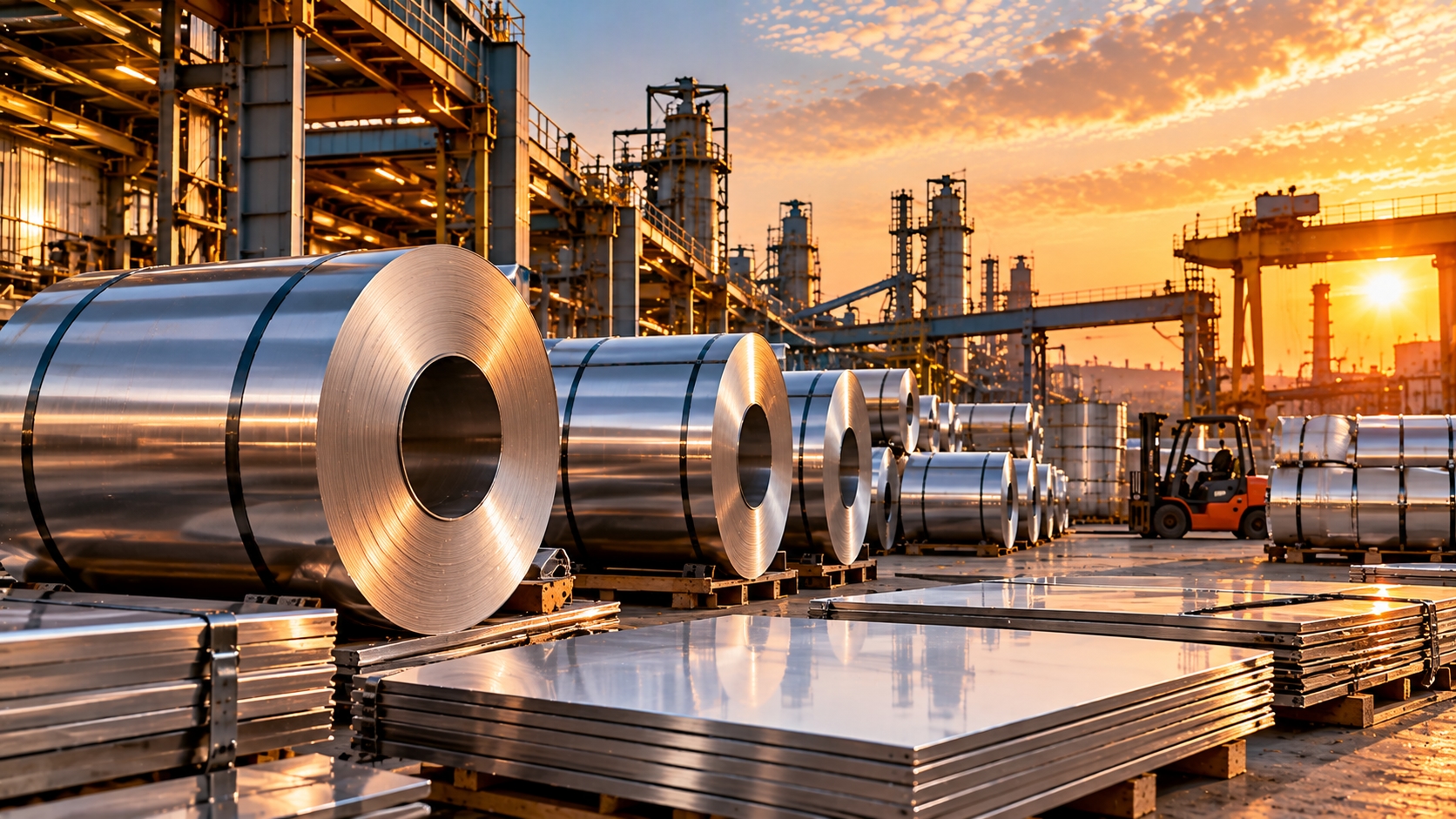
Stainless steel just posted fresh numbers for August 2026, and the stainless steel price trend across Asia’s two biggest markets is worth a closer look. China’s price sits at USD 2,164.75/MT on an FOB basis. India comes in higher at USD 2,255.54/MT, CIF. A gap of roughly 90 dollars per ton. Not massive, but not small either once you scale it across real procurement volumes.
Stainless steel touches a lot of industries at once. Construction, automotive, appliances, industrial equipment. Any shift in its price works its way downstream into finished products within a quarter or two, sometimes faster depending on how tight inventories are running.
Current Stainless Steel Prices: China vs India
Product | Region | Incoterm Basis | Price | Last Updated |
|---|---|---|---|---|
Stainless Steel | China | FOB | USD 2,164.75/MT | August 2026 |
Stainless Steel | India | CIF | USD 2,255.54/MT | August 2026 |
That’s a USD 90.79 spread per metric ton. China’s figure is FOB, meaning the price covers goods loaded onto the vessel at the port of origin. Nothing beyond that. India’s number is CIF, so freight and insurance are already folded in before the material even reaches the buyer.
Two different cost structures, essentially. Comparing them directly isn’t entirely fair, since part of that gap comes from what each incoterm actually includes rather than any real difference in base production cost.
Q&A: Quick Answers on the China-India Gap
Why does India’s price run higher here?
Mostly the incoterm. CIF bundles freight and insurance into the number, FOB doesn’t. Add India’s reliance on a mix of domestic and imported raw materials, and the landed figure climbs further.
Is a 90 dollar spread significant for buyers?
Depends on volume. On a single ton, barely noticeable. Across a thousand tons a month, it adds up to a cost difference procurement teams would want on their radar.
Does this gap hold steady, or does it move around?
It shifts. Freight rates, nickel and chromium costs, currency swings. All of it feeds into the spread month to month, so August’s numbers won’t necessarily match September’s.
What’s Driving Stainless Steel Prices Right Now
Raw material costs lead the list. Nickel and chromium make up a big chunk of stainless steel’s input cost, and both metals have their own supply dynamics tied to mining output and export policy, particularly out of Indonesia and South Africa.
Energy costs matter too. Producing stainless steel is energy intensive, melting and refining stages especially. When power or natural gas prices rise in a manufacturing hub, mills pass that through pretty directly.
Freight plays a bigger role for India’s CIF number than it does for China’s FOB figure. Bunker fuel costs, container availability, port delays. Any of these can widen the gap without a single change in actual steel production cost.
Currency matters as well. Since pricing runs in dollars, a weaker rupee against the dollar raises India’s effective import bill even if nothing changed on the supplier’s end.
Domestic demand cycles round things out. China’s construction and manufacturing base absorbs a large share of its own output, which keeps its export pricing somewhat more stable. India still depends on imports for part of its supply, and that dependency shows up directly in price.
What This Means for Procurement and Investment Teams
Buyers comparing FOB China against CIF India need to run the full landed cost calculation before assuming China is cheaper. Once freight, insurance, and inland logistics get added to China’s FOB price, the real gap between the two markets often shrinks.
Investors watching India’s metals sector might read the import premium differently. It points toward capacity gaps that domestic producers could fill over time, and a few Indian stainless steel makers have been expanding output with exactly that in mind.
For advisers working with clients in construction, auto components, or industrial fabrication, this price data works as an early cost signal. Finished product pricing tends to follow raw material costs with a lag, so tracking this now helps with margin planning a quarter out.
Stainless Steel Price Trend Outlook for Q3 2026
Hard to call this one with much precision. Nickel supply out of Indonesia remains the biggest swing factor, and any policy change there ripples through global stainless steel pricing fast.
What looks reasonably stable is the structural gap between China and India. Production capacity, import reliance, incoterm differences. None of that changes quickly. Whether the spread grows or shrinks through Q3 will come down to raw material costs and how freight rates behave over the next few months.
Buyers locking contracts off August figures should treat them as a reference point, not a guarantee. Stainless steel pricing moves fast enough that a few weeks of delay can change the math meaningfully.
Conclusion
The stainless steel price trend for Q3 2026 shows China at USD 2,164.75/MT FOB and India at USD 2,255.54/MT CIF, both from August 2026. Part of that 90 dollar gap comes down to incoterm basis, part to real differences in freight and raw material sourcing. For procurement teams, investors, and advisers tracking metals pricing, this kind of gap is worth checking regularly rather than treating one month’s numbers as the full picture.
FAQ Section
What is the current stainless steel price trend in China and India?
As of August 2026, China’s stainless steel is priced at USD 2,164.75/MT FOB, while India sits at USD 2,255.54/MT CIF. The difference comes from incoterm basis, freight costs, and each country’s mix of domestic versus imported raw materials.
Why is stainless steel more expensive in India than China?
India’s CIF price includes freight and insurance, which China’s FOB figure doesn’t cover. India also imports a portion of its raw material inputs, adding to overall cost. Domestic production gaps and longer shipping distances push the landed price up further.
What raw materials affect stainless steel pricing the most?
Nickel and chromium drive most of the cost swing, since they’re core inputs. Energy costs for melting and refining matter too. Supply disruptions from major exporters like Indonesia can shift global stainless steel prices within weeks, sometimes faster.
How often do stainless steel prices change?
Prices can move weekly depending on raw material supply, energy costs, and freight conditions. The August 2026 figures here are a useful snapshot, but anyone finalizing a purchase contract should pull updated numbers first rather than relying on older data.
What’s the outlook for stainless steel prices in Q3 2026?
The China-India price gap should remain fairly stable through Q3 2026, driven by structural factors like import dependency and production capacity. Nickel supply trends and freight rate changes will largely decide whether that spread widens or narrows going forward.