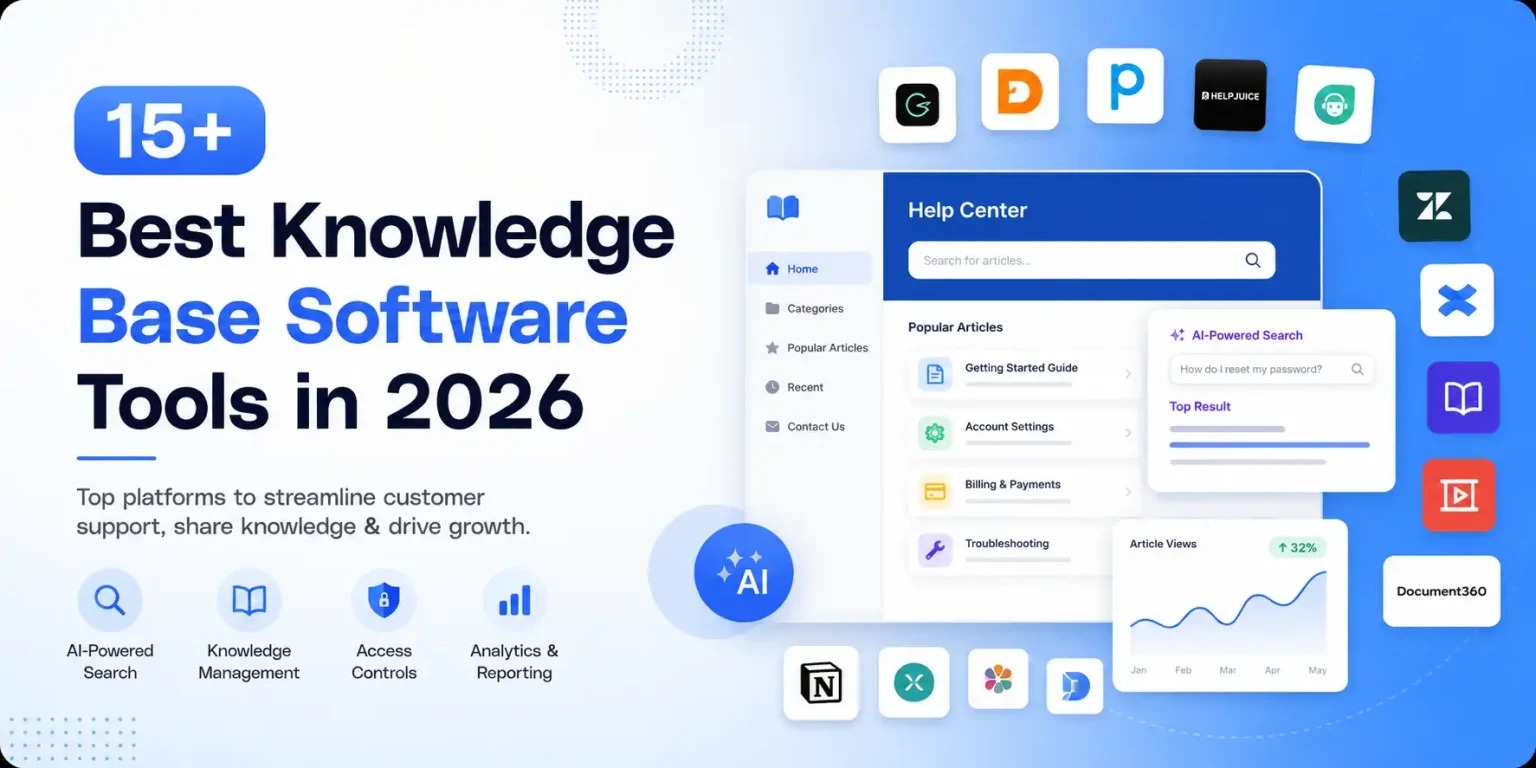
You might think that your company documentation is doing just fine sitting in a bunch of shared folders. But things are shifting very fast. The way we store and look up information is undergoing a massive transformation, and it is crucial to stay ahead. If you are curious about where things are going, let us look at the future of Knowledge Base Software and what businesses should expect in the coming years.
The Evolution of Knowledge Base Software
Not too long ago, a knowledge base was just a digital filing cabinet. It was a static place where documents went to gather dust. Today, Knowledge Base Software has become an active part of daily business operations. Businesses now realize that static pages do not cut it anymore. They need active systems that help teams work faster and help customers find answers without frustration.
When you look at modern knowledge management, it is no longer just about typing up articles. It is about connecting your data to every single department. In the future, Knowledge Base Software will not just wait for you to type a search query. It will predict what you need based on the work you are doing at that exact moment.
How AI-Powered Search is Changing Everything
The biggest shift is undoubtedly happening in how we search for information. Traditional search systems look for exact keywords, which often fails if an employee or a customer does not know the exact corporate phrasing. This is where AI-powered search comes into play. Future Knowledge Base Software will rely heavily on natural language processing to understand the true intent behind a question.
Traditional Search: Looks for exact string matches -> Fails on typos or synonyms
AI-Powered Search: Understands context and intent -> Surface the exact solution
Imagine a customer support agent trying to solve a complex issue during a live chat. Instead of scrolling through endless text, the AI-powered search instantly surfaces the exact paragraph needed. This kind of advanced AI-powered search reduces friction significantly. For businesses, implementing Knowledge Base Software with robust AI-powered search means your team spends less time digging and more time actually helping people.
Deep Integration with Everyday Tools
Another major trend is that Knowledge Base Software will no longer live on an isolated island. It is becoming deeply woven into tools like task management software and specialized customer support platforms.
Connecting to Task Management Software
When an employee is working inside their task management software, they should not have to open a separate tab to find standard operating procedures. Future Knowledge Base Software will automatically display relevant guides directly inside the task management software interface. If a task management software card says "Deploy update," the exact technical steps will appear right alongside it. This seamless link between knowledge management and everyday task management software keeps workflows moving without interruption.
Enhancing Customer Support and Incident Response
For customer support teams, speed is everything. When an urgent issue breaks out, your incident response protocol must be flawless. Future Knowledge Base Software will play a central role in incident response by automatically delivering troubleshooting steps to the engineering team the moment an alert triggers. Platforms like Jira Service Management are already showing how this works by linking tickets directly to help articles. As Jira Service Management and similar platforms evolve, the line between ticket resolution and knowledge management will blur completely. Your incident response teams will use Knowledge Base Software to log fixes in real time, creating an automated track record of solutions.
Security, Access Controls, and the Power of Data
As company data becomes more centralized, keeping it safe is incredibly important. You cannot just give everyone access to everything. This is why future Knowledge Base Software will feature much more granular access controls.
Smart Access Controls
Advanced access controls ensure that sensitive internal data, like financial records or private incident response plans, stay restricted to the right eyes. When an employee uses the AI-powered search, the system checks their permissions via integrated access controls. If they do not have the right clearance, the document simply will not appear. This smart application of access controls keeps your company intellectual property fully secure while still keeping public information available for customer support self-service.
Advanced Analytics and Reporting
You cannot improve what you do not measure. Future Knowledge Base Software will offer incredibly detailed analytics and reporting features. Businesses will use analytics and reporting to see exactly which articles are helping customer support deflect tickets, and which ones are confusing.
By tracking what users search for when they get "no results," analytics and reporting give you a clear roadmap of exactly what content your knowledge management system is missing.
Through consistent analytics and reporting, you can build a proven track record of content performance. A strong track record means your customer support team continuously gets better, because your knowledge management strategy is guided by real user data instead of wild guesses.
Preparing Your Business for the Future
If you want to keep your business competitive, you need to evaluate your current knowledge management setup. Look at your existing tools. Do they have a solid track record of reliability? Do they connect easily with platforms like Jira Service Management or your internal task management software?
The future of Knowledge Base Software is all about automation, intelligent AI-powered search, and tight security through smart access controls. By investing in modern Knowledge Base Software today, you give your customer support teams the tools they need to succeed, streamline your incident response, and ensure your organizational knowledge is a powerful asset for growth.