Spinach contains calcium, but your body absorbs relatively little of it. Adding lemon to lentils can improve iron absorption. And eating plenty of fruits and vegetables doesn't necessarily mean you're getting enough vitamin B12.
Good nutrition isn't just about what you eat. It's also about which nutrients your body can actually absorb and use.
Here's how to get more nutritional value from everyday foods without making your diet unnecessarily complicated.
What Are the Essential Vitamins and Minerals Your Body Needs?
Your body requires 13 essential vitamins and several minerals to support normal growth, energy metabolism, immunity, brain function and bone health.
The good news? Many of these nutrients are available in familiar, affordable foods.
The Fit Nourish Essential Vitamins Chart
Vitamin | Main Function | Food Sources |
Vitamin A | Vision and immune function | Carrots, sweet potatoes, spinach |
Vitamin B1 | Energy metabolism | Whole grains, beans, pork |
Vitamin B2 | Energy production | Milk, eggs, almonds |
Vitamin B3 | Cellular energy metabolism | Chicken, fish, peanuts |
Vitamin B5 | Energy and hormone metabolism | Mushrooms, eggs, avocados |
Vitamin B6 | Brain and immune function | Chickpeas, bananas, fish |
Vitamin B7 | Nutrient metabolism | Cooked eggs, nuts, seeds |
Vitamin B9 | Cell growth and development | Lentils, spinach, asparagus |
Vitamin B12 | Nerve function and red blood cells | Eggs, fish, dairy, fortified foods |
Vitamin C | Collagen formation and iron absorption | Guava, oranges, bell peppers |
Vitamin D | Calcium absorption and bone health | Oily fish, fortified milk, egg yolks |
Vitamin E | Protection against oxidative damage | Almonds, sunflower seeds |
Vitamin K | Normal blood clotting and bone health | Kale, broccoli, spinach |
Essential Minerals and Their Food Sources
Mineral | Why You Need It | Food Sources |
Calcium | Bones and muscle function | Yogurt, calcium-set tofu, fortified milk |
Iron | Oxygen transport | Lentils, meat, beans |
Magnesium | Muscle and nerve function | Pumpkin seeds, almonds, spinach |
Potassium | Fluid balance and muscle function | Potatoes, beans, bananas |
Zinc | Immunity and wound healing | Seafood, meat, chickpeas |
Iodine | Thyroid hormone production | Iodised salt, seafood |
Selenium | Thyroid function and antioxidant protection | Fish, eggs, Brazil nuts |
Phosphorus | Bones and cellular energy | Dairy, fish, beans |
Copper | Iron metabolism and connective tissue | Cashews, lentils, seafood |
These are food-source examples, not complete daily intake recommendations.
Which Vitamin-Rich Foods Give You the Most Nutritional Value?
Instead of searching for a single superfood, choose ingredients that provide several essential nutrients.
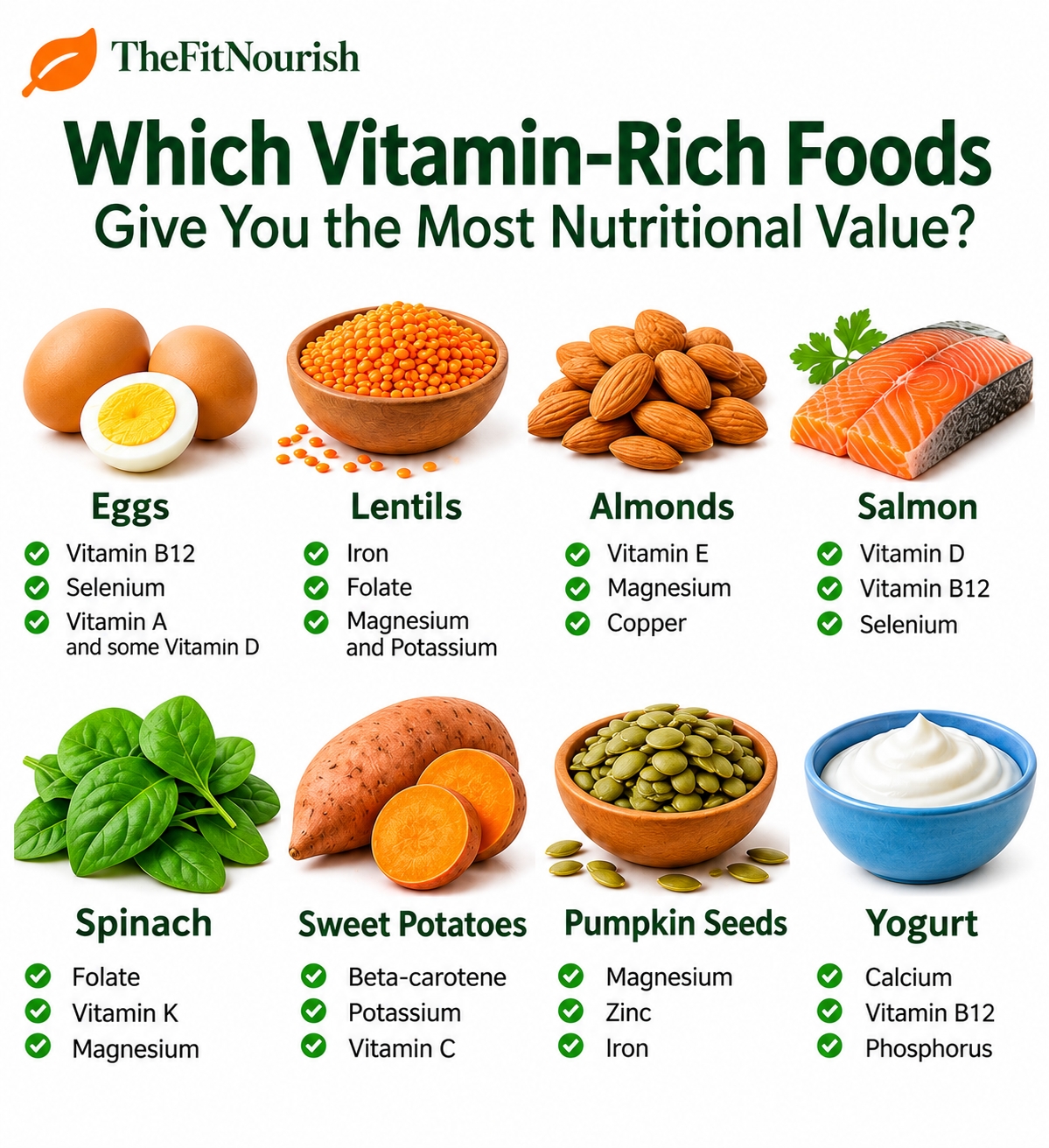
Eggs: Vitamin B12, selenium, vitamin A and some vitamin D.
Lentils: Iron, folate, magnesium and potassium.
Almonds: Vitamin E, magnesium and copper.
Salmon: Vitamin D, vitamin B12 and selenium.
Spinach: Folate, vitamin K and magnesium.
Sweet potatoes: Beta-carotene, potassium and vitamin C.
Pumpkin seeds: Magnesium, zinc and iron.
Yogurt: Calcium, vitamin B12 and phosphorus.
Rotating these foods throughout the week is more practical than eating the same supposedly perfect meal every day.
What Are the Best Iron-Rich Foods, and How Can You Absorb More Iron?
Iron-rich foods include lentils, kidney beans, chickpeas, meat, seafood and fortified cereals.
But here's something many people overlook: the iron listed in your food isn't necessarily the amount your body absorbs.
Vitamin C can improve the absorption of iron from plant foods.
Try these combinations:
Lentils with fresh lemon juice.
Chickpea salad with bell peppers.
Kidney beans with tomatoes.
Iron-fortified cereal with strawberries.
Tea and coffee consumed with meals can reduce plant-based iron absorption. If iron deficiency is a concern, consider enjoying these drinks between meals instead.
Persistent tiredness or suspected anaemia deserves medical assessment rather than self-prescribed iron supplements.
Why Are Vitamin D and Vitamin B12 Difficult to Get From Food?
These two vitamins deserve particular attention.
Vitamin D: Relatively few foods naturally contain substantial amounts. Oily fish, egg yolks, UV-exposed mushrooms and appropriately fortified foods can contribute.
Vitamin B12: Naturally occurs mainly in animal-derived foods, including fish, eggs, meat and dairy products.
People following a vegan diet need a reliable source of vitamin B12 through fortified foods or appropriate supplements.
Vitamin D requirements may also need additional attention depending on sunlight exposure, geographical location and individual circumstances.
Don't assume that eating a colourful salad covers every nutritional requirement.
Which Food Combinations Help Your Body Absorb More Nutrients?
Sometimes, adding one ingredient makes your meal nutritionally more useful.
Food Combination | Nutritional Advantage |
Lentils + lemon | Vitamin C improves plant-based iron absorption |
Carrots + olive oil | Dietary fat helps absorb beta-carotene |
Spinach + avocado | Fat supports absorption of certain fat-soluble nutrients |
Salmon + yogurt | Provides vitamin D and calcium, which support bone health |
Beans + bell peppers | Combines iron with vitamin C |
The Fit Nourish encourages building meals around complementary ingredients rather than unnecessarily restricting individual foods.
Explore TheFitNourish healthy and nutritious recipes for practical ways to include these combinations in everyday meals.
What Is the Difference Between Fat-Soluble and Water-Soluble Vitamins?
Understanding the difference can change how you prepare your meals.
Fat-soluble vitamins — A, D, E and K
These vitamins are absorbed more effectively when dietary fat is available. The body can store them, and excessive supplementation can be harmful.
Water-soluble vitamins — B vitamins and vitamin C
These dissolve in water. Many need regular dietary replenishment, although vitamin B12 can be stored in the body for long periods.
Some water-soluble vitamins can be lost during prolonged cooking in water.
Try steaming vegetables or using the cooking liquid in soups instead of always discarding it.
Are You Getting Enough Minerals From Your Everyday Diet?
Three common nutritional misunderstandings are worth knowing:
1. Bananas aren't your only potassium source.
Potatoes, beans and lentils also provide potassium. You don't need to rely on one fruit.
2. Spinach isn't the most reliable calcium source.
Although spinach contains calcium, compounds called oxalates reduce its absorption. Yogurt, calcium-set tofu and fortified beverages can be more useful sources.
3. Himalayan pink salt isn't necessarily a good iodine source.
Many speciality salts aren't iodised. Check the packaging rather than assuming their natural mineral content meets your iodine needs.
Choose iodised salt when appropriate, without increasing your overall salt consumption.
What Are the Signs of a Vitamin or Mineral Deficiency?
Nutritional deficiencies can sometimes cause symptoms that are easily overlooked.
Possible Symptom | Nutrients That May Be Relevant |
Persistent fatigue | Iron, vitamin B12, folate |
Tingling or numbness | Vitamin B12 |
Difficulty seeing in dim light | Vitamin A |
Bleeding gums | Vitamin C |
Bone pain or muscle weakness | Vitamin D |
These symptoms can have many other causes. They cannot confirm a nutrient deficiency on their own.
If symptoms persist, consult a healthcare professional. Appropriate blood tests and medical assessment may be necessary.
What Should You Eat in a Day to Get Essential Vitamins and Minerals?
Here's a flexible example using familiar foods.
Breakfast: Vegetable oats or a rainbow omelette with whole-grain toast.
Mid-morning: Guava, orange or seasonal fruit.
Lunch: Lentil curry or chickpeas with rice, cooked vegetables and fresh lemon.
Evening snack: Yogurt with almonds and pumpkin seeds.
Dinner: Grilled fish or calcium-set tofu with sweet potatoes and leafy greens.
Rotate your ingredients throughout the week.
This meal example illustrates nutritional variety; it does not guarantee that every individual vitamin and mineral requirement is met.
Do You Really Need Multivitamins Every Day?
Not everyone needs a daily multivitamin.
A varied diet can supply many essential nutrients, but certain circumstances may require supplementation, including pregnancy, vegan diets, diagnosed deficiencies or absorption disorders.
For example, folic acid supplementation is recommended before conception and during early pregnancy. Vitamin B12 supplementation may be necessary for people following vegan diets.
More supplements don't automatically mean better health. Excessive amounts of certain vitamins and minerals can be harmful.
With personalised dietitian guidance from TheFitNourish, nutritional needs can be assessed using your eating habits, health history and relevant medical reports where appropriate.
Give Your Food More Purpose
The next time you prepare lunch, think beyond calories and protein.
Add lemon to your lentils. Include nuts in your breakfast. Check whether your plant-based milk is fortified. Rotate the vegetables you buy each week.
Small choices can improve the nutritional variety of meals you already enjoy.
You don't need the most expensive food on the shelf. You need a better understanding of what everyday food can do for your body.
The Fit Nourish
Personalised Nutrition • Fitness • Healthy Living
Email: support@thefitnourish.com
Phone & WhatsApp: +91 9315870727