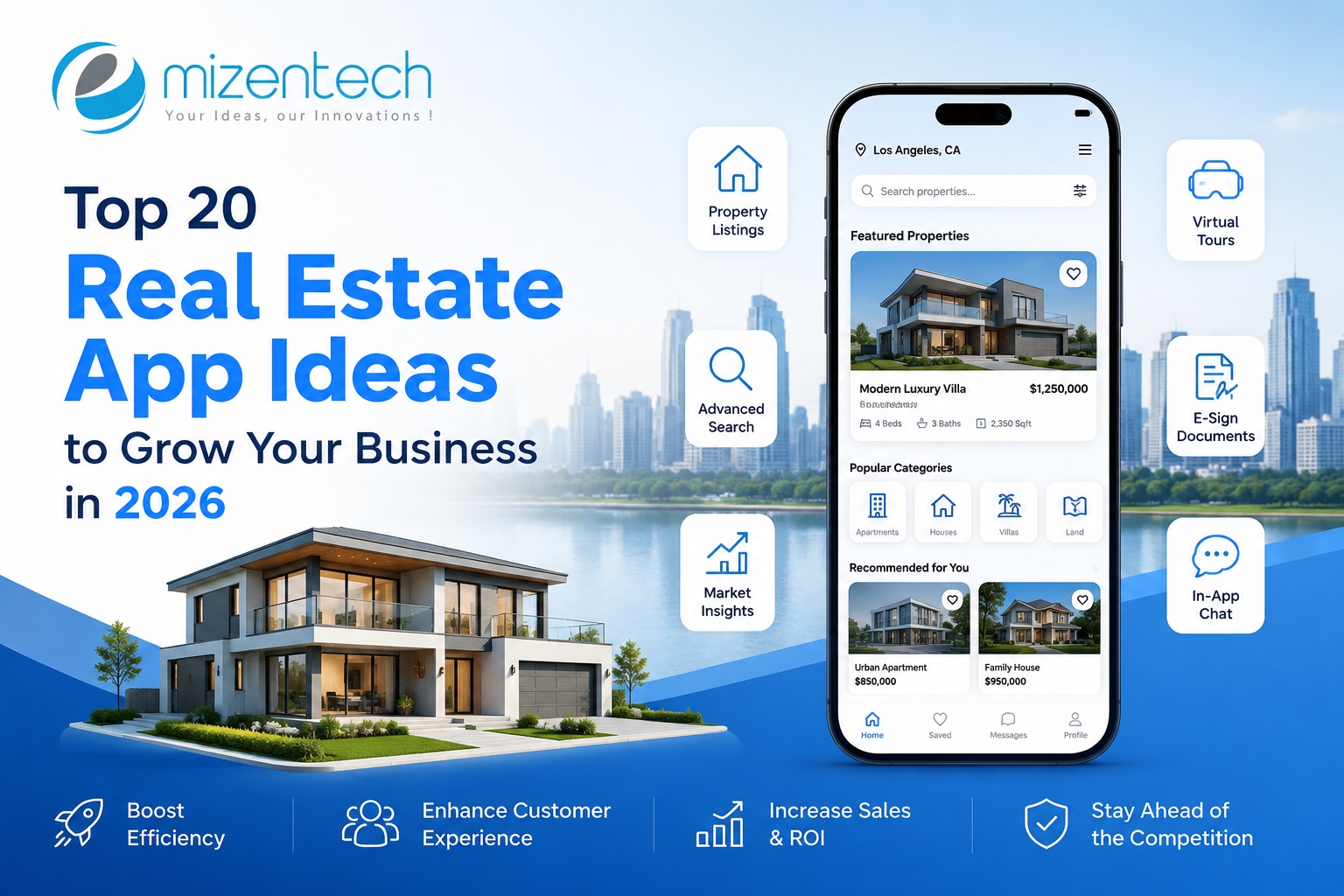
The real estate industry is undergoing a profound digital transformation, where mobile applications have become the backbone of property discovery, engagement, and transaction ecosystems. Modern users no longer rely on traditional methods; instead, they expect instant access, intelligent recommendations, and seamless digital experiences. As competition intensifies and customer expectations rise, businesses that fail to adopt app-driven models risk losing relevance. In 2026, real estate applications are no longer optional enhancements—they are strategic growth engines shaping scalability, efficiency, and market dominance.
Why Real Estate Apps Matter in 2026
The significance of real estate applications has escalated dramatically as consumer behavior shifts toward digital-first property interactions and on-demand accessibility.
Mobile-first property exploration
Today’s property seekers prioritize mobile platforms for discovering and evaluating listings. Real estate apps streamline this journey by offering intelligent search capabilities, interactive maps, and real-time listing updates.
Accelerated transaction workflows
Digital ecosystems eliminate traditional bottlenecks by enabling instant communication, automated documentation, and faster negotiation cycles, significantly reducing deal closure time.
Elevated user engagement experiences
Through personalized alerts, smart recommendations, and continuous interaction channels, apps foster deeper engagement and long-term user retention.
Enhanced competitive positioning
Organizations leveraging advanced real estate applications consistently outperform traditional models by delivering superior speed, convenience, and customer-centric experiences.
Future Technologies Shaping Real Estate App Development
The real estate industry is rapidly evolving into a technology-first ecosystem, where next-generation innovations are redefining how properties are discovered, evaluated, and transacted. These advancements are not incremental upgrades—they are fundamentally reshaping user expectations, business models, and digital real estate experiences.
Augmented Reality and Virtual Reality experiences
AR and VR technologies are revolutionizing property visualization by offering immersive, lifelike walkthroughs without physical site visits. This allows buyers to explore layouts, interiors, and surroundings in detail, significantly improving remote decision-making and buyer confidence.
Blockchain for transparent and secure transactions
Blockchain introduces a new level of trust in real estate ecosystems by enabling secure, tamper-proof property records and automated smart contracts. It minimizes fraud risks, eliminates unnecessary intermediaries, and ensures transparent ownership verification.
Internet of Things (IoT) enabled smart properties
IoT integration connects real estate platforms with smart home systems, allowing users to control and monitor security, energy usage, and appliances remotely. This enhances property value while delivering a seamless smart living experience.
Big Data analytics for market forecasting
Big Data empowers real estate platforms with deep market intelligence by analyzing demand patterns, pricing fluctuations, and user behavior. These insights help businesses make informed investment decisions and optimize property offerings strategically.
Cloud computing for scalable real estate ecosystems
Cloud infrastructure enables real estate applications to handle large-scale data, high user traffic, and real-time updates without performance issues. It ensures flexibility, scalability, and secure access across multiple devices and global markets.
AI-powered voice and conversational assistants
Voice-enabled assistants are simplifying property search by allowing users to interact naturally with apps. These systems provide instant answers, schedule visits, and deliver recommendations, creating a hands-free and intuitive user experience.
Top 20 Real Estate App Ideas
The real estate industry is rapidly shifting toward a digital-first ecosystem driven by innovation and user demand for smarter solutions. These real estate app ideas are transforming how properties are discovered, evaluated, managed, and monetized. Modern apps are now focused on improving efficiency, transparency, and user experience across the entire property lifecycle.
1. Advanced Property Listing Platform
A centralized digital marketplace designed to simplify property discovery and improve search efficiency. It helps users find relevant listings quickly through structured and intuitive browsing.
Key Features:
Intelligent filters (price, location, amenities, property type)
Interactive map-based property search
Live listing synchronization and updates
High-resolution image and video galleries
2. AI-Powered Property Recommendation App
An intelligent platform that delivers personalized property suggestions based on user behavior and preferences. It enhances decision-making through data-driven insights and predictive matching.
Key Features:
Machine learning-based recommendation engine
Real-time behavioral analytics tracking
Preference-driven property filtering
Predictive matching algorithms
3. Virtual Property Tour Platform
An immersive digital solution that enables users to explore properties remotely with advanced visualization tools. It replicates real-world walkthrough experiences through interactive technology.
Key Features:
360° virtual walkthrough experiences
AR/VR-enabled property visualization
Interactive space navigation tools
Ultra-HD multimedia integration
4. Real Estate Marketplace Ecosystem
A multi-user platform that connects buyers, sellers, and agents within a unified digital environment. It streamlines property transactions and improves collaboration across stakeholders.
Key Features:
Multi-agent listing management system
Integrated inquiry and lead capture tools
Verified user authentication system
End-to-end transaction facilitation
5. Smart Property Management App
A digital operations platform designed to simplify rental and property management processes. It improves efficiency in handling tenants, payments, and maintenance tasks.
Key Features:
Tenant lifecycle and lease management
Automated rent collection system
Maintenance request automation
Financial reporting and insights dashboard
6. Real Estate CRM Platform
A structured customer management system built for real estate professionals to manage leads and clients effectively. It enhances sales tracking and relationship management efficiency.
Key Features:
Lead pipeline tracking and segmentation
Automated follow-up scheduling
Complete client interaction history
Sales performance analytics dashboard
7. Mortgage & EMI Intelligence App
A financial planning tool that simplifies property financing decisions for buyers. It provides accurate calculations and comparisons for better affordability planning.
Key Features:
EMI calculation engine
Loan eligibility assessment tool
Multi-bank comparison system
Structured amortization schedules
8. Real Estate Investment Analysis App
A data-driven platform that evaluates property value, profitability, and long-term investment potential. It supports smarter financial decision-making using analytics.
Key Features:
ROI forecasting models
Real-time market trend analysis
Risk scoring and evaluation tools
Investment portfolio comparison dashboard
9. Rental Booking Platform
A streamlined digital system that simplifies short-term and long-term property rentals. It enhances booking speed and improves transaction transparency.
Key Features:
Instant property booking workflow
Secure integrated payment gateway
Real-time availability calendar
Automated booking confirmations
10. Property Auction Application
A competitive bidding platform that enables transparent and efficient property auctions. It ensures fair pricing through real-time participation and updates.
Key Features:
Live bidding interface
Real-time price update engine
Auction scheduling and management tools
Detailed bid history tracking
11. Location-Based Property Discovery App
A hyperlocal search platform that helps users find properties based on exact geographic proximity. It improves relevance using location intelligence.
Key Features:
GPS-powered property search
Radius-based filtering system
Nearby amenities visualization
Location intelligence mapping
12. Real Estate Communication Hub
A unified communication system designed to simplify interactions between buyers, sellers, and agents. It enables seamless negotiation and information exchange.
Key Features:
In-app messaging system
Voice and video communication support
Negotiation and offer management tools
Secure document sharing system
13. Digital Document Management System
A secure cloud-based system for managing legal and transactional real estate documents. It ensures safety, accessibility, and compliance.
Key Features:
Encrypted cloud storage system
E-signature integration
Secure document encryption
Version control and audit tracking
14. Smart Home Integration Platform
An IoT-powered system that connects and controls smart property devices remotely. It enhances convenience and energy efficiency for users.
Key Features:
Remote device control dashboard
Integrated security system management
Energy consumption monitoring
Automated scheduling and controls
15. Real Estate Analytics Dashboard
A business intelligence platform that delivers insights into property trends and market performance. It helps stakeholders make data-driven decisions.
Key Features:
Property pricing trend visualization
Predictive demand forecasting
Investment performance analytics
Custom reporting modules
16. AI Property Valuation Tool
An automated valuation system that estimates property prices using AI and historical data. It ensures accurate and real-time pricing insights.
Key Features:
AI-based price estimation system
Historical market comparison engine
Benchmarking against similar assets
Real-time valuation updates
17. Lead Generation & Marketing Platform
A growth-focused system designed to capture and convert high-quality real estate leads. It improves marketing efficiency and conversion rates.
Key Features:
Advanced lead capture forms
Automated marketing workflows
Campaign performance tracking
Conversion analytics dashboard
18. Co-Living Management App
A modern housing solution that simplifies shared living arrangements and roommate coordination. It enhances transparency in shared expenses and communication.
Key Features:
Smart roommate matching system
Shared expense tracking module
Automated rent splitting system
Community communication tools
19. Developer Project Showcase App
A digital platform that helps real estate developers showcase projects to potential buyers. It improves visibility and enhances buyer engagement.
Key Features:
Interactive project portfolio display
Digital brochures and walkthroughs
Inquiry and booking system
Construction progress tracking
20. All-in-One Real Estate Super App
A unified ecosystem that integrates multiple real estate services into a single platform. It streamlines listings, transactions, and property management workflows.
Key Features:
Integrated listings and CRM system
Secure payment gateway integration
Advanced analytics dashboard
End-to-end transaction management flow
How These App Ideas Help Grow Your Business
Modern real estate applications serve as powerful growth catalysts that directly influence revenue expansion, customer acquisition, and operational efficiency.
Enhanced lead quality and conversion
Structured digital funnels ensure that businesses attract highly qualified prospects, significantly improving conversion performance.
Superior user engagement
Interactive features such as personalization, notifications, and communication tools create sustained user engagement.
Operational automation and efficiency
Automation reduces dependency on manual processes, enabling faster execution and improved resource utilization.
Expanded market penetration
Mobile-first strategies enable businesses to scale beyond geographical boundaries and access wider audiences.
Monetization Models for Real Estate Apps
Revenue diversification is critical for sustaining and scaling real estate platforms in a competitive digital ecosystem.
Subscription-based revenue systems: Recurring payment models provide continuous access to premium tools, analytics, and listings.
Transaction-based commissions: Platforms generate income by earning a percentage from successful property deals facilitated through the app.
Featured listing monetization: Premium visibility options allow property owners to boost exposure and accelerate engagement.
Tiered freemium models: Basic services remain free while advanced functionalities are gated behind premium subscription tiers.
Challenges in Building Real Estate Apps
Despite immense opportunities, real estate application development involves several complex technical and operational challenges.
Ensuring data authenticity
Maintaining verified and up-to-date property information is essential for user trust and platform credibility.
Complex system integrations
Integrating AI, AR/VR, and payment gateways requires robust architecture and advanced technical expertise.
Driving user adoption
Encouraging traditional users to transition to digital platforms demands intuitive UX and strong onboarding strategies.
Regulatory and compliance complexities
Real estate platforms must comply with regional laws, financial regulations, and data protection standards.
How to Choose the Right App Idea for Your Business
Selecting the most effective real estate app concept requires a strategic balance among market demand, technical feasibility, and long-term scalability. The right decision ensures stronger adoption, better user engagement, and sustainable business growth in a competitive digital landscape.
Clear audience segmentation
A precise understanding of your target users—whether buyers, renters, agents, or developers—helps define core functionalities, refine user experience, and position the app more effectively in the market.
Market-driven validation
Focusing on real-world problems and verified user needs ensures the chosen idea delivers genuine value, leading to higher adoption rates and stronger market relevance.
Scalability and expansion readiness
A well-defined development roadmap, aligned with expert technical guidance, ensures smooth execution, reduced risks, and scalable implementation from concept to launch.
Choosing the right real estate app developer ensures a well-planned technical roadmap, smooth execution, and a scalable solution that aligns with your business goals and long-term growth.
Conclusion
The real estate industry is rapidly evolving into a technology-led ecosystem where digital innovation determines competitive success. Businesses that embrace intelligent applications gain significant advantages in customer engagement, operational efficiency, and revenue generation. Strategic investment in scalable digital platforms is no longer optional but essential for sustained growth. EmizenTech continues to deliver future-ready, high-performance solutions that empower businesses to thrive in the evolving property technology landscape.
FAQs
1. What are the most important features in a real estate app in 2026?
The most important features include advanced property search filters, AI-based recommendations, virtual tours, secure in-app chat, document management, and integrated payment systems. These features improve user experience, speed up decision-making, and increase engagement for buyers and agents.
2. How much does it cost to build a real estate mobile app?
The cost depends on app complexity, features, design quality, and platform choice (iOS, Android, or both). A basic app may cost significantly less, while advanced apps with AI, AR/VR, and CRM integration require higher investment and longer development timelines.
3. How can real estate apps generate revenue?
Real estate apps generate revenue through multiple models, including subscription plans for agents, paid property listings, transaction commissions, advertising space, and premium feature upgrades. The right monetization strategy depends on the target audience and business model.
4. Why should businesses invest in real estate app development today?
Investing in real estate apps helps businesses attract more qualified leads, improve customer experience, automate operations, and stay competitive in a digital-first market. It also enables better scalability and long-term growth in an increasingly tech-driven industry.