Tree Removal and Wood Chipping: What Really Happens to All That Wood?
A single large tree can fill a driveway with branches, logs and leaves. Most homeowners planning a tree removal think about the cutting part: how the tree will come down, whether it will miss the fence, how long it will take. Fewer people think about what happens to the wood afterward, even though that part affects the cost, the cleanup and what your yard looks like when the crew leaves.
This guide covers the second half of the job. It explains how wood chipping works, what the chips are good for, when keeping firewood makes sense and how to decide what to keep or haul away.
What Happens During a Typical Tree Removal?
Knowing the basic sequence helps you see where the wood ends up.
The tree is assessed. The crew looks at the tree's size, lean, condition and what's underneath, such as a roof, power lines, a pool or a garden.
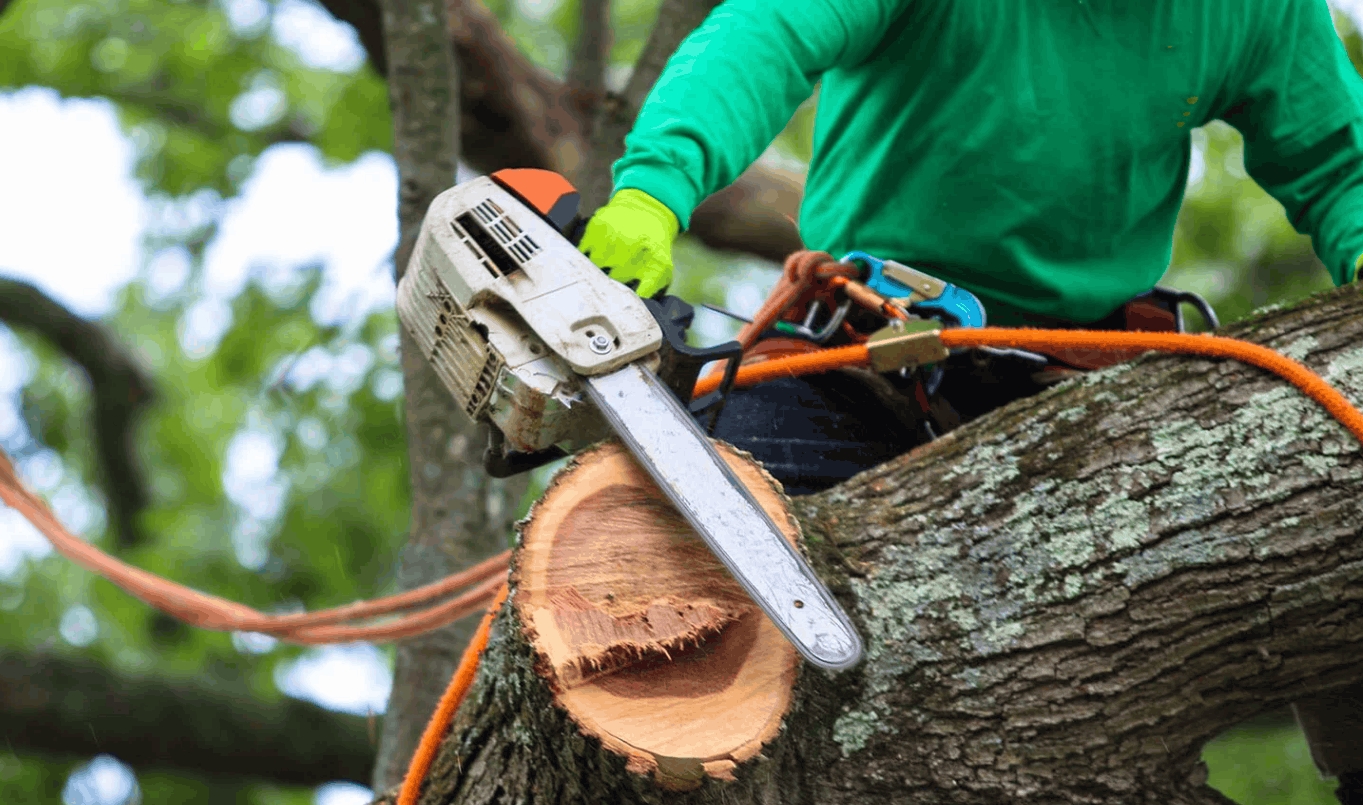
Branches come off first. On most residential jobs, a climber or a bucket truck removes the limbs in sections, working from the bottom up or the top down depending on the tree.
The trunk comes down in pieces. In open yards, the trunk may be felled in one piece. In tight spaces, it's cut into sections and lowered with ropes. Where there's no safe drop zone, a crane can lift pieces over the house.
Branches go through the chipper. Smaller limbs and brush are fed into a wood chipper, usually parked at the street.
The trunk is cut into rounds or logs to haul away or leave on site.
The stump is handled by grinding it out, removing it fully or leaving it, depending on what was agreed.
Cleanup. Leaves, sawdust and small debris are raked and blown off lawns, patios and driveways.
Most of the volume from a tree removal is the branches and leaves, not the trunk. That's why wood chipping is such a big part of the job.
How Wood Chipping Works
A commercial wood chipper uses rotating blades or a drum to cut branches into small chips. Crews feed branches in butt-first, and the machine pulls them through and blows the chips into a dump truck or chip box.
A few things affect how the chipping goes:
Branch diameter. Most residential tree work chippers handle branches up to several inches thick. Anything bigger is usually cut into logs.
Species. Palms, very wet wood and stringy material like pampas grass can be harder to chip, and some of it may need to be hauled away separately.
Access. The chipper usually stays at the curb, so branches from a backyard have to be dragged through gates or side yards. Long carries add time.
Is Wood Chipping Noisy?
Yes. Chippers are loud, which is why most crews run them in the daytime. If you have close neighbors, it's polite to let them know the day before. Many cities in the Sacramento area also have noise ordinances that limit early-morning equipment use.
What Are Wood Chips Good For?
Arborist wood chips, the mix of wood, bark and leaves that comes out of the chipper, are one of the most useful byproducts of tree work. Many homeowners pay for bagged mulch every year without realizing they can keep the chips from their own tree.
Mulch for Trees and Shrubs
A layer of 3 to 4 inches of wood chips around trees and shrubs helps:
Keep soil moisture in during hot Sacramento Valley summers
Moderate soil temperature
Suppress weeds
Improve soil over time as the chips break down
Protect roots from lawn mowers and string trimmers
One important rule: keep the chips a few inches away from the trunk. Piling mulch against the bark, sometimes called "volcano mulching," holds moisture against the trunk and can lead to rot and pests.
Paths and Play Areas
Chips work well for garden paths, dog runs and the spaces between raised beds. They break down over time and usually need a fresh layer every year or two.
Vegetable Gardens: Use With Care
Fresh chips spread on top of the soil are generally fine. Mixing fresh chips into the soil is different, because as they break down they can temporarily tie up nitrogen that plants need. If you garden, use chips as a surface layer or let them age before working them in.
Fire Safety Considerations
In foothill communities like Auburn, El Dorado Hills and parts of Folsom, fire agencies typically recommend keeping the first few feet around a house free of combustible material, including wood mulch. Use chips farther out in the yard, and check with CAL FIRE or your local fire agency for guidance on your property.
What About the Logs? Keeping Firewood After Tree Removal
If the tree had a large trunk, you can often ask the crew to cut the wood into rounds and leave them for firewood. Some things to know first:
Not all wood burns well. Oak, almond, walnut and other hardwoods make good firewood. Pine burns fast and leaves more creosote. Eucalyptus is dense but hard to split.
Fresh wood needs to dry. Green wood typically needs six months to a year of drying before it burns well.
Rounds still need splitting. Most crews cut rounds to length but don't split them unless that's agreed in advance.
Watch for pests. Pines killed by bark beetles shouldn't be stacked next to healthy pines. The beetles can move into nearby trees. Cover the pile or move it away from other conifers.
Check local burn rules. Many Sacramento-area air districts restrict wood burning on certain days. Check your local air quality district before planning to burn.
Should You Keep the Wood or Haul It Away?
Here's a simple way to decide:
Option | Pros | Cons |
|---|---|---|
Keep chips | Free mulch, better soil | Needs space, piles take time to spread |
Keep logs | Free firewood | Heavy, needs splitting and drying |
Haul everything | Clean yard, nothing left behind | Usually costs more |
Mix (keep some, haul the rest) | Balance of cost and use | Needs a clear plan with the crew |
If you plan to keep chips, ask the crew to dump them in a specific spot, like the side of the driveway or a corner of the yard, so they don't end up blocking your car.
How Wood Handling Affects Tree Removal Cost
Prices vary too much from tree to tree to quote numbers without seeing the job, but these are the main factors that move the cost:
Size and number of trees
What the tree is near: houses, pools, fences and power lines all add time and care
Access for the chipper, the truck and, if needed, a crane
Wood handling: hauling all logs and chips away usually costs more than leaving them
Stump grinding or stump removal, if included
The tree's condition: dead or failing trees can be more dangerous to climb and may need different equipment
When comparing estimates, make sure each one says clearly what happens to the wood, chips and stump. Two quotes that look far apart are sometimes just handling the debris differently.
Do You Need a Permit for Tree Removal?
Rules vary across the region. Sacramento County protects native oaks, and cities such as Sacramento, Roseville, Rocklin, Folsom and Citrus Heights have their own tree ordinances. Before removing a large tree, especially an oak, check with your city or county planning department. Trees near power lines may need to be coordinated with your utility first.
Questions to Ask Before Your Tree Removal Day
Will the branches be chipped on site, and can I keep the chips?
Will the trunk be cut into rounds, or hauled away?
Where will the chipper and truck park?
Is the stump included, and how deep will it be ground?
What does the cleanup include: raking, blowing, leaf pickup?
Are you licensed, insured and working under an ISA Certified Arborist?
Clear answers to these questions avoid most misunderstandings on removal day.
Frequently Asked Questions
Can I get free wood chips after tree removal?
Often, yes, if you ask ahead of time. Many crews are happy to leave chips from your own tree, since it saves them a trip to dump them.
Are wood chips safe to use around the house?
Generally, yes, but keep chips away from foundations and siding in fire-prone areas, and keep them a few inches back from tree trunks.
How long do wood chips last as mulch?
Typically one to two years before they break down enough to need a fresh layer. Chunkier chips last longer than fine material.
Can diseased wood be chipped?
Usually, yes, but chips from diseased or beetle-infested trees shouldn't go around trees of the same species. When in doubt, have that wood hauled away.
Final Thoughts
Tree removal doesn't end when the tree comes down. The branches, logs and stump are a big part of the job, and deciding ahead of time what to keep makes the day go more smoothly. Wood chipping can turn debris into free mulch, and the right logs can become a season of firewood. Talk it through with your crew before the work starts and you'll get exactly the cleanup you expect.
The same advice applies across the Sacramento region, from North Highlands, Antelope, Rio Linda and McClellan Park to Carmichael, Fair Oaks, Orangevale, Roseville, Rocklin and El Dorado Hills.