
Tulsi has held a deeply sacred place in Hindu traditions for centuries. Revered particularly in Vaishnava traditions, Tulsi is closely associated with Lord Vishnu and Lord Krishna and is traditionally valued as a symbol of devotion, purity, surrender, and Bhakti.
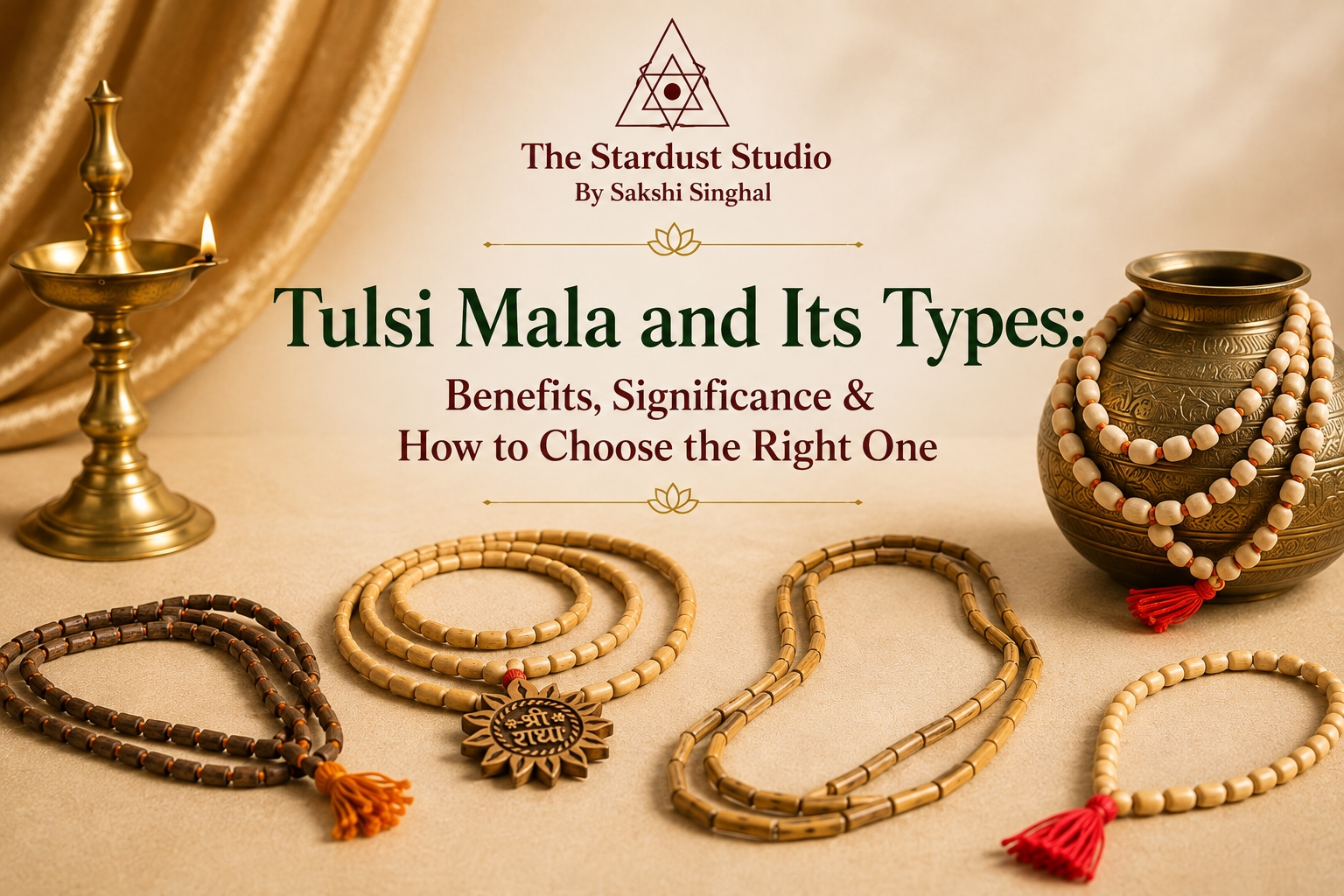
One of the most meaningful ways devotees incorporate Tulsi into their spiritual lives is through a Tulsi Mala.
Whether worn around the neck, used during devotional practices, or given as a spiritual gift, a Tulsi Mala can carry a significance that goes far beyond ordinary jewellery.
But not every Tulsi Mala is the same. Different styles vary in bead size, shape, construction, and intended use. You may come across a small Tulsi Kanthi Mala, a larger Kanthi Mala, raw Tulsi beads, or specially designed malas such as a Shri Radha Tulsi Mala.
So, which one should you choose?
This guide explains the traditional significance and Tulsi Mala benefits, explores five popular types available from The Stardust Studio, and helps you choose the right mala according to your personal preferences and spiritual practice.
What Is a Tulsi Mala?
A Tulsi Mala is traditionally made from beads carved from the wood of the sacred Tulsi plant, commonly known as Holy Basil.
Tulsi is especially revered in Vaishnava traditions and is associated with Lord Krishna and Lord Vishnu. Tulsi beads are therefore commonly used in devotional necklaces and Japa malas.
Depending on its design, a Tulsi Mala may be worn around the neck as a devotional accessory or used for mantra chanting.
Its natural wooden appearance also makes it an understated alternative to conventional jewellery.
Why Is Tulsi Mala Considered Sacred?
Tulsi is regarded as sacred in many Hindu traditions and has a particularly important role in Vaishnava worship.
For devotees, Tulsi represents qualities such as:
Devotion
Purity
Bhakti
Surrender
Faith
Spiritual discipline
Wearing a Tulsi Mala can therefore serve as a visible reminder of one's devotional path.
For many Krishna devotees, it is not simply a necklace but an expression of their spiritual connection.
Tulsi Mala Benefits
The commonly discussed Tulsi Mala benefits are primarily traditional and devotional.
1. Symbol of Devotion
Tulsi Mala is traditionally associated with devotion to Lord Vishnu and Lord Krishna.
Many devotees wear it as an expression of their faith and connection with Bhakti traditions.
2. Supports Mantra Practice
Tulsi beads have traditionally been used in mantra chanting and Japa practices.
Depending on the bead count and construction, a Tulsi Mala may be used to help count mantra repetitions.
3. Encourages Spiritual Discipline
Wearing a sacred mala can serve as a daily reminder to maintain prayer, meditation, gratitude, and mindful living.
4. Represents Purity
Tulsi's sacred status gives the mala symbolic associations with purity and spiritual devotion.
5. Lightweight Natural Jewellery
Tulsi wood is naturally lightweight, making it comfortable for many people to wear around the neck.
What Is a Tulsi Kanthi Mala?
A Tulsi Kanthi Mala is a Tulsi-bead necklace traditionally worn around the neck, particularly among devotees following Vaishnava traditions.
The word "Kanthi" refers to the necklace worn around the neck.
A Kanthi Mala may be worn as an expression of devotion to Lord Krishna or Lord Vishnu and can therefore have a deeper devotional meaning than ordinary wooden jewellery.
Different Kanthi malas can vary in bead size, length, layering, and construction.
Tulsi Mala vs Tulsi Kanthi Mala
Although both are made using Tulsi beads, they are not always intended for exactly the same purpose.
A general Tulsi Mala may refer broadly to a necklace or Japa mala made from Tulsi wood.
A Tulsi Kanthi Mala specifically refers to the traditional neck-worn devotional style associated particularly with Vaishnava practices.
If you are purchasing one for a specific devotional tradition, check the design and intended use rather than assuming that every Tulsi necklace serves the same purpose.
5 Types of Tulsi Mala to Explore
The Stardust Studio offers several Tulsi Mala styles, allowing devotees to choose according to their preferred bead size, appearance, and devotional purpose.
1. Tulsi Kanthi Mala – Small
The Tulsi Kanthi Mala Small is a suitable choice for someone who prefers a subtle and lightweight devotional necklace.
Its smaller beads create a delicate appearance while retaining the traditional significance of Tulsi.
Best For
Everyday devotional wear
Minimalist styling
First-time Tulsi Mala buyers
People who prefer smaller beads
Its understated design also makes it easy to wear with both traditional and everyday clothing.
2. Tulsi Mala – Raw Beads
The Tulsi Mala Raw Beads style highlights the natural character of Tulsi wood.
Instead of focusing heavily on a polished decorative appearance, raw or naturally finished beads allow more of the wood's original texture and character to remain visible.
Best For
People who appreciate natural materials
Devotees who prefer a rustic appearance
Meditation and spiritual practices
Those who like traditional-looking malas
Natural wood can have variations in colour, grain, and texture, making individual beads slightly different from one another.
3. Tulsi Kanthi Mala – Big
The Tulsi Kanthi Mala Big is designed for people who prefer a more prominent neck-worn mala.
Its larger beads create a stronger visual presence while retaining the traditional Kanthi style.
Best For
Devotees who prefer larger beads
Traditional spiritual wear
People who want a more noticeable Tulsi Mala
Regular devotional use
The right bead size ultimately depends on personal comfort and aesthetic preference.
4. Shri Radha Tulsi Mala
The Shri Radha Tulsi Mala brings a particularly devotional character to the collection.
Radha holds a central place in Krishna Bhakti, and the association of Radha with Tulsi makes this style especially meaningful for devotees who feel a strong connection with Radha-Krishna devotion.
Best For
Radha-Krishna devotees
Bhakti practitioners
Spiritual gifting
Devotees looking for a more symbolic Tulsi design
Its devotional identity makes it a thoughtful option for someone who wants their mala to reflect their connection with Krishna Bhakti.
5. Tulsi Mala
The classic Tulsi Mala offers a traditional option for people who prefer a simple and versatile design.
It can be incorporated into daily devotional routines, prayer, meditation, and spiritual wear depending on its specific construction.
Best For
Everyday wear
Traditional spiritual styling
Meditation
Devotional gifting
Its simplicity makes it suitable for both beginners and experienced devotees.
How to Choose the Right Tulsi Mala
Choosing the right mala becomes easier when you first decide how you intend to use it.
For Subtle Everyday Wear
Choose a smaller Tulsi Kanthi Mala if you prefer a lightweight and understated design.
For a Traditional Look
A larger Kanthi Mala can be suitable if you prefer more prominent Tulsi beads.
For Natural Appearance
Consider a raw-bead style if you appreciate visible wood texture and a less polished aesthetic.
For Krishna Bhakti
A Shri Radha Tulsi Mala can be particularly meaningful for devotees connected with Radha-Krishna worship.
For Meditation and Mantra Practice
Check the bead count and construction before choosing a mala for Japa. Not every neck-worn Tulsi Mala is necessarily designed as a traditional Japa mala.
How to Wear a Tulsi Mala
There are different practices across Hindu and Vaishnava traditions, so your family or spiritual teacher's guidance should take priority.
A simple approach is to begin with a clean body and a clean devotional space.
You may offer a prayer before wearing the mala and mentally dedicate it to your spiritual practice.
A devotee following Krishna Bhakti may chant:
Hare Krishna Hare Krishna
Krishna Krishna Hare Hare
Hare Rama Hare Rama
Rama Rama Hare Hare
You can then wear the mala respectfully around your neck.
How to Use Tulsi Mala for Mantra Chanting
If your particular mala is intended for Japa, hold the beads comfortably and move from one bead to the next while reciting your chosen mantra.
Traditional Japa practice often uses specific finger techniques and a Guru or Meru bead, depending on the tradition.
If your Tulsi Mala is primarily designed as a neck-worn Kanthi Mala, don't automatically assume it should be used for counting 108 repetitions.
Always check the product's construction and intended purpose.
Can You Wear Tulsi Mala Every Day?
Yes, many devotees wear Tulsi Mala regularly.
However, because Tulsi beads are made from natural wood, they benefit from careful handling.
Avoid prolonged exposure to water, excessive humidity, perfumes, and harsh chemicals.
Removing the mala before swimming, bathing, or strenuous activities can help preserve the beads and thread.
How to Identify an Original Tulsi Mala
If you're searching for an original Tulsi Mala, don't rely only on colour or appearance.
Natural Tulsi wood can display differences in:
Colour
Grain
Texture
Shape
Surface character
These variations are normal.
Before buying, check whether the seller clearly identifies the material as Tulsi wood and provides useful information about bead size, count, length, construction, and intended use.
A trustworthy seller should also provide clear photographs and product information.
Does a Pure Tulsi Mala Have to Look Perfect?
No.
Natural wood is not manufactured to be perfectly uniform. Slight differences between beads are expected.
A perfectly identical appearance does not automatically prove that a product is fake, just as natural variations alone do not conclusively prove authenticity.
If botanical authenticity is particularly important, rely on transparent sourcing information or appropriate professional verification rather than risky home tests.
Tulsi Mala Price: What Determines the Cost?
The Tulsi Mala price can vary depending on:
Quality of Tulsi wood
Bead size
Bead count
Mala length
Thread quality
Craftsmanship
Finishing
Additional devotional elements
A larger mala with bigger beads may naturally cost more than a small-bead design.
Likewise, specialised craftsmanship or additional components can influence the final price.
Don't compare price alone. Compare equivalent products based on their specifications and construction.
Common Mistakes to Avoid
Buying Based Only on Colour
Tulsi wood can naturally vary in colour. Don't assume a particular shade automatically proves authenticity.
Soaking the Mala in Water
Natural wood can absorb moisture, so prolonged soaking should generally be avoided.
Using Harsh Chemicals
Perfumes, cleaning agents, and other chemicals can affect natural wooden beads.
Using Every Tulsi Mala for Japa
A neck-worn Kanthi Mala isn't automatically a traditional 108-bead Japa Mala.
Treating Spiritual Claims as Guarantees
Tulsi Mala is best approached as a devotional and spiritual accessory. Traditional beliefs should not be confused with scientifically proven effects.
How to Care for Your Tulsi Mala
To preserve its natural appearance:
Keep it dry.
Avoid prolonged water exposure.
Store it in a clean pouch.
Keep away from perfumes and harsh chemicals.
Wipe gently with a soft cloth.
Avoid pulling or stretching the thread unnecessarily.
If your mala has specific care instructions from the manufacturer, follow those recommendations.
Tulsi Mala as a Spiritual Gift
A Tulsi Mala can make a meaningful gift for someone who follows Krishna or Vishnu devotion.
It can be considered for:
Janmashtami
Housewarming
Birthdays
Weddings
Religious ceremonies
Spiritual milestones
Bhakti-related occasions
A Tulsi Kanthi Mala can be especially meaningful for a devotee who already follows a Vaishnava spiritual tradition.
Why Choose The Stardust Studio?
At The Stardust Studio, we believe spiritual products should combine traditional significance with thoughtful craftsmanship and quality.
Our Tulsi collection includes multiple styles so you can choose according to your personal preferences:
Tulsi Kanthi Mala Small
Tulsi Mala Raw Beads
Tulsi Kanthi Mala Big
Shri Radha Tulsi Mala
Classic Tulsi Mala
Whether you're looking for a subtle everyday necklace, a larger Kanthi Mala, a natural raw-bead style, or a devotional Radha-inspired design, the collection offers options for different spiritual journeys.
Review the individual product details before purchasing to confirm the specific bead size, length, construction, and intended use.
Final Thoughts
A Tulsi Mala is a beautiful expression of India's devotional traditions, particularly for those connected with Lord Krishna and Lord Vishnu. Its significance comes not simply from the beads themselves but from the faith, intention, and spiritual practice associated with wearing them.
Whether you prefer the subtle Tulsi Kanthi Mala Small, natural Tulsi Mala Raw Beads, prominent Tulsi Kanthi Mala Big, devotional Shri Radha Tulsi Mala, or a classic Tulsi Mala, choose according to your personal practice, comfort, and style.
If you're searching for an original Tulsi Mala, explore the curated Tulsi collection at The Stardust Studio. With multiple bead styles and designs, the collection makes it easier to find a thoughtfully crafted Tulsi Mala for devotional wear, spiritual practice, or meaningful gifting.