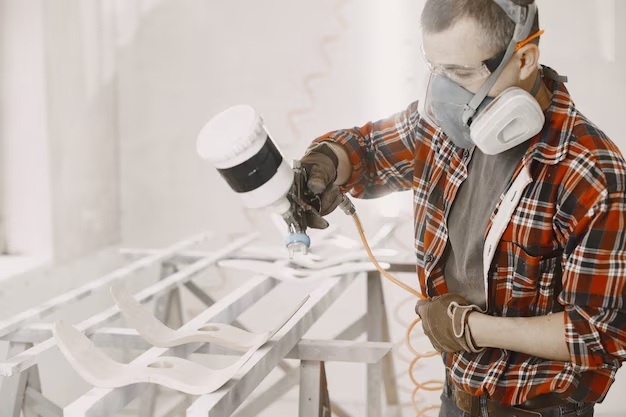
The UAE's expanding construction, real estate, hospitality, and infrastructure sectors are creating sustained opportunities for building-material suppliers, including manufacturers of paints and protective surface finishes. Architectural coatings are used across interior and exterior applications to improve appearance, protect substrates, and support durability under demanding environmental conditions.
According to MarkNtel Advisors, the UAE Architectural Coatings Market was valued at around USD 490 million in 2025 and is projected to grow from USD 512.05 million in 2026 to USD 666.82 million by 2032, exhibiting a CAGR of 4.5% during the forecast period. The market's development is being supported by construction activity, refurbishment projects, sustainability requirements, and growing demand for durable and performance-oriented coating solutions.
Construction Activity Supports Coating Demand
Construction remains a major contributor to demand for architectural coatings across the UAE. New residential developments, commercial properties, hotels, retail destinations, offices, and infrastructure projects require coatings for walls, ceilings, facades, floors, and other surfaces.
Knight Frank reported that UAE construction output reached a record USD 107.2 billion in 2024 and is projected to reach USD 130.8 billion by 2029. Construction also represented 62% of the UAE's future project pipeline in its 2025 assessment.
This continued project activity provides a broad customer base for coating manufacturers and suppliers.
Exterior Protection Gains Importance
The UAE's hot climate and intense solar exposure create challenging conditions for exterior building surfaces. Coatings must often withstand sunlight, heat, dust, moisture, and temperature variations while maintaining their appearance and protective characteristics.
Exterior products can therefore be selected based on properties such as adhesion, weather resistance, color retention, durability, and surface protection. Manufacturers are increasingly focusing on formulations designed for demanding climatic conditions and longer service requirements.
Sustainability Influences Product Selection
Sustainability is becoming increasingly relevant to construction-material selection. Dubai's green-building framework includes requirements covering materials, energy, water, and environmental performance.
Dubai Municipality states that green-building requirements became mandatory for all new buildings in Dubai from March 2014. The municipality also maintains guidance covering green-building materials and products, requiring users to ensure that relevant materials and testing facilities meet applicable certification or accreditation requirements. Dubai Municipality's green-building materials guidance provides additional information.
Low-VOC Formulations Gain Attention
Volatile organic compounds (VOCs) are an important consideration in architectural coatings because emissions can affect indoor air quality and environmental performance. This is encouraging greater attention toward low-emission paints and coatings.
Dubai Municipality's current certification framework includes a dedicated category for low-emitting paints and coatings under the 2023 Al Sa'fat Dubai Green Building System. The framework identifies certification requirements for paints, coatings, adhesives, and sealants.
This regulatory environment can encourage manufacturers to develop water-based and other lower-emission formulations that meet project specifications.
Performance Requirements Shape Innovation
Architectural coatings need to balance appearance with functional performance. Depending on the application, buyers may consider coverage, adhesion, drying time, abrasion resistance, color stability, moisture resistance, and durability.
Dubai Municipality's technical guidance for paints and varnishes establishes criteria related to product constituents, health risks, environmental impacts, and VOC limits. The technical guide for paints and varnishes also references requirements under the 2023 Al Sa'fat Dubai Green Building System and the Dubai Building Code.
These requirements encourage suppliers to maintain consistent product specifications and develop formulations suited to local conditions.
Reflective Coatings Support Building Efficiency
Surface reflectivity is another consideration for exterior applications in hot climates. Reflective surfaces can reduce the amount of solar radiation absorbed by building envelopes, potentially supporting thermal management.
Dubai's coating certification framework includes requirements related to light reflective value for exterior paints and solar reflective index for certain roofing applications.
This creates opportunities for coating manufacturers to develop products that combine decorative characteristics with building-performance considerations.
Residential Development Creates Opportunities
Residential construction is an important application area for architectural coatings. Villas, apartments, residential communities, and mixed-use developments require products for interior and exterior surfaces.
Consumers and developers can consider factors including color range, finish, ease of application, durability, cleanability, odor, and resistance to environmental conditions. As residential projects become increasingly design-focused, decorative performance can become as important as basic surface protection.
Commercial and Hospitality Projects Expand Demand
Commercial buildings, hotels, restaurants, shopping centers, and offices create additional opportunities. These properties often require coatings that provide both aesthetic appeal and resistance to frequent use.
Hospitality projects can be particularly demanding because high-traffic areas may require durable finishes, while exterior surfaces must withstand the UAE's environmental conditions. Renovation cycles can also generate recurring demand as properties update interiors and maintain facades.
Renovation Supports Recurring Consumption
Demand for architectural coatings is not limited to new construction. Existing buildings require periodic repainting, refurbishment, and surface maintenance to preserve appearance and protection.
Renovation projects can therefore provide a recurring source of demand across residential and commercial properties. Property upgrades, tenant changes, hospitality refurbishment, and maintenance programs can all contribute to continued consumption.
Quality and Certification Remain Important
Consistent quality is essential for coating manufacturers because variations in formulation can influence application and final performance. Parameters such as viscosity, coverage, drying time, adhesion, color consistency, and durability need to be controlled throughout production.
Dubai Municipality maintains a certified-products framework for paints and coatings that provides information on products assessed under relevant certification schemes.
Compliance and documentation can therefore become important differentiators for suppliers serving regulated construction projects.
Future Growth Remains Construction-Driven
The UAE Architectural Coatings Market is evolving alongside construction expansion, real estate development, renovation activity, sustainability requirements, low-emission materials, and demand for durable finishes. The projected increase from USD 512.05 million in 2026 to USD 666.82 million by 2032 reflects continued opportunities across residential, commercial, hospitality, and infrastructure applications.
Future development will remain connected with construction pipelines, refurbishment activity, climate-resistant formulations, low-VOC technologies, reflective coatings, certification, and green-building requirements. As developers increasingly balance aesthetics, durability, environmental performance, and regulatory compliance, architectural coatings are expected to remain an important part of the UAE's evolving built environment.

