
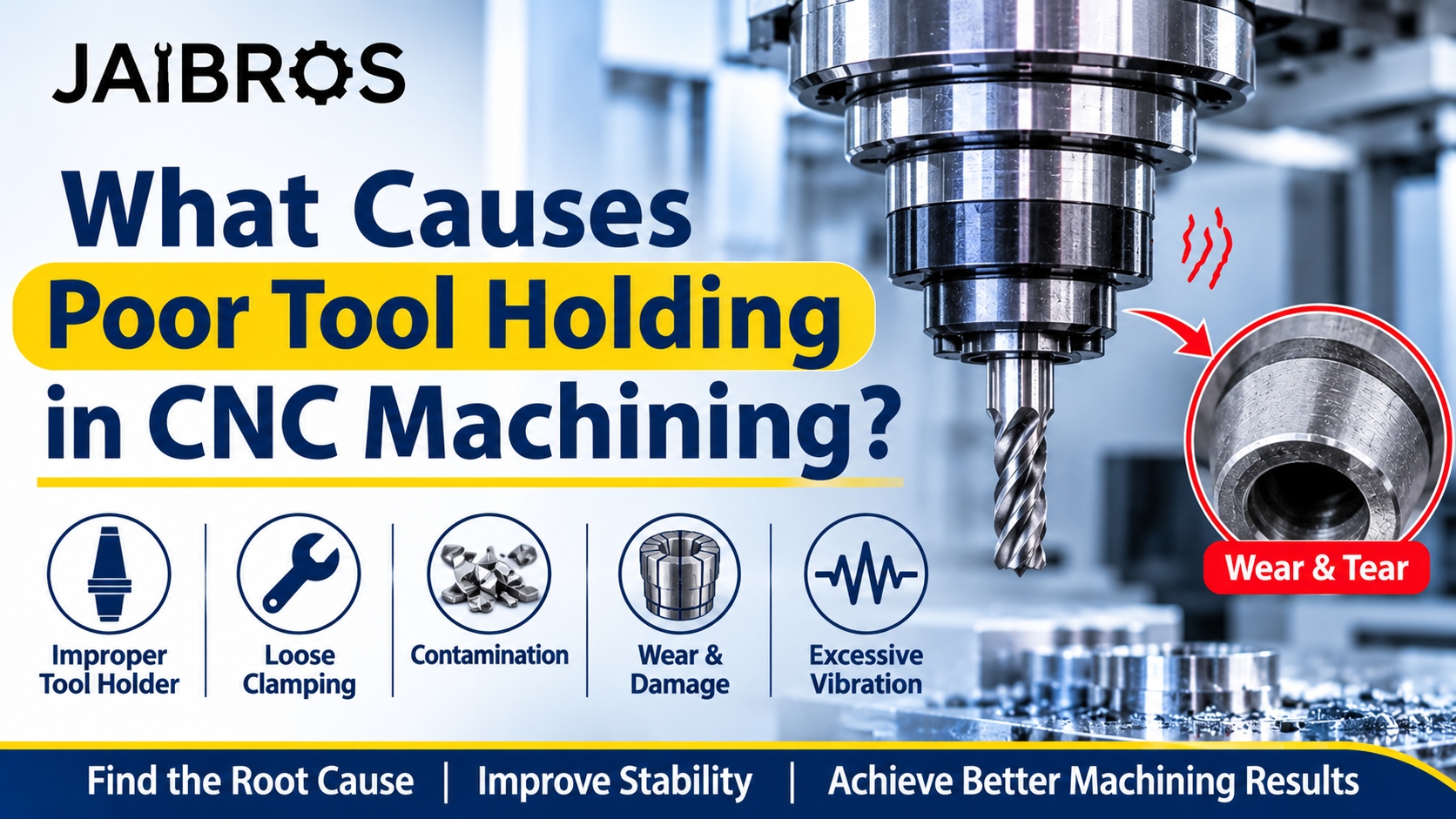
Poor tool holding is one of the most common reasons for bad surface finish, broken cutters, and scrapped parts. If a cutter is not gripped firmly and run straight, even a high-end machine cannot cut well. Many shops blame the cutter first, but the real problem is often in the holding system. This guide explains the main causes in simple English and shows practical ways to fix them. Knowing how your cnc tools connect to the spindle is the first step to steady, accurate machining.
What Is Tool Holding in CNC Machining?
Tool holding is the way a cutting tool is gripped and linked to the machine spindle. It works like a chain. The spindle taper, the cnc tool holder (such as BT, CAT, or HSK style), the pull stud, the collet or chuck, and the cutter shank must all fit well together. If one link is dirty, worn, or loose, the whole chain becomes weak. That weakness shows up as runout, vibration, and tool slip.
Main Causes of Poor Tool Holding
1. Dirt, Chips, and Coolant Residue
Even a tiny chip or oil film between the holder taper and the spindle stops full contact. The holder then sits slightly off-center, which causes runout. Dirt inside a collet bore or on the nut face has the same effect. Cleaning is simple, yet it is the cause that is missed most often.
2. Worn or Damaged Tapers
Over time, spindle and holder tapers wear, scratch, or show fretting marks (a dull, rubbed look). A worn taper cannot seat properly, so accuracy drops and the holder may loosen under load. Frequent tool changes, crashes, and rough handling speed up this damage.
3. Weak Drawbar Force or a Bad Pull Stud
The drawbar pulls the holder into the spindle using the pull stud. If the pull stud is cracked, stretched, loose, or has the wrong angle for the machine, clamping force falls. Tired springs inside the spindle can also lower drawbar force. Check pull studs often, and have drawbar force measured during regular machine service.
4. Worn, Dirty, or Wrong-Size Collets
An ER collet grips well only inside a small clamping range, usually about 1 mm below its nominal size. A collet that is too large for the shank leaves weak contact and lets the cutter slip. Worn collets also lose accuracy. Match the collet size to the shank, and replace collets that show cracks, scoring, or uneven wear.
5. Wrong Nut Tightening
Under-tightening lets the cutter pull out. Over-tightening can distort the collet and damage the nut. Use the correct spanner and follow the torque value given by the holder maker. A nut that does not turn smoothly should be replaced.
6. Poor Shank Condition
Oily, scratched, or undersized shanks reduce grip. Solid carbide cutters usually have precisely ground shanks, so any burr or dent affects holding. Wipe the shank clean and dry before clamping.
7. Long Overhang and Heavy Loads
Pulling a cutter out too far increases leverage and bending. Heavy roughing with a light-duty holder can also push the cutter out of its grip. Keep the stick-out as short as the job allows, and pick a holder that suits the cutting load.
8. Heat and Imbalance
Heat changes the size of parts, and unbalanced holders cause vibration at high speed. Both reduce holding accuracy. For high-speed work, use balanced holders.
Signs of Poor Tool Holding
Watch for chatter marks, rough surface finish, uneven tool wear, loud cutting noise, size changes from part to part, and cutters moving in the holder. A dial indicator can confirm the problem by measuring runout. Poor holding also costs money, because cnc tools wear out faster when the cutter does not run true.
How to Fix and Prevent Poor Tool Holding
Most holding problems can be avoided with simple habits:
Clean the spindle taper, holder, collet, and nut before every tool change.
Inspect tapers, pull studs, and collets on a fixed schedule.
Match the collet size to the shank diameter.
Tighten the nut with the correct spanner and torque.
Keep cutter stick-out as short as possible.
Measure runout regularly and record the readings.
Store holders clean and covered, away from chips and coolant.
Good care of your cnc tools costs little and saves a lot in scrap and downtime. For more on this topic, read this practical care guide for BT40 holders and ER collets.
Choosing the Right Holder for the Job
Different jobs need different holding methods. Collet chucks suit general milling. Side-lock holders give a strong grip for heavy roughing. Hydraulic and shrink-fit holders give high accuracy for finishing. To compare options, see these types of CNC tool holders. Pairing the right holder with the right cnc tool cutter gives better grip, less vibration, and longer tool life.
Conclusion
Poor tool holding rarely has one single cause. It usually comes from small problems adding up: dirt, worn tapers, weak clamping force, wrong collets, or loose nuts. The good news is that most of these are easy to find and fix. Clean often, inspect regularly, choose the right holder, and measure runout. Strong holding is the base of accurate and efficient CNC machining, and these habits protect both your cutters and your finished parts.
If you are looking for reliable ER collets, tool holders, pull studs, and carbide cutters, you can explore the full range at Jaibros. It is a trusted online place to find precision machining tooling in one spot, so you can match the right holder and cutter for your job with confidence.
Frequently Asked Questions
1. What is the most common cause of poor tool holding?
The most common cause is dirt. Chips, dust, or coolant residue on the spindle taper, holder taper, collet, or nut stops proper seating and creates runout. Worn tapers and loose pull studs come next. Cleaning every surface before each tool change is the simplest and cheapest way to improve holding accuracy and prevent many problems.
2. How does a worn pull stud affect machining?
A pull stud connects the holder to the drawbar. If it is cracked, stretched, loose, or the wrong angle, the holder is not clamped with full force. This can cause vibration and poor accuracy. In serious cases, the holder may release during cutting. Inspect pull studs regularly and replace any that show damage or wear.
3. Can I use any ER collet for any cutter size?
No. An ER collet grips well only within a small range, usually about 1 mm below its nominal size. A collet much larger than the shank gives weak contact and risks slipping or runout. Always choose the collet that matches the shank diameter, and replace it when it shows wear, scoring, or damage.
4. How can I check for runout?
Place a dial test indicator against the cutter shank or a test bar held in the holder, then turn the spindle slowly. The needle movement shows the runout. Check near the tip and again further up the shank. High readings usually point to dirt, wear, or a damaged holder or collet.
5. How often should CNC tool holders be inspected?
Do a quick visual check at every tool change. Inspect tapers, pull studs, collets, and nuts more closely every week or month, depending on machine use. Well-maintained cnc tools hold accuracy longer, reduce scrap, and extend cutter life. Replace worn parts right away instead of waiting for a failure.



